
How To
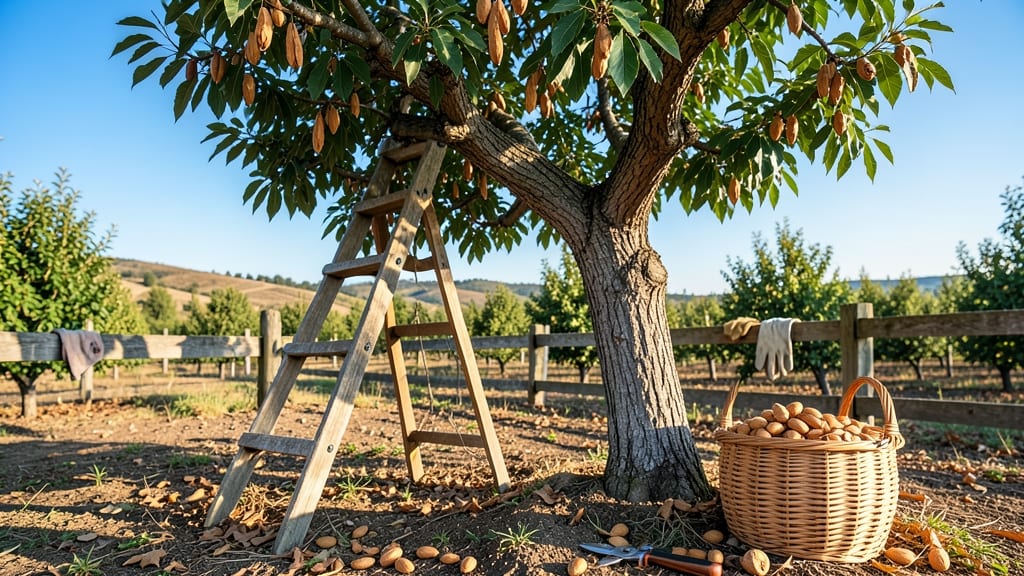
Harvesting almonds when their shells crack open and nuts drop naturally means the difference between rich, flavorful nuts and bitter, underripe ones.
Almond trees reward patience with a bountiful harvest—but knowing exactly when to pick those perfect, crack-open shells can mean the difference between rich, flavorful nuts and bitter, underripe ones. 🌰
If you’ve ever waited too long and watched your nuts shrivel on the branch or picked too early and ended up with hard, tasteless shells, you know how critical timing is.
In this guide, I’ll walk you through the key signs of readiness, the best tools for harvesting, and step-by-step methods—from hand-picking to shaking—to ensure you collect the best possible yield every season.


When to harvest almonds: key signs shells are ready to crack
Timing your almond harvest is everything—pick too early, and you’ll end up with bitter, underdeveloped nuts that won’t store well. Harvest too late, and mold or pests can ruin your crop before you even crack the shells.
The perfect window is narrow but unmistakable once you know what to look for.
Almonds mature over late summer to early fall, typically between September and October in most US growing zones. However, the exact timing depends on your local climate and almond variety.
In warmer regions like California’s Central Valley, harvests often begin as early as late August, while cooler zones like Oregon may wait until October.
European climates follow a similar pattern, with harvests in September-October for Mediterranean regions (e.g., Spain, Italy) and slightly later in cooler coastal areas like France or Portugal. Always monitor your tree’s specific maturity cues rather than relying solely on the calendar.
🌰 Summary: How to Harvest Almonds
| Sign | Description | Action |
|---|---|---|
| 🍃 Hull Color | Hulls turn from green to brown and become papery. | Check 2-3 nuts daily; harvest when 70%+ are brown. |
| 🔊 Shell Sound | Shells sound hollow when tapped or shaken. | Tap a few nuts with your knuckles; loud "ping" = ready. |
| 🍂 Leaf Drop | Leaves begin to yellow and fall, signaling dormancy. | Harvest before 50% leaf drop to avoid overripe nuts. |
| 🌰 Nut Release | Nuts detach easily when branches are gently shaken. | Test a few branches; no force needed for ripe almonds. |
| ⏰ Regional Timing | US: Late Aug-Oct; EU: Sep-Oct. | Adjust 1-2 weeks early in warm climates. |
The most reliable indicator is the hull split. When the outer hull (the green, leathery covering) cracks open and dries into a brown, papery texture, that’s your cue. At this stage, the inner shell will be hard and the nut inside fully developed.
If you crack open a few test nuts and find they’re still green or soft, wait another 3-5 days.
Another foolproof method is the sound test. Hold a nut in your palm and tap it with your knuckles. A ripe almond will produce a clear, hollow "ping", while an unripe one will sound dull or mushy.
This trick works best when the nuts are still on the tree, so shake a few branches over a tarp to collect samples for testing.
Don’t ignore the leaves either. As almond trees prepare for dormancy, their leaves will begin to yellow and drop. This is nature’s way of telling you it’s time to harvest.
However, wait until only about 30-50% of leaves have fallen—harvesting too late risks attracting pests like rodents or promoting mold growth in the damp hulls.
Regional differences matter, especially if you’re growing almonds in cooler climates. Trees in USDA Zone 7 or higher (e.g., Pacific Northwest) may need an extra 1-2 weeks compared to California’s Mediterranean climate.
In Europe, Southern Spain or Italy often harvest earlier than Northern France or Germany due to warmer temperatures.
Pro tip: Keep a harvest journal for your first few years. Note the exact dates when your tree’s hulls split, leaves change color, and nuts drop. Over time, you’ll predict your tree’s personal harvest window with near-perfect accuracy.
This is especially useful for non-bearing trees (those under 3-5 years old) that may mature slightly later.
If you miss the window, don’t panic—but act fast. Almonds left on the tree too long can sprout or attract squirrels and birds, which will strip your crop. For a last-resort harvest, pick the nuts and spread them on a dry, shaded surface to finish curing.
Just know that flavor and storage life will suffer compared to perfectly timed almonds.
Once you’ve confirmed your almonds are ripe, the next step is harvesting them efficiently. Whether you choose hand-picking, shaking the tree, or using a mechanical harvester, timing is everything. But for now, focus on those key ripeness signs—they’re your ticket to a flavorful, bountiful harvest.
Step-by-step almond harvesting process: from tree to shelling
Now that you’ve identified your almonds are ready to harvest, the next step is collecting them efficiently. The method you choose—hand-picking, manual shaking, or mechanical harvesting—depends on your tree’s size and your harvest volume.
Smaller orchards often rely on hand-picking or gentle shaking, while larger operations use specialized equipment to speed up the process.
For home growers, I recommend starting with a combination of both methods to maximize yield without damaging the tree. Always work during dry, sunny days to prevent moisture from causing mold later. Remember, almonds are not tree-ripe like stone fruits—they must be fully dried before cracking open for optimal flavor.
Step-by-Step Almond Harvesting Process
- 1
- 2
- 3
- 4
- 5
- 6
- 7
After harvesting, I always sort my almonds by shell hardness—the hardest shells indicate the best flavor and longest shelf life. If you’re processing a large quantity, consider investing in a nutcracker or mechanical sheller to save time.
Just be sure to inspect each batch for pests or damaged nuts before storage.
Pro tip: Save a few nuts from your first harvest to plant new trees next season! Almond trees thrive when grown from grafted nursery stock, but homegrown nuts can produce wild-type trees with unique characteristics. Just remember—it takes 3-5 years for a new tree to bear fruit. 🌰