
Vegetables
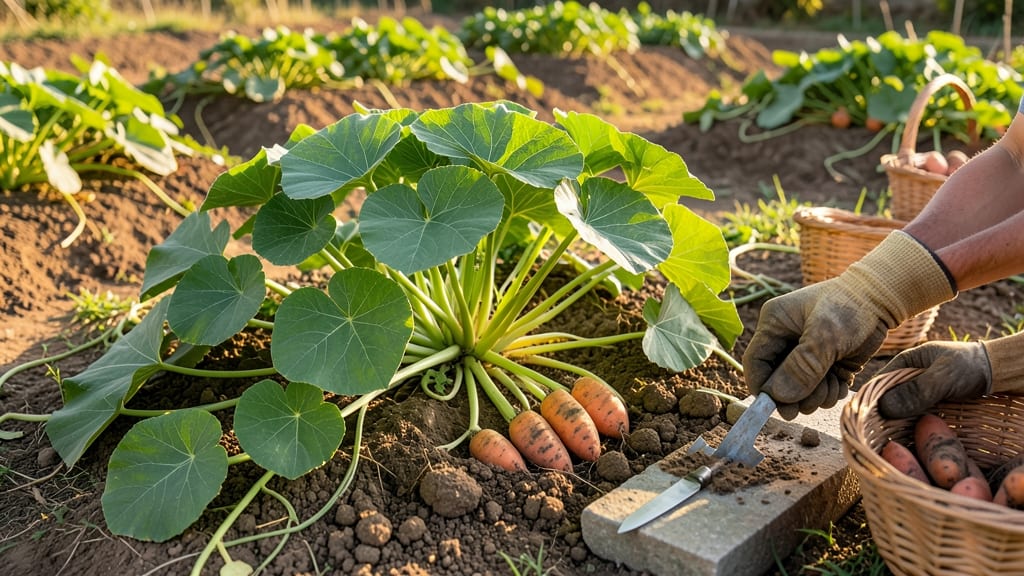
Harvesting sweet potatoes at the right time ensures you get the best flavor and texture — and skipping these key signs can leave you with bitter, woody tubers instead.
Picture this: you’ve spent months nurturing your 🍠 plants, only to dig up small, underdeveloped roots because you missed the window. The difference between a perfect harvest and a disappointing one often comes down to timing.
Sweet potatoes are ready to pick when their vines turn yellow and start dying back, usually between September and November in most growing zones. But there’s more to it than just the calendar — soil conditions, leaf color, and tuber size all play a role in determining the ideal moment.
In this guide, I’ll walk you through the exact signs to watch for, how climate affects your harvest, and the best way to handle and store your sweet potatoes once they’re out of the ground.

When to harvest sweet potatoes: signs leaves yellow & soil loosens
Timing your sweet potato harvest correctly ensures you get the sweetest, most flavorful tubers possible. Unlike regular potatoes, sweet potatoes develop their signature starch and sugar content as they mature in the soil.
The key is watching for visual and soil-based cues that signal peak ripeness—especially when the leaves yellow and the soil becomes easier to work.
One of the most reliable indicators is the color change in the vines. Healthy green foliage gradually shifts to a golden yellow or brown hue, often starting at the edges and moving inward.
This is your plant’s natural way of telling you it’s redirecting energy to the underground tubers. If you see more than 50% of the leaves turning yellow, it’s time to start checking for harvest readiness.
Soil conditions also play a critical role in determining when to harvest. As sweet potatoes mature, they loosen the soil around them, making it easier to dig. If the soil crumbles easily with gentle pressure and you can see the tubers just below the surface, that’s a strong sign they’re ready. Pro tip: Use a garden fork or hands to gently probe the soil—if resistance is minimal, your sweet potatoes are likely at peak ripeness.
Here’s a quick reference to help you identify the perfect harvest window:
| Harvest Indicator | What to Look For | Action |
|---|---|---|
| Leaf Color | 50-75% yellow or brown leaves | Start checking soil |
| Vine Dieback | Leaves wilting and stems drying | Harvest within 1-2 weeks |
| Soil Condition | Loosens easily with gentle pressure | Dig carefully to avoid damage |
| Tuber Size | 3-6 inches in length, firm texture | Harvest immediately for best flavor |
| Skin Hardness | Hard, consistent color (no green spots) | Store in cool, dry place |
Don’t wait too long after the leaves yellow—sweet potatoes left in the ground past their prime can become woody and bitter. If the vines have completely died back and the soil feels compacted again, you’ve missed the window.
The ideal harvest window is when the tubers are fully sized but before the first frost, which can damage the skin and reduce storage life.
Another pro tip: Check for tuber size and firmness by gently brushing away soil near the plant base. If you find tubers that are 3-6 inches long and feel firm to the touch, they’re ready.
Soft or small tubers need more time in the ground, while oversized ones may have less sweetness due to overmaturation.
Regional differences matter too. In warmer climates (USDA zones 9-11), sweet potatoes often mature earlier, while cooler zones (7-8) may need an extra 2-3 weeks. Always adjust your harvest timing based on local frost dates and variety-specific growth rates.
For example, Beauregard varieties typically mature in 90-100 days, while Jewel can take up to 120-150 days.
If you’re unsure whether your sweet potatoes are ready, conduct a soil probe test: Dig down 6-8 inches near the plant base. If you find tubers that are well-formed and firm, harvest immediately.
If they’re still small or soft, wait another week and check again. Patience here pays off with better flavor and storage life.
Once you’ve confirmed the perfect harvest time, act quickly. Sweet potatoes are perishable after harvest, so avoid leaving them exposed to sunlight or moisture. Cure them properly for 10-14 days in a warm, humid environment (around 80-85°F) to develop their sweetness and skin thickness.
This step is crucial for long-term storage and optimal taste.
By mastering these visual and soil-based cues, you’ll consistently harvest sweet potatoes at their peak—ensuring a bounty of flavorful, starchy tubers that store well and impress at the dinner table. Happy digging! 🍠
Sweet potato harvest timeline: months & hardiness zones
Timing your sweet potato harvest correctly depends heavily on your USDA hardiness zone, as frost sensitivity makes all the difference. In Zones 9-11, you might harvest as early as August for heat-sensitive varieties, while Zones 7-8 typically wait until October-November to avoid frost damage.
Understanding these regional differences ensures you don’t miss the window or risk tuber spoilage.
Sweet potatoes thrive in warm climates but struggle with temperatures below 50°F (10°C). A single frost can turn your firm, flavorful tubers into mushy, inedible messes. That’s why I always check my local frost dates and adjust my harvest schedule accordingly—especially for late-maturing varieties like 'Georgia Jet' or 'Beauregard'.
Here’s how your zone affects harvest timing, including adjustments for early vs. late varieties:
| USDA Zone | Ideal Harvest Month | Early Varieties | Late Varieties | Frost Risk | Key Sign |
|---|---|---|---|---|---|
| 7-8 | October-November | Late September | Mid-November | High (first frost) | Vines 70% yellow |
| 9 | September-October | August-September | October | Low (rare frost) | Vines fully yellow |
| 10-11 | August-October | July-August | September-October | None | Soil loosens easily |
*Adjust for local microclimates—harvest earlier in high-altitude areas or later in coastal zones.
For gardeners in Zones 7-8, I recommend harvesting 2-3 weeks before the first expected frost. Even if the vines aren’t fully yellow, it’s better to dig up smaller tubers than risk losing your entire crop to cold damage.
In Zones 9-11, you have more flexibility—just watch for soil compaction and vine dieback, which signal readiness.
Pro tip: If you’re growing multiple varieties, harvest early types first (like 'Centennial'), then move to mid-season ('Beauregard'), and save late types ('Covington') for last.
This staggered approach maximizes your harvest window and storage potential. Always prioritize firm, well-sized tubers over waiting for perfect vine color—quality matters more than quantity!
One mistake I’ve made? Ignoring soil moisture before harvest. Dry soil makes tubers harder to extract, while soggy ground can bruise them. Aim for moderately moist soil—just damp enough to loosen easily with a fork. This small detail can save you hours of frustration during harvest.
Remember: Sweet potatoes won’t ripen further after picking, so timing is everything. Use this zone guide as your roadmap, but always trust your eyes—yellowing vines and loose soil are the ultimate harvest indicators. Happy digging! 🍠