How To
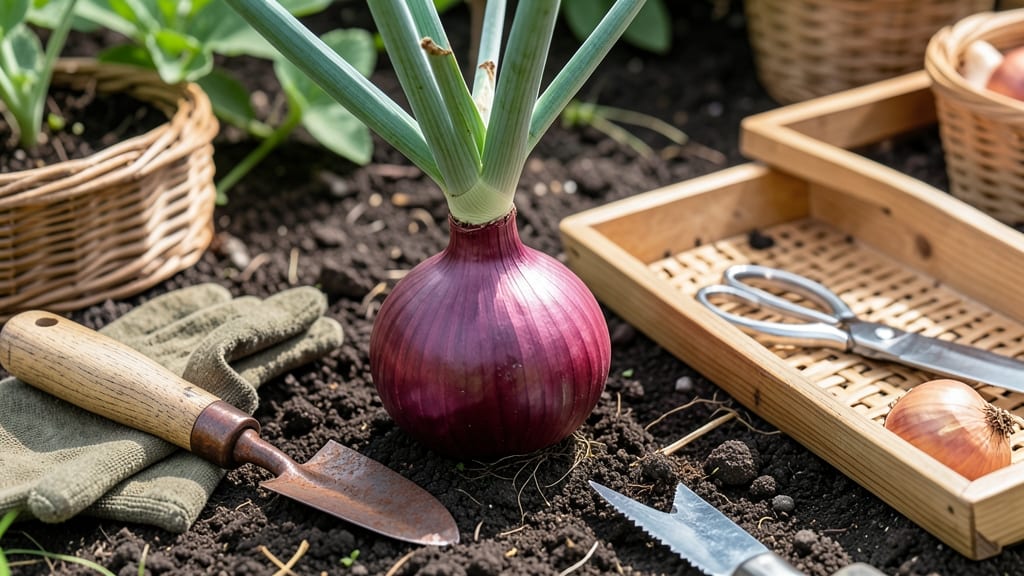
Harvesting red onions 🧅 at the right time means the difference between a sweet, tender bulb and a tough, pungent one—here’s exactly when to pull them for peak flavor.
If you’ve ever dug up an onion only to find it soft or still growing, you know how frustrating it can be. The good news? Timing is simple once you know the three key size-based cues that signal readiness.
Most red onions take between 90 and 120 days to mature, but size—not days—is your best guide. Look for bulbs that are 1 to 2 inches in diameter, with tops that yellow and flop over like a bow.
In this guide, I’ll break down the top three size-based signs, how to avoid common mistakes, and even how to store your harvest for months. Ready to get it right every time?


3 Key size-based signs your red onions are ready to harvest
Red onions are one of the most rewarding vegetables to grow, but knowing when to harvest red onions can be tricky. Unlike green onions, red onions develop bulbs that need precise timing to reach their sweetest flavor and best storage potential.
The key lies in three size-based indicators that signal your onions are ready—diameter, neck thickness, and top growth.
Harvesting too early means small, pungent bulbs with poor storage life, while waiting too long risks splitting or bitter flavors. The ideal harvest window falls between 90 to 120 days after planting, but size-based cues are your best guide.
Let’s break down each sign so you can pull onions at peak perfection.
| Sign | Description | Action |
|---|---|---|
| Bulb Diameter | 1 to 2 inches across (size of a golf ball) | Gently grasp bulb to check firmness |
| Neck Thickness | Top narrows visibly (1/4-inch or less) | Use fingers to feel the shrinking stem |
| Top Growth | Green leaves yellow and flop over (50%+) | Pull when 60% of tops are yellowed |
The first sign to watch is bulb diameter. When your red onions reach 1 to 2 inches across, they’re typically ready. Think of a golf ball—this is your target size.
Smaller bulbs (under 1 inch) are often pungent and lack storage potential, while larger ones may split or become tough.
Next, focus on the neck thickness. As onions mature, the stem connecting the bulb to the leaves will shrink dramatically. When it’s about 1/4-inch thick or less, this signals the bulb has stopped growing upward and is ready for harvest.
Use your fingers to feel the neck—it should feel firm and tight.
Don’t ignore the top growth either. The most reliable indicator is when 50% or more of the green leaves turn yellow and flop over. This means the plant is redirecting energy to the bulb.
If you wait until all leaves are yellow, you risk over-maturity, which can lead to bitter flavors or cracked skins.
For storage onions, aim for bulbs on the larger end of the 1-2 inch range. These store best in a cool, dry place (50-60°F) for up to 6 months. Smaller bulbs are better for immediate cooking, like caramelizing or pickling, where their milder flavor shines.
If your red onions are still green and upright, they’re not ready. Keep monitoring—bulbs grow quickly in warm weather. Conversely, if you see cracked skins or split bulbs, you’ve waited too long. The good news? Onions are forgiving—even slightly underripe bulbs can be harvested early for green onions.
Timing your harvest correctly ensures sweet, flavorful onions that store well. Pay attention to these three size-based cues, and you’ll never miss the perfect moment again. Happy harvesting!
How red onion size affects flavor: small vs medium vs large bulbs
Did you know your red onion’s size at harvest directly impacts its flavor, storage life, and even how it performs in recipes? I’ve grown red onions for years, and I’ve found that small, medium, and large bulbs each have distinct characteristics that make them better suited for specific uses.
For example, small red onions (about 1 inch in diameter) are milder and sweeter, perfect for fresh salads or quick pickling. Meanwhile, large bulbs (2+ inches) develop deeper, sharper flavors ideal for caramelizing or long-cooked dishes.
Let’s break down the pros and cons of each size category to help you choose—or even adjust your growing habits—to get the exact flavor profile you want.
Red Onion Size Comparison
Small Bulbs (1 inch)
- Pros: Mild, sweet flavor; great for fresh eating
- Cons: Shorter storage life (2-3 months)
Medium Bulbs (1.5-2 inches)
- Pros: Balanced flavor; stores 4-6 months
- Cons: Can be slightly tougher than small bulbs
Large Bulbs (2+ inches)
- Pros: Deep, robust flavor; stores 6+ months
- Cons: Can be too pungent for raw dishes
If you’re growing red onions for long-term storage, aim for medium to large bulbs. These hold up better in cool, dry conditions and develop a stronger skin that resists spoilage.
I’ve had large red onions last through winter in my root cellar with no issues, while smaller ones often shrivel by December.
For immediate culinary use, like fresh salsas or quick stir-fries, small to medium bulbs are my go-to. Their tenderness and mild sweetness elevate dishes without overpowering other flavors.
Pro tip: If you want both, try harvesting a few small onions early in the season and let others mature fully for later use.
One mistake I see often is assuming all red onions should be harvested at the same size. Adjust your harvest timing based on your goals: Pull small bulbs when they’re 1 inch wide for early-season use, or wait for 2+ inches if you’re planning to store them.
The key is watching the neck of the onion—when it starts to tighten and the tops yellow, that’s your cue.
For best results, I recommend growing a mix of sizes. Plant some onions closer together to encourage smaller bulbs (they’ll compete for space), and others with more room for larger harvests. This way, you’ll have onions ready for everything from spring salads to holiday cooking.