
Picking
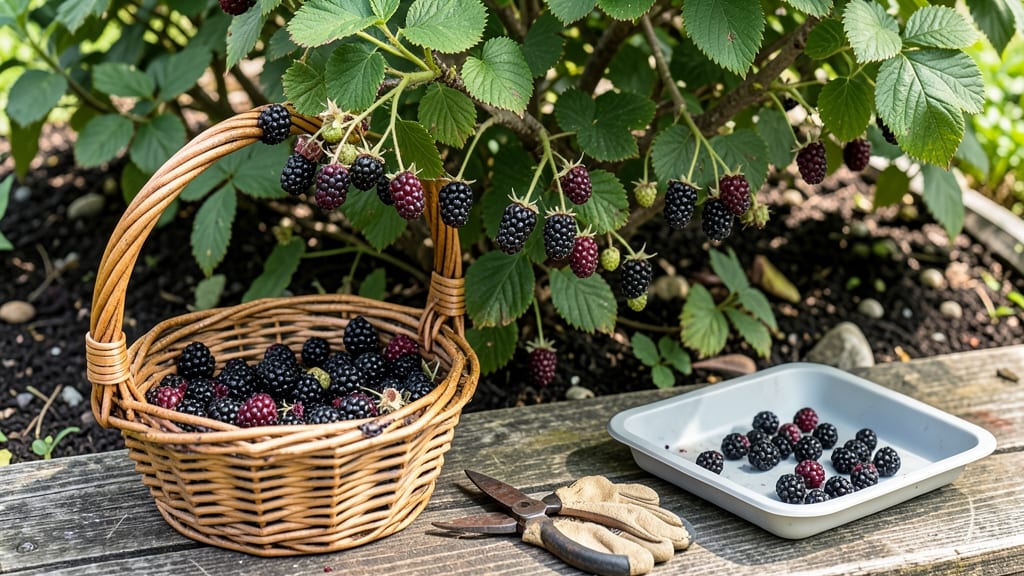
Blackberries ripen fastest in June through September 🫐, but timing your harvest wrong means missing out on the sweetest, juiciest berries—or worse, dealing with a mealy mess.
Picture this: you’ve waited months for those glossy, deep-black clusters, only to pick them too early and end up with tart, underripe fruit. Or worse, you wait too long, and birds or pests beat you to the feast.
The key to success? Knowing the exact signs of ripeness and when to act.
Whether you’re in USDA Zone 6a or further south, the right harvest time depends on your variety and climate. Some berries ripen in waves, while others all come at once—so understanding these patterns can double your yield.
In this guide, I’ll walk you through the 3 fastest ways to spot perfect ripeness, regional harvest windows, and how to protect your crop from common pitfalls like uneven ripening or hungry birds.

3 Key signs your blackberries are ready for harvest (timing matters)
There's nothing quite like the taste of a perfectly ripe blackberry, freshly picked from your garden. But knowing the exact blackberry harvest time can be tricky—pick too early, and you'll get mealy, tart berries.
Wait too long, and they'll turn mushy or become bird snacks! The secret lies in watching for these three critical ripeness indicators that tell you when your blackberries are at their peak.
Timing matters because blackberries ripen quickly, especially in warm climates. A single day can make the difference between a sweet, juicy berry and one that's past its prime.
I've learned from experience that regional variations also play a huge role—what's perfect in USDA Zone 7 might be too early in Zone 5. Let's break down the signs so you never miss the window again.
-
1. Deep, Uniform Color
Look for deep black or purple berries—no red or green patches. Varieties like 'Triple Crown' turn jet black, while others like 'Cheyenne' stay slightly purple. -
2. Gentle Firmness
Squeeze lightly—ripe berries yield slightly but don’t squish. If they feel hard, they’re not ready; if they’re mushy, they’ve overripe. -
3. Easy Release
Gently tug a berry—it should detach easily from the stem. If it resists, wait a day or two. Overripe berries may fall off on their own!
The first sign to watch is color. Unripe blackberries often start red or greenish, but as they ripen, they deepen to a rich black or deep purple. Some varieties, like 'Natchez', stay a lighter purple-black, but the key is uniformity.
If you see patches of red or green, the berries need more time on the vine. I once picked a batch of 'Ouachita' blackberries that were mostly black but had green shoulders—they tasted bland and underripe!
Firmness is the second clue. A ripe blackberry should feel plump but slightly yielding when you gently squeeze it. Think of it like a ripe peach—firm enough to hold its shape but soft enough to know it’s ready. If the berries feel rock-hard, they’re not ready, and if they’re squishy, they’ve passed their prime. I test firmness by pinching a few berries—if they leave a slight imprint but don’t break, they’re perfect.
The third and most reliable sign is how easily the berries detach from the plant. A ripe blackberry should come off with a gentle tug, separating cleanly from the stem. If you have to twist or pull hard, the berries aren’t ready yet.
This is especially important for thornless varieties, like 'Arapaho', where you want to avoid damaging the canes while harvesting. I always pick a few berries from different parts of the plant to check consistency—some canes may ripen faster than others!
Regional timing adds another layer of complexity. In warmer climates (Zones 8-10), blackberries often ripen as early as late spring, sometimes even in May. But in cooler zones (Zones 4-6), the harvest window typically stretches from mid-July to early September.
I’ve noticed that native blackberries, like those found in the Pacific Northwest, ripen later than cultivated varieties in the same zone.
To stay ahead, I mark my calendar with the average last frost date in my area and count back 90-120 days to estimate when my plants will start fruiting.
One challenge I’ve faced is uneven ripening—some berries ripen while others stay green. To tackle this, I harvest in stages, picking only the ripe berries and leaving the rest on the plant. This encourages the remaining berries to ripen more evenly.
Another trick is to shade the plants slightly if temperatures soar above 90°F (32°C), as extreme heat can cause berries to overripe quickly. I use lightweight shade cloth on especially hot days to protect the crop.
Don’t forget about bird interference—these critters love ripe blackberries too! If you’re seeing a lot of feathered visitors, consider covering your plants with bird netting once the berries start to ripen.
I’ve had to resort to this in years when the birds got too aggressive, especially with thornless varieties that are easier targets. Netting also protects the berries from getting bruised, which can shorten their shelf life.
Once you’ve identified the ripe berries, it’s time to harvest! Use clean pruners or scissors to snip the stems, leaving a small portion attached to prevent the berries from drying out. Avoid pulling the berries by hand, as this can damage the plant.
Store your harvest in the refrigerator for up to 3-5 days or freeze them for longer storage. I love freezing blackberries in single layers on a tray before transferring them to bags—this prevents them from sticking together!
Knowing the blackberry harvest time is all about patience and observation. By watching for these three key signs—color, firmness, and easy release—you’ll never miss the perfect moment to pick.
And remember, regional differences mean you’ll need to adjust your timing based on your climate zone. Happy harvesting—your taste buds (and your neighbors, if you share!) will thank you.
Best blackberry harvest time by variety and climate zone
Timing your blackberry harvest depends on both the variety and your USDA climate zone. In my garden, I’ve learned that thornless varieties like 'Natchez' ripen earlier than native types, while everbearing varieties produce two harvests per season.
The key is matching your variety to your local growing conditions for the sweetest, most abundant crop.
For gardeners in Zones 5-7, harvest typically starts in late June and peaks in August, while those in Zones 8-10 can expect berries as early as May and extending into October. Understanding these windows helps you plan for extended harvests and even seasonal succession planting.
| Variety | Climate Zones | Primary Harvest Window | Notes |
|---|---|---|---|
| Thornless (e.g., 'Natchez', 'Cheyenne') | Zones 5-9 | Late June - August | Earlier ripening, less bird damage |
| Everbearing (e.g., 'Arapaho', 'Illini Hardy') | Zones 4-8 | June + September | Two harvests per season |
| Native Wild (e.g., 'Black Hawk', 'Black Diamond') | Zones 6-10 | July - September | Later ripening, smaller berries |
| Cultivated (e.g., 'Triple Crown', 'Ouachita') | Zones 7-10 | May - October | Long harvest season |
If you're in a warmer zone (8-10), you might experience overlapping harvests where some varieties ripen in May while others peak in September.
In my experience, everbearing varieties are my go-to for extending the season—they produce a spring crop followed by a fall crop, giving me berries for nearly six months.
For cooler zones (5-7), focus on thornless varieties like 'Natchez' or 'Cheyenne', which ripen earlier and are easier to harvest. I’ve also found that mulching heavily in late summer can protect berries from early frosts and extend the harvest by 2-3 weeks in marginal zones.
Pro tip: Use bird netting during peak ripening to prevent wildlife from stealing your crop. In my garden, I’ve seen birds completely strip a plant in 24 hours if I’m not vigilant. Harvesting in the early morning also helps preserve berry quality since they’re cooler and firmer.
Finally, don’t forget that uneven ripening is common. I always check berries every 2-3 days during peak season to avoid missing the perfect window. For late-season varieties, a light frost can actually sweeten the berries, so don’t rush to pick them if temperatures drop slightly.