
Picking
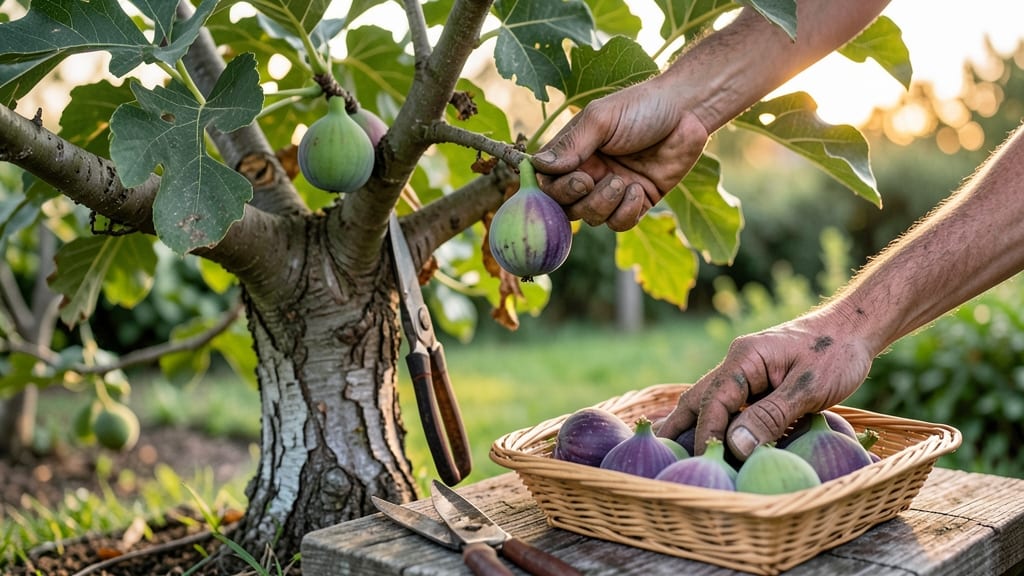
Knowing when to harvest figs transforms your fig harvest time from a guess into a sweet, flavor-packed victory 🍈.
Picture this: you bite into a fig that’s so ripe it practically melts in your mouth, its seeds rattling inside like tiny maracas. That’s the moment you’ve been waiting for—and missing it means bland, mealy fruit that falls short of delicious. The secret? Timing.
In USDA Zone 6, figs typically ripen between late August and October, but the real magic happens when you check for three telltale signs: skin that softens under gentle pressure, a deep, rich color (no more green), and a base that pulls away from the tree with a slight twist.
Ignore these cues, and you might end up with fruit that’s either too hard or already overripe.
Below, I’ll walk you through how to spot the perfect fig, adjust for your region, and even salvage slightly underripe (or overripe) fruit before it goes to waste. No more second-guessing—just peak flavor every time.

How to identify the exact fig harvest time by touch and sound
Figs are one of nature’s sweetest rewards—but only when picked at the perfect ripeness. Unlike many fruits that ripen off the vine, figs must be harvested at their peak for that burst of honeyed flavor.
The key? Using your hands and ears to detect subtle cues most gardeners miss. I’ve learned that mastering these sensory signals can turn a mediocre harvest into a flavor explosion.
Start by examining the skin texture. A ripe fig’s skin should yield slightly when pressed with your thumb—like the give of a soft peach. If it feels rock-hard, it’s too early.
If it’s mushy or leaves a thumbprint, it’s past its prime. This gentle pressure test is your first clue that the fig is ready to taste like sunshine.
Next, listen for the seed rattle. Gently shake the fig near your ear—ripe figs produce a faint internal rattling sound from the developing seeds. This happens because the gel-like interior thickens as sugars concentrate. An unripe fig stays silent, while an overripe one may feel hollow or squishy.
Color alone isn’t enough—some figs stay green until they’re nearly rotten! Instead, focus on consistent color across the entire fruit. A deep purple, brown, or yellow (depending on the variety) with no green patches is a clear ripeness signal. Pair this with the other cues for foolproof results.
| Ripeness Cue | What to Look For | Action |
|---|---|---|
| Skin Softness | Yields slightly to thumb pressure (like a ripe peach) | Harvest immediately |
| Seed Rattle | Faint rattling when shaken near ear | Pick within 24 hours |
| Color Consistency | Deep, uniform color (no green) | Ready for harvest |
| Base Detachment | Stem separates easily with slight twist | Perfect ripeness |
| Weight | Feels heavy for its size | Harvest now |
Don’t overlook the base of the fig. A ripe fig will detach easily when you gently twist it at the stem. If it resists, wait a day or two. This twist test is especially useful for varieties like Black Mission, which can stay firm longer than others.
Morning is the best time to harvest because figs are cooler and firmer. Avoid picking after a hot day—they’ll overheat in your hands and may bruise. I always carry a small basket lined with paper towels to prevent damage during transport.
One mistake I made early on was harvesting figs based on size alone. Some figs grow large but stay bland inside. Always combine three ripeness cues (softness, rattle, color) for accuracy. For example, a Brown Turkey fig might be brown but still hard—wait for the rattle.
Figs ripen quickly once picked, so don’t wait if they meet all the criteria. Store them at room temperature for up to 3 days or refrigerate to extend freshness. Overripe figs make great homemade jam or can be dried for winter snacks.
Pro tip: If you’re unsure, pick a few figs and taste one. The flavor will confirm whether you’ve nailed the perfect harvest window. With practice, you’ll develop an instinct for when figs are at their peak—turning every harvest into a sweet success.
Best times of year for fig harvesting by variety (early, mid, late season)
Figs aren’t one-size-fits-all when it comes to harvest time—variety matters. Early-season types like Brown Turkey ripen as early as July in warm zones, while late-season Black Mission figs may not reach peak ripeness until October or November.
Even within the same region, a 5-week difference can separate your first bite of sweetness from your last.
Your USDA zone also shifts these timelines. In Zone 6, expect harvests to start 2-4 weeks later than in Zone 8. For example, Kadota figs—known for their honey-like flavor—mature in mid-to-late August in Southern California but may wait until early September in the Midwest.
Always check your local first frost date to avoid losing your crop to cold snaps.
If you live in a cooler zone (Zone 5 or below), treat figs like tender perennials. Many varieties won’t survive winters without protection, so harvest all ripe figs before the first frost—even if they’re not fully colored.
In Zone 7 and warmer, you might get two harvests per year: one in early summer from spring crops and another in fall from main crops.
Pro tip: Container-grown figs ripen 1-2 weeks earlier than in-ground trees because they warm up faster. If your potted Chicago Hardy starts showing color in early August, start checking weekly—those green figs won’t wait forever to turn sweet.
Use a harvest calendar to track progress and avoid missing the window.
For urban gardeners, extend your harvest by choosing dwarf varieties like Little Miss Figgy, which ripens in late August and produces smaller, concentrated flavors.
Pair this with a south-facing wall to trap heat, and you’ll push your harvest into early October—just in time for fig jam season.
Remember: Overripe figs are still edible but lose their firm texture and sweetness. If your Black Mission starts dropping on its own, harvest immediately—these are ready to eat but won’t improve. Store them in the fridge to slow ripening if you can’t enjoy them all at once.