
Vegetables
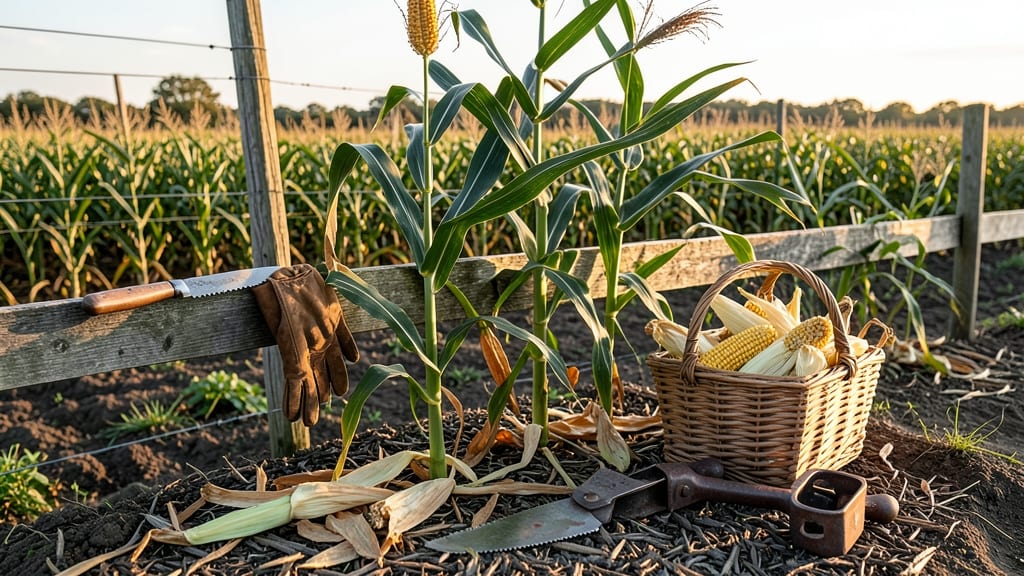
The harvest season for corn arrives in late summer to early fall 🌽, when silks turn brown and kernels reach peak sweetness—but timing is everything.
Picture this: you’ve spent weeks tending to your 🌽, and now the moment of truth is here. One wrong move, and you’ll end up with tough, starchy cobs instead of the juicy, buttery kernels you crave.
The difference between a perfect harvest and a disappointing one often comes down to knowing exactly when to pull those ears.
Corn doesn’t ripen all at once, so understanding the visual cues—like dry silks, plump kernels, and that milky liquid when pierced—is the key to nailing the harvest window. Plus, regional climate and corn variety play a huge role in when your crop is ready to pick.
In this guide, I’ll walk you through the best ways to spot ripe corn, avoid common mistakes, and even extend freshness so you can enjoy your garden’s bounty for weeks. Let’s get started!


How to determine the perfect harvest timing for sweet corn
Timing your corn harvest is an art that balances flavor, texture, and nutritional value. Sweet corn reaches its peak when kernels are packed with natural sugars but haven't converted into starch.
Missing this window means tough, dry cobs that lack the sweetness we all love. The key lies in understanding visual cues, kernel development, and how your local climate affects ripening.
Most sweet corn varieties take between 60 to 120 days to mature, depending on the type. Early varieties like 'Silver Queen' may be ready in 60-70 days, while super-sweet varieties like 'Ambrosia' can take up to 90 days.
Always check the seed packet for your specific variety's days to maturity, as this gives you a baseline. However, never rely solely on days—visual indicators are your true guide.
Weather plays a surprisingly large role in harvest timing. Cooler temperatures slow sugar conversion, giving you a slightly longer window to harvest. Hot, dry weather can cause sugars to convert to starch more quickly. If your area experiences a heatwave during the final weeks of growth, harvest earlier than usual to avoid tough kernels.
Now let's break down the visual indicators that tell you when your corn is perfectly ripe. These signs work together to give you the most accurate picture of harvest readiness.
| Harvest Indicator | Ready Stage | Not Ready Stage | Action |
|---|---|---|---|
| Silk Color | Brown and dry | Green and moist | Harvest within 1-2 days |
| Kernel Color | Full, plump, and creamy | Pale or translucent | Wait 2-3 more days |
| Kernel Test | Milky liquid when pierced | Clear or watery liquid | Harvest immediately |
| Husk Color | Green with slight yellowing at base | Bright green and tight | Check kernels in 1-2 days |
| Ear Weight | Feels heavy for its size | Feels light and hollow | Harvest if other signs confirm |
| Weather Impact | Cool mornings, warm days | Extended heatwave | Harvest 1-2 days early |
The silk drying is perhaps the most reliable early indicator. When the silks turn completely brown and begin to dry out, it signals that pollination is complete and the kernels are filling out.
However, don't wait until they're completely crispy—harvest when they're mostly dry but still slightly pliable. This usually happens about 20-30 days after pollination, depending on your climate.
Next, examine the kernels themselves. Gently press a kernel with your fingernail—if it releases a milky white liquid, it's ready to harvest. If the liquid is clear or watery, the corn needs more time.
Avoid kernels that feel hard or starchy when pressed, as these have already converted sugars into starch. The kernel color should be fully developed, not pale or translucent.
Don't overlook the husks, which can also provide clues. When corn is ready, the husks will have a slight yellowing at the base and may pull back slightly from the ear. However, if the husks are still bright green and tightly wrapped, the corn likely needs more time.
One pro tip: If you're unsure, harvest a few ears a day apart to test their readiness. This staggered approach ensures you don't miss the sweet spot.
Regional variations also affect harvest timing. In cooler climates like the Pacific Northwest, corn may mature more slowly, extending the harvest window into early fall. Meanwhile, in hotter southern states, corn often ripens more quickly, sometimes as early as late July.
Pay attention to your local first frost date—most sweet corn varieties won't survive a frost, so plan your harvest accordingly.
For super-sweet varieties, timing is even more critical. These hybrids contain genes that produce higher sugar levels, but they also convert sugars to starch more rapidly. Harvest these varieties earlier than standard sweet corn, often when the silks are just beginning to dry.
The kernel test is especially important for these types, as they can go from perfect to starchy in just 24-48 hours.
Once you've identified the perfect ear, harvest it properly to maintain
Sweet corn vs. field corn: when to harvest for best flavor and storage
Harvesting corn at the right moment makes all the difference between juicy, sweet kernels and dry, starchy cobs. But here’s the twist: sweet corn and field corn have completely different harvest windows and storage needs.
Sweet corn is all about capturing that peak sugar content, while field corn (like dent corn) is harvested when kernels reach their starchy maturity for long-term storage.
If you’re growing sweet corn varieties like Silver Queen or Peaches and Cream, you’ll want to pick when kernels are milky-white inside and silks turn brown—usually 18-24 days after pollination.
Field corn, on the other hand, needs to dry on the stalk or in storage until kernels reach a hard, dented appearance, signaling starch conversion. Let’s break down the key differences so you never miss the window.
Sweet Corn vs. Field Corn Harvest Guide
Sweet Corn
- Harvest Time: 18-24 days after pollination
- Kernel Stage: Milky-white when pierced
- Silk Color: Brown and dry
- Best For: Fresh eating, freezing, canning
🌽 Pro Tip: Harvest in morning for peak sweetness.
Field Corn
- Harvest Time: Late fall/winter (after frost)
- Kernel Stage: Hard, dented appearance
- Moisture Level: 12-15% for storage
- Best For: Animal feed, long-term storage
🌾 Pro Tip: Dry ears in sun or with fans before storage.
For sweet corn, timing is everything—harvest too early, and kernels stay underdeveloped; too late, and sugars convert to starch, turning sweetness into mealy texture. I recommend checking a few ears daily starting 20 days after pollination.
Twist a kernel between your fingers: if it’s creamy and slightly soft, it’s ready. For field corn, wait until kernels are hard and dented, usually after the first frost when moisture drops naturally.
Post-harvest care differs drastically too. Sweet corn should be eaten or frozen within 2-3 days to preserve flavor, while field corn needs drying to 12-15% moisture before storing in a cool, dry place.
I’ve learned the hard way—skipping this step leads to moldy cobs or sprouted kernels. For sweet corn, shock ears in ice water for 30 minutes before husking to slow sugar breakdown.
Regional climate plays a role too. In warmer zones (USDA 8-10), sweet corn may ripen earlier (late summer), while cooler zones (USDA 4-6) might see harvests stretching into early fall. Field corn, however, benefits from a frost or two to halt moisture and harden kernels.
Always monitor weather forecasts—hot, dry days can speed up sugar conversion in sweet corn, while humid conditions may delay field corn drying.
Proper storage extends your harvest’s lifespan. Sweet corn can be blanched and frozen for up to 12 months, while field corn should be husked and stored in mesh bags in a cool, dark place with good airflow.
I’ve had field corn last 6-12 months this way, ready for grinding into flour or animal feed. The key? Consistency in moisture control—whether you’re preserving sweetness or starch.
Don’t let your hard work go to waste—mastering these harvest windows turns your garden’s corn into a year-round resource, whether you’re boiling sweet ears or storing field corn for winter. Now grab those knives and enjoy the fruits (or kernels!) of your labor! 🌽