
How To
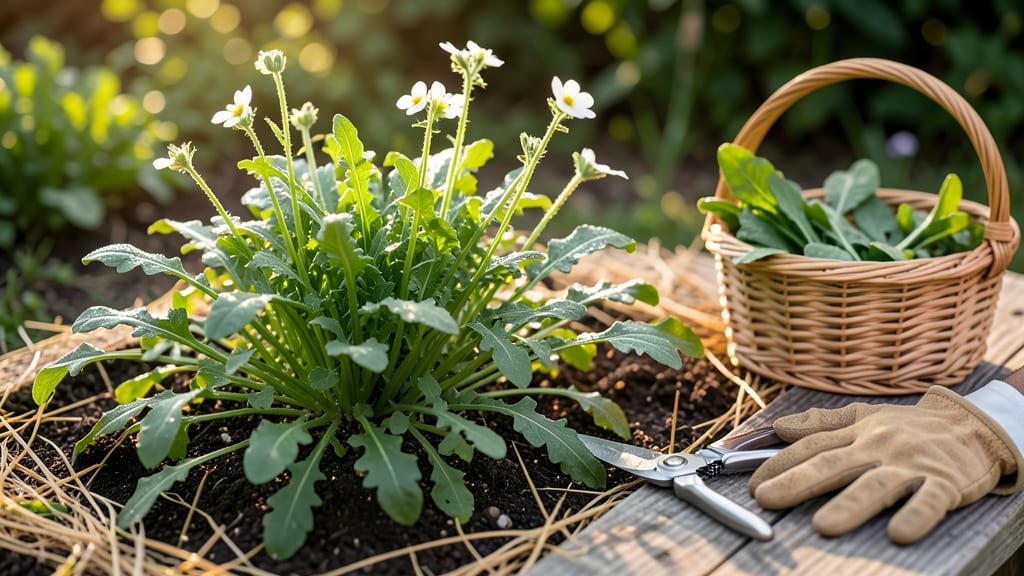
Harvesting arugula at the right time ensures crisp, peppery leaves packed with flavor—skip it, and you’ll end up with bitter, tough greens that go to waste.
Want crisp, peppery arugula straight from your garden? Harvesting at the wrong time means bitter leaves and wasted flavor—here’s how to pick the perfect moment every time.
This small but mighty 🌱 plant thrives when you cut leaves at 2–3 inches long, before it bolts (sends up flowers). Too late, and the taste turns sharp; too early, and you stunt the plant’s growth.
Below, I’ll show you the 3 exact signs your arugula is ready, plus the best way to snip or pick leaves to keep your patch producing all season.


3 Exact signs your arugula is ready for harvest (with visual clues)
Harvesting arugula at the right moment transforms your garden into a flavor factory. Too early, and you’re left with tiny, underdeveloped leaves. Too late, and you risk bitterness or bolting—when the plant sends up flower stalks instead of tender greens.
The key? Watch for these three visual cues that scream "harvest me now!"
First, let’s address the biggest mistake I see in home gardens: waiting until the plant looks "big enough." By then, it’s often too late. Arugula is a fast grower, but its flavor and texture peak at a specific window.
Miss it, and you’ll end up with leaves that taste more like mustard than peppery arugula. Here’s how to nail it every time.
🌱 How to Harvest Arugula: 3 Visual Clues
- 📏 Leaf Size: Harvest when leaves reach 2–3 inches long. This is the sweet spot for flavor and texture. Smaller leaves (<1 inch) are edible but lack that signature peppery kick.
- 🌿 Plant Height: Aim for a 4–6 inch tall plant. At this stage, the rosette is dense and leaves are fully unfurled. Taller plants risk bolting, especially in hot weather.
- 💚 Leaf Color & Texture: Look for deep green, crisp leaves. Avoid harvesting if leaves are yellowing or wilted—this signals stress or bolting. The texture should be tender, not tough.
Now, let’s talk about bolting, the arch-nemesis of arugula growers. This is when your plant suddenly shoots up a flower stalk, leaving you with tough, bitter leaves.
Bolting happens when arugula senses heat stress or maturity. To prevent it, plant in cool seasons (spring or fall) and harvest before leaves exceed 3 inches.
If you’ve already missed the window and your arugula is bolting, don’t panic. The flower stalks are edible—just blanch and chop them like you would broccoli rabe.
And if the plant is still producing lower leaves, keep harvesting those until they turn bitter. Regrowth is minimal at this stage, but you’ll get a few more harvests.
For continuous harvests, use the cut-and-come-again method: Snip the outer leaves at the base, leaving the inner leaves to regrow. This keeps the plant productive for 4–6 weeks in ideal conditions. Just avoid cutting more than 1/3 of the plant at once—this stresses the roots and can trigger bolting.
One more critical tip: Arugula’s flavor intensifies after a light frost. If you’re growing in fall, let a mild frost (28–32°F) sweep through before your final harvest.
The cold converts starches to sugars, giving your greens a sweeter, nuttier taste. Just avoid heavy freezes—your plants won’t survive!
Finally, store harvested arugula properly to preserve its freshness. Wrap leaves in a damp paper towel, place them in a sealed container, and refrigerate for up to 5–7 days. For longer storage, blanch and freeze—this locks in color and nutrients for up to 6 months.
Now that you’ve mastered the art of timing, your garden will always deliver crisp, peppery arugula at its peak. Happy harvesting! 🌱
Step-by-step arugula harvesting guide: cut vs. pick for maximum yield
Once your arugula reaches the perfect harvest window, the next step is deciding whether to pick individual leaves or use the cut-and-come-again method. Both techniques work, but the approach you choose affects your plant’s regrowth and overall yield.
I’ve tested both in my garden, and here’s what I’ve learned about timing, tools, and techniques for arugula that keeps coming back.
The cut-and-come-again method is ideal for continuous harvests—simply snip the outer leaves about 1 inch above the soil when they reach 2–3 inches long. This encourages the plant to produce more leaves, giving you a steady supply.
For smaller, frequent harvests, pluck individual leaves from the outer edges of the plant, leaving the inner leaves to grow. This method is gentler and works well for container-grown arugula.
How to Harvest Arugula: Step-by-Step
- 1 Choose your method: Decide between cut-and-come-again (for bulk harvests) or individual leaf picking (for smaller needs).
- 2 Use the right tools: Grab a pair of clean, sharp scissors or pruning shears to avoid crushing leaves. For individual leaves, use your fingers or thumb.
- 3 Harvest outer leaves first: For cut-and-come-again, snip 1 inch above the soil. For individual leaves, pluck from the outer edges to leave the center intact.
- 4 Avoid harvesting more than 1/3 of the plant: Over-harvesting stresses arugula and can lead to bolting (flowering) faster.
- 5 Water and fertilize after harvest: Give your arugula 1/2 inch of water and a light nitrogen feed (like compost tea) to encourage regrowth.
After harvesting, your arugula will regrow in 7–10 days if conditions are right. To maximize yield, keep the soil consistently moist and provide partial shade during hot afternoons.
If your plant starts to bolt (send up flower stalks), it’s time to harvest the remaining leaves immediately—they’ll turn bitter and tough as they mature.
Pro tip: If your arugula bolts but you still want to use it, harvest the flower stalks and leaves before they fully mature. The young flower buds are edible and add a mild, nutty flavor to salads.
Just avoid letting the plant go to seed, or you’ll lose your harvest to the next generation of volunteers!
With the right technique, you can enjoy fresh arugula from your garden for 6–8 weeks in spring and 4–6 weeks in fall. The key is consistency—harvest regularly, avoid over-picking, and your arugula will reward you with crisp, peppery leaves all season long. 🌿