
How To
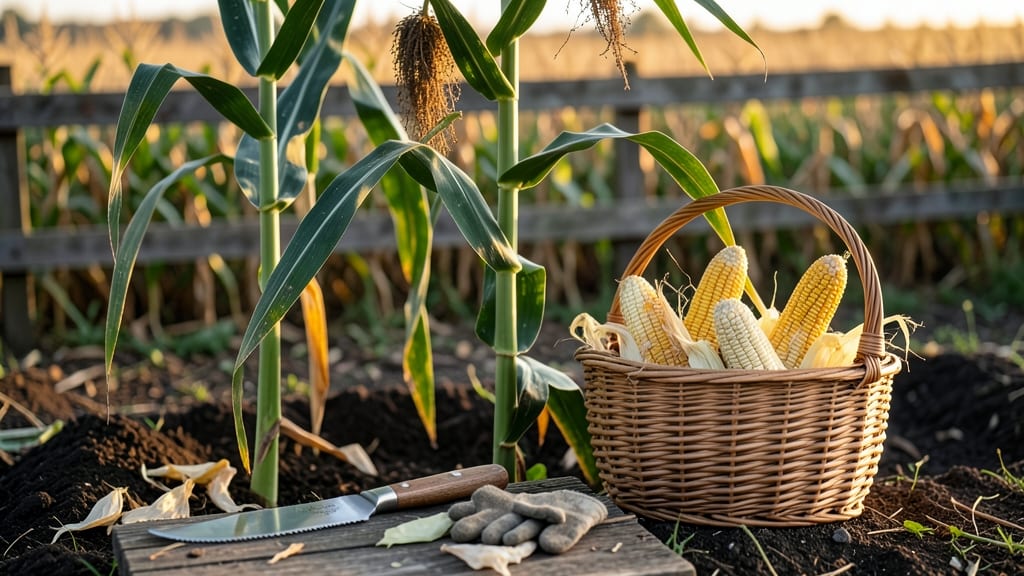
Harvesting corn at the right time means the difference between tender, sweet kernels and tough, starchy ears—and the exact number of days depends on your variety and growing conditions.
Picture this: you’ve been waiting months for those golden ears to ripen, only to pull one too soon and find it still hard as a rock. Or worse, you wait too long, and the kernels turn mealy and past their prime.
The good news? With a few simple checks—like silk color, kernel milkiness, and ear plumpness—you can nail the perfect harvest window every time.
Most home gardeners can expect to harvest sweet corn 60 to 90 days after planting, but field corn and popcorn take longer, often up to 120 days. Soil temperature, rainfall, and even your local last frost date can shift that timeline by weeks.
Below, I’ll break down the exact stages to watch for, how to adjust for your climate, and the one trick that keeps corn sweet for days after picking.
Ready to go from guesswork to a foolproof harvest? Let’s dive into the signs, science, and shortcuts that’ll have you pulling ears at peak flavor—no more, no less.

Exact corn harvest timeline by variety: sweet, field, and popcorn types
Harvesting corn at the right time ensures maximum sweetness and texture, whether you're growing sweet corn for fresh eating or field corn for storage. The days to harvest corn vary dramatically by variety, with some reaching maturity in as few as 60 days while others take 120 days or more.
Understanding these timelines helps you plan your garden layout and schedule your harvest for peak flavor.
Most corn varieties follow a predictable growth pattern: seeds sprout, plants develop tassels, silks emerge, and ears fill out. The key stages to watch are silk emergence (when pollination begins) and the kernel milk line (a telltale sign of harvest readiness).
For heirloom varieties, these stages may occur slightly later, so always check the seed packet for specific guidelines. My experience shows that even a few extra days can turn sweet corn starchy and tough.
| Variety Type | Common Varieties | Days to Harvest | Key Growth Stage | Harvest Tip |
|---|---|---|---|---|
| Sweet Corn | Silver Queen, Country Gentleman, Honey & Pearl | 60-90 days | Silks brown, kernels milky | Harvest in morning for peak sweetness |
| Super Sweet Corn | Ambrosia, Peaches & Cream, Bodacious | 70-85 days | Silks crispy, kernels plump | Freeze immediately after harvest |
| Field Corn | Pioneer Brand, Golden Bantam, Country Gold | 90-120 days | Leaves yellow, kernels hard | Dry ears completely before storage |
| Popcorn | Golden Bantam, Tom Thumb, Stowell's Evergreen | 85-110 days | Silks dry, kernels firm | Harvest when moisture is 12-14% |
| Heirloom Corn | Black Aztec, Cherokee White, Blue Gourd | 100-130 days | Silks crispy, kernels fully colored | Preserve kernels for traditional uses |
For sweet corn, the 60-90 day range is standard, but varieties like Silver Queen mature quickly, while Country Gentleman takes the full 90 days. The milk line test is my go-to method: pierce a kernel with your fingernail. If it oozes a milky liquid, it's ready.
If it's clear, wait a day or two. For super sweet corn, like Ambrosia, the sugars break down faster, so harvest within 24 hours of readiness for the best flavor.
Field corn varieties, such as Pioneer Brand, require more time—90-120 days—because they're grown for their starch content rather than sweetness. These varieties are perfect for grinding into cornmeal or feeding livestock.
The key difference is that field corn kernels should be hard and dry when harvested, not milky. I always wait until the leaves start yellowing and the husks feel papery to know it's time.
Popcorn varieties like Golden Bantam fall in the middle, with a 85-110 day harvest window. The challenge with popcorn is achieving the right moisture content—between 12-14%. Too much moisture, and it won't pop; too little, and it burns.
I use a kitchen scale to test moisture levels, but a simple pinch test works too: if the kernel feels firm but not brittle, it's ready.
For heirloom varieties, such as Black Aztec, patience is key—they often take 100-130 days to mature and reward you with stunning colors and flavors.
Soil temperature plays a surprising role in harvest timing. Cooler soils
How soil temperature affects corn harvest time: cold vs. warm climates
Soil temperature is the secret weapon for predicting your corn’s harvest window. While most seed packets list 60-90 days to maturity, those estimates assume ideal 70°F soil temps.
In reality, cooler soils in the Midwest can stretch that timeline by 2-3 weeks, while Southern gardeners might see harvests 10 days earlier thanks to warmer conditions. The key? Understanding how temperature shifts growth rates—and how to adjust your planting schedule accordingly.
Corn seeds won’t even sprout until soil hits 50°F, but true growth kicks in at 60°F. Below that, roots struggle to develop, and above 85°F, plants can bolt prematurely.
My Midwest garden (Zone 5) often waits until mid-May to plant, while friends in Georgia (Zone 7b) start in early April. The difference? 30°F warmer soils mean faster maturity and earlier harvests for them.
Here’s how soil temperature directly impacts your harvest timeline, with regional examples to help you calculate your own window:
| Soil Temp Range | Growth Rate | Days to Maturity (Sweet Corn) | Regional Example | Adjustment Tip |
|---|---|---|---|---|
| 50–59°F | Slow | 90–120 days | Midwest (May planting) | Use black plastic mulch to warm soil |
| 60–70°F | Moderate | 75–90 days | Pacific Northwest (June planting) | Plant early varieties like 'Ambrosia' |
| 70–80°F | Fast | 60–75 days | Southern U.S. (April planting) | Succession plant every 2 weeks |
| 80°F+ | Very Fast | 50–65 days | Arizona/California (March planting) | Provide afternoon shade to prevent bolting |
To calculate your local harvest window, start by checking your average soil temperature (use a soil thermometer or local extension service data). Then add 10–15 days to the seed packet’s maturity date if your soil runs 10°F cooler than 70°F, or subtract 5–10 days if it’s warmer.
For example, my Zone 5 garden plants 'Silver Queen' (70-day variety) in late May—by mid-July, the soil’s warmed enough for harvest, even though the packet says 70 days.
Pro tip: Warm soil speeds up the time between silk emergence and kernel development. In hot climates, silks may dry within 3–5 days of appearing, while in cool areas, they can take 7–10 days.
Track this interval—it’s your best real-time gauge for adjusting harvest timing. If silks linger past 14 days, your corn may need more phosphorus (try a side-dressing of bone meal).
For late-season adjustments, consider planting short-season varieties like 'Early Sunglow' (65 days) in cooler climates, or use row covers to extend the season by 2–3 weeks. In warm zones, focus on shade cloth during peak summer to prevent ears from drying out before maturity.
The goal? Match your variety’s needs to your soil’s natural rhythm.
🌽