
How To
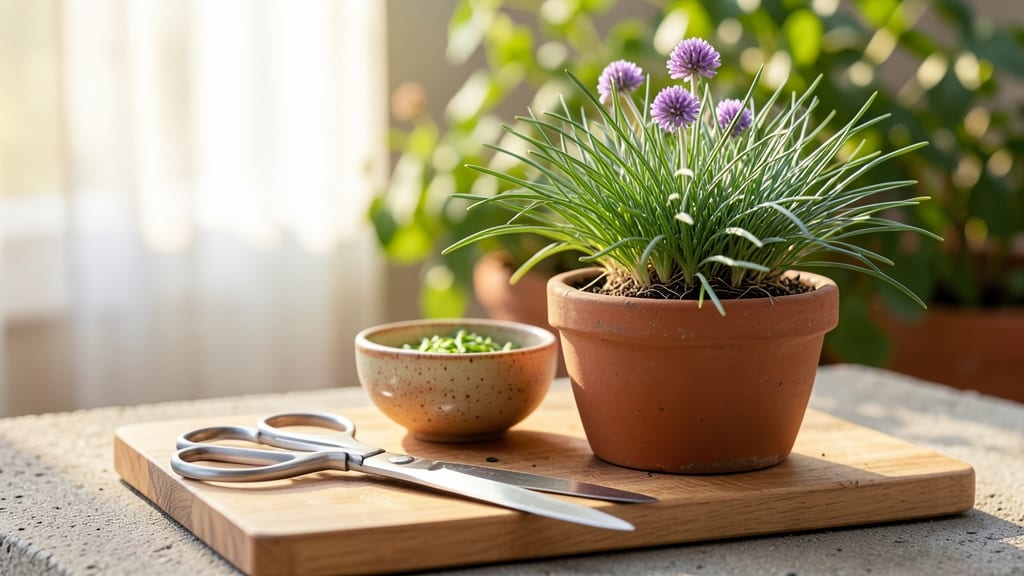
Harvesting chives correctly ensures a steady supply of fresh, flavorful greens without weakening your plant—here’s the fast way to do it right.
Chives are one of the fastest-growing herbs in your garden, but knowing when and how to harvest them correctly ensures a steady supply without sacrificing plant health—or ending up with hollow stems.
You’ll learn the exact signs to look for—like 6-inch stems and a slight hollow feel—plus the best tools and timing to keep your chives thriving all season long.
Whether you’re clipping for soups or drying for winter, these techniques will help you harvest multiple times without stressing your plants.


When to harvest chives: signs of readiness and optimal regrowth timing
Harvesting chives at the right time ensures a steady supply of fresh flavor without compromising the plant's health. The key is waiting until the stems feel hollow when gently squeezed—a sure sign they're ready.
This usually happens when chives reach 6-8 inches tall with fully elongated leaves and a bushy appearance. Timing your harvest correctly also encourages faster regrowth, so you can enjoy continuous harvests throughout the growing season.
Chives are perennial herbs, meaning they regrow year after year, but their harvest window is typically between late spring and early fall. In mild climates, you can even harvest year-round, but avoid cutting when temperatures drop below 40°F, as this can stress the plant.
The secret to maximizing yield is balancing when you harvest with how you do it—cutting too early or too aggressively can stunt growth.
⚠️ NON-NEGOTIABLE: Never harvest chives when they're flowering, as this diverts energy away from leaf production. The best harvest time is just before the plant sends up its purple flower stalks, which usually appear in late spring or early summer. If you let them flower, the leaves become bitter and less flavorful, and the plant may not recover as quickly for your next harvest.
| Harvest Indicator | Optimal Timing | Regrowth Timeline |
|---|---|---|
| Stem Height | 6-8 inches tall | 3-5 weeks to regrow |
| Leaf Color | Bright green, fully elongated | 2-3 weeks to new growth |
| Stem Feel | Hollow when squeezed | 4-6 weeks for full recovery |
| Plant Appearance | Bushy, healthy, no flowers | Ready for next harvest in 4 weeks |
| Seasonal Window | Late spring to early fall | Year-round in mild climates |
To encourage the fastest regrowth, harvest chives every 3-4 weeks during their peak growing season. This frequency gives the plant enough time to recover while keeping you stocked with fresh herbs.
If you're growing chives in containers or pots, you can harvest even more frequently—every 2-3 weeks—since they have less root space to recover from. Just be sure to never cut more than one-third of the plant at a time to avoid shocking the roots.
One of the most common mistakes gardeners make is harvesting chives too early, when the stems are still soft and not hollow. If you cut them before they're ready, the flavor will be milder and less potent, and the plant may take longer to bounce back.
Always check for the hollow stem test: gently squeeze the base of the stem—if it feels hollow, it's time to harvest. If it's still firm, wait another week or two.
For indoor chives, timing is slightly different because they don't experience seasonal changes. You can harvest them year-round as long as they're getting 6+ hours of sunlight daily. In this case, focus on the stem height and leaf color rather than the season.
Indoor chives may grow slightly slower, so you might only need to harvest every 4-5 weeks to maintain their health. Always use clean, sharp scissors to avoid damaging the plant.
If you're new to growing chives, start with a small batch and practice harvesting small clumps at a time to get a feel for the plant's regrowth cycle. Over time, you'll develop an intuition for when they're ready—usually, the bright green color and bushy growth are your best indicators.
With the right timing, you can enjoy a continuous supply of fresh chives from early spring through late fall, or even year-round in warmer climates.
Remember, chives are hardy perennials, meaning they'll come back year after year if cared for properly. The more you harvest them correctly, the stronger and more productive they'll become. Just avoid cutting them down to the ground, as this can weaken the plant and slow down regrowth.
Aim to leave at least 2-3 inches of stem after each harvest to keep the roots healthy and the plant thriving.
🌿
Step-by-Step chive harvesting techniques for maximum yield
Harvesting chives at the right time and with the right technique ensures you get plump, flavorful stems while encouraging rapid regrowth. Unlike many herbs, chives can be harvested multiple times per season—up to 10-12 cuts—if done correctly.
The key is to avoid cutting too close to the base or over-harvesting, which leads to hollow stems and stunted growth.
For both outdoor garden beds and indoor pots, the same principles apply: use clean tools, cut at the right height, and provide post-harvest care. Whether you're snipping for a fresh garnish or drying bundles, these techniques will keep your chives thriving all season long.
- 🌱 Step 1: Choose the Right Time
Harvest when chives reach 6-8 inches tall with 3-4 mature leaves. Avoid harvesting when plants are flowering, as this weakens regrowth. - 🪒 Step 2: Select Your Tool
Use sharp scissors or pruning shears for outdoor plants. For indoor pots, your clean fingers work fine—just pinch above the lowest leaf set. - ✂️ Step 3: Cut at the Base
Snip or pinch 1/3 above the soil line (never below). This leaves enough foliage for photosynthesis while encouraging new growth. - 💧 Step 4: Water Immediately After
Give chives a deep drink post-harvest to reduce stress. Outdoor plants may need 1 cup per plant, while indoor pots need soil-level moisture. - 🌿 Step 5: Fertilize for Regrowth
Apply a balanced 5-10-10 fertilizer 1 week after harvesting. For indoor chives, use half-strength liquid fertilizer to avoid burning roots. - 📅 Step 6: Space Harvests 3-4 Weeks Apart
Allow 4-6 weeks between cuts for full recovery. In mild climates, you can harvest every 3 weeks for continuous production.
If you're harvesting for drying or freezing, bundle stems and hang upside down in a dark, dry place for 1-2 weeks. For fresh use, store chives in the fridge wrapped in a damp paper towel for up to 2 weeks.
This preserves their bright green color and onion-like flavor.
Avoid cutting chives when they're stressed by drought or overcrowded, as this slows regrowth. If your chives develop hollow stems, reduce harvest frequency and increase fertilizer with potassium to strengthen stems.
With these techniques, your chives will stay productive all season, giving you a steady supply for soups, salads, and garnishes. Happy harvesting!