
How To
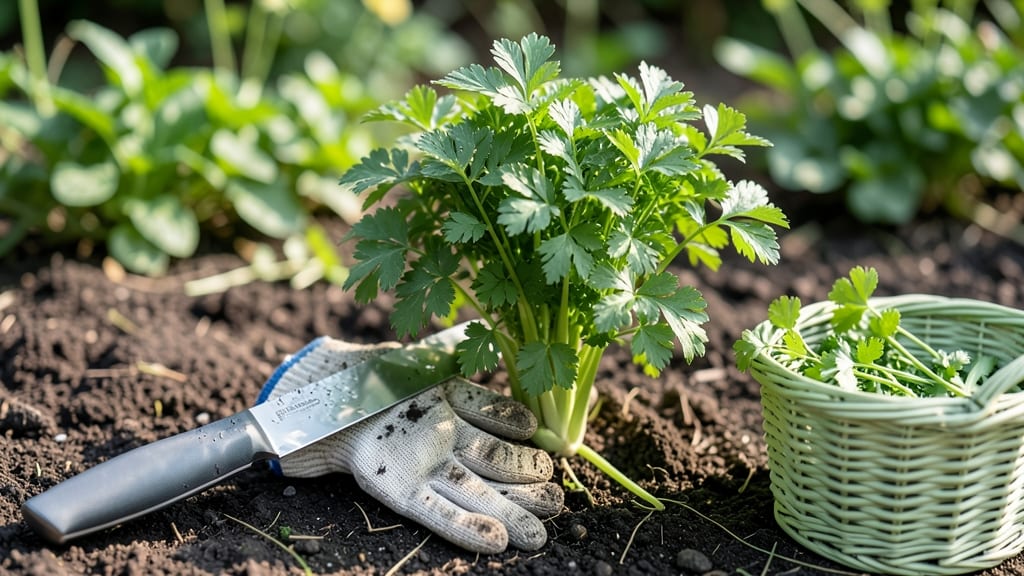
To harvest parsley properly, focus on timing and technique to keep your 🌿 parsley thriving and productive for months.
Fresh parsley isn’t just a garnish—it’s a versatile herb that thrives when harvested correctly, ensuring lush regrowth and maximum flavor. But timing, technique, and tools make all the difference between a bountiful harvest and a struggling plant.
If you’ve ever snipped parsley leaves only to watch the plant wilt or bolt, you know how frustrating it can be. The key is cutting at the right stage—when leaves are mature but before the plant flowers—and using the right tools to encourage bushier growth.
In this guide, I’ll walk you through the best times to harvest, step-by-step knife techniques to avoid damage, and post-harvest care tips to keep your parsley flourishing. Let’s get started!


Best times to harvest parsley for maximum regrowth & flavor
Timing your parsley harvest is everything—cut too early, and you’ll sacrifice flavor; wait too long, and you risk bitter leaves or flowering stems. The ideal harvest window depends on your seasonal planting and the maturity stage of your plants.
For spring-planted parsley, aim for June through September, while fall-planted varieties yield best from December to February. Understanding these windows ensures you get flavorful leaves while encouraging continuous regrowth.
Parsley thrives when harvested at the right leaf maturity. Look for flat, broad leaves that are 4-6 inches tall and deep green in color. These leaves are tender and flavorful, perfect for culinary use.
If you wait until the plant flowers, the leaves become woody and bitter, ruining their culinary potential. The key is to harvest regularly—about every 4-6 weeks—to maintain a steady supply of fresh, vibrant parsley.
Seasonal differences matter too. In spring, parsley grows quickly, so you can harvest more frequently. In fall, growth slows, but the flavor often intensifies. Avoid harvesting during extreme heat or cold, as these conditions stress the plant and can stunt regrowth.
Instead, focus on mild weather windows when temperatures are between 50°F and 75°F for optimal results.
| Harvest Stage | Leaf Characteristics | Best Time of Day | Seasonal Window |
|---|---|---|---|
| Early Growth | Small, curled leaves (1-2 inches) | Avoid harvesting | Spring/Fall (first 60 days) |
| Prime Harvest | Flat, 4-6 inch leaves | Morning (after dew dries) | June-Sept (spring) or Dec-Feb (fall) |
| Late Stage (Risk) | Woody stems, bitter taste | Avoid harvesting | Post-flowering (90+ days) |
| 🌿 Pro Tip: Harvest outer leaves first to protect the plant’s center! | |||
One of the biggest mistakes gardeners make is cutting too aggressively. Never remove more than one-third of the plant at once, or you’ll shock the roots and stunt future growth. Instead, focus on selective harvesting—trim the outer leaves and stems first, leaving the inner growth intact.
This method encourages bushier regrowth and keeps your parsley productive for months. Think of it like pruning a shrub: you want to shape the plant while preserving its vitality.
Morning is the best time of day to harvest parsley. The leaves are hydrated and crisp, and the flavor is most concentrated. Avoid harvesting in the late afternoon, when leaves can wilt quickly, or after rain, when they’re more prone to disease.
Always use clean, sharp scissors or pruners to make precise cuts—dull tools crush stems, inviting pests and infections. A sharp blade ensures clean cuts that heal faster, promoting healthier regrowth.
If you’re growing parsley in containers, timing becomes even more critical. Potted parsley has limited root space, so over-harvesting can lead to nutrient depletion and stunted growth.
In this case, reduce your harvest frequency to every 6-8 weeks and supplement with balanced fertilizer every 4-6 weeks during the growing season. Container-grown parsley also benefits from regular watering—keep the soil consistently moist but never soggy to prevent root rot.
Pay attention to the growth patterns of your parsley plants. If you notice leggy stems or yellowing leaves, it’s a sign the plant is stressed—likely from over-harvesting or poor light conditions. Adjust your harvesting schedule and ensure the plant gets 4-6 hours of sunlight daily.
Parsley is partial-shade tolerant, but too little light weakens the plant and reduces flavor. A sunny windowsill or dappled shade in the garden is ideal for maintaining healthy, flavorful growth.
For year-round harvests, consider planting parsley in two batches: one in early spring and another in late summer. This staggered approach ensures a continuous supply of fresh parsley, regardless of seasonal changes.
In USDA Zone 6a, spring-planted parsley matures by June, while fall-planted varieties are ready by December. With this strategy, you’ll enjoy homegrown parsley for nearly the entire year, minimizing store-bought gaps.
Finally, always harvest parsley before flowering. Once the plant bolts, the leaves become
Step-by-step knife techniques to harvest parsley without damaging the plant
Harvesting parsley with a knife instead of pinching leaves encourages bushier growth and prevents the plant from becoming leggy. A sharp knife gives you clean cuts and reduces stress on the plant, but the wrong technique can harm it.
I’ve found that using a serrated knife or clean pruners works best—just avoid dull tools that tear leaves.
The key to regrowth lies in where and how you cut. Always aim for the outer leaves first, leaving the inner growth intact. This method mimics natural pruning and stimulates new shoots.
If you cut too close to the base, you risk exposing the crown to rot or pests. I recommend stopping about 1/3 of the way down the stem to maintain balance.
How to Harvest Parsley Like a Pro
-
Step 1: Choose the Right Tool
Use a sharp chef’s knife or clean pruners. Avoid scissors—they crush stems. -
Step 2: Locate the Cutting Zone
Focus on outer stems with 4-6 mature leaves. Avoid cutting into the center rosette. -
Step 3: Angle Your Cut
Hold the knife at a 45-degree angle to prevent water from pooling on the stem. -
Step 4: Make the Cut
Snip 1/3 of the stem, leaving 2-3 inches above the next leaf node. -
Step 5: Repeat Strategically
Harvest every 3-4 weeks, never taking more than 1/3 of the plant at once.
One common mistake I see is cutting too close to the base, which can expose the plant to disease. Always leave at least 2-3 inches of stem above the next set of leaves.
This ensures the plant has energy reserves to regrow. Another pro tip: harvest in the morning when leaves are hydrated and flavors are most concentrated.
After harvesting, rinse the leaves gently under cool water to remove dirt, but avoid soaking them—this can cause wilting. Store parsley in a sealed container with a damp paper towel to retain freshness for up to a week.
If you’re growing parsley in containers, be extra cautious with cuts to avoid overcrowding.
For bushier growth, I recommend harvesting outer stems first and working your way inward. This encourages the plant to fill out rather than grow tall and sparse.
If your parsley starts looking leggy or sparse, it’s a sign you’ve been cutting too aggressively. Adjust your technique and give it time to recover.
With these knife techniques, your parsley will stay healthy and productive for months, giving you a steady supply of fresh leaves for cooking and garnishes. Happy harvesting! 🌿✂️🌱