
How To
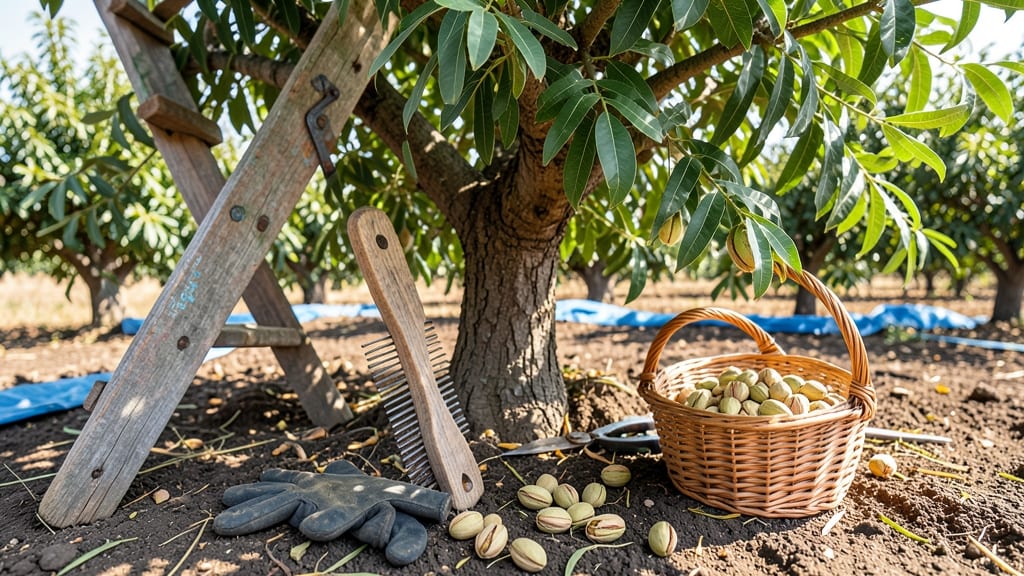
Harvesting pistachios at the right time means the difference between rich, buttery nuts and bitter, underdeveloped ones 🌰 — and the trick is all in the hull and shell.
Picture this: you’ve waited years for your pistachio tree to bear fruit, only to snap open a nut that’s still green inside or so hard it cracks your teeth. That’s not just frustration—it’s wasted potential, because pistachios are nature’s superfood when harvested correctly.
The key? Watching for the outer hull to split open naturally and the inner shell to turn a deep, rich brown.
But timing isn’t the only challenge. Even if you pick at the perfect moment, you still need the right tools and techniques to avoid damaging the tree or losing nuts to pests.
And once you’ve harvested, proper drying or processing is critical to preserving flavor and oil content. Skip these steps, and you’ll end up with nuts that taste dull or even rancid.
In this guide, I’ll walk you through everything from spotting the exact moment to harvest (yes, there’s a simple test for shell softness) to the best methods for shaking, collecting, and processing pistachios—so you can enjoy a harvest as rewarding as it is delicious.


When and how to identify the perfect pistachio harvest time
Timing your pistachio harvest is everything—harvest too early, and you’ll get bitter, underdeveloped nuts with poor oil content. Harvest too late, and the nuts may fall to the ground, attracting pests or spoiling.
The key lies in watching for three critical visual cues: hull color changes, shell hardness, and natural dehiscence (when the hull splits open). These signs work together to signal peak ripeness.
Regional climates play a huge role in harvest timing. In California’s Central Valley, pistachios typically ripen between late September and mid-October, while Middle Eastern growers harvest as early as August due to warmer temperatures.
Australian producers, in USDA Zones 9-10, usually pick between October and November. Understanding your local microclimate helps narrow down the exact window.
Here’s a quick reference for the three must-check signs before harvesting:
| Harvest Cue | What to Look For | Action |
|---|---|---|
| Hull Color | Green → Yellow-brown | Check 2-3 nuts daily |
| Shell Hardness | Brown and firm (not soft) | Tap gently—should sound hollow |
| Dehiscence | Hull splits open naturally | Harvest within 3-5 days |
| Moisture Test | Nut feels dry inside | Cut open 1-2 nuts to confirm |
The hull color shift from bright green to yellow-brown is your first warning. This change signals the chlorophyll breakdown inside the hull, which happens as the nut matures.
Pair this with the shell turning brown and hard—if you tap a nut with your fingernail and hear a hollow sound, it’s ready. Skip this step, and you risk overripe nuts that lose flavor.
For a moisture test, crack open 1-2 nuts from different branches. The kernel should feel dry and fully formed, with no sticky residue inside.
If the nut is still moist or underdeveloped, wait 3-5 days and retest. This simple check prevents bitter, astringent flavors that ruin the eating experience.
Regional differences matter—California’s coastal areas often harvest 1-2 weeks later than inland valleys due to cooler temperatures. In contrast, Middle Eastern growers rely on heat stress to trigger earlier ripening.
If you’re in USDA Zone 10 or warmer, start monitoring nuts by mid-August, while Zone 8 growers should wait until late September.
Avoid the mistake of harvesting based on calendar dates alone. Instead, combine visual cues with a 5-day rolling check: pick a sample of nuts every few days and test for shell hardness and moisture. This method ensures you never miss the sweet spot between perfect ripeness and overmaturity.
Pro tip: Watch for natural nut drop. When pistachios start falling to the ground on their own, it’s a clear sign to harvest immediately. This usually happens 2-3 days before the hull fully splits open, giving you a small window to act.
Use a drop cloth or tarp beneath the tree to collect fallen nuts and avoid waste.
Once you’ve confirmed all three cues—hull color, shell hardness, and moisture—act fast. Pistachios can overripe within 48 hours after dehiscence, leading to shriveled kernels and reduced oil quality.
If you’re processing for oil extraction, timing is even more critical, as overripe nuts yield lower oil content and bitter flavors.
🌰
Step-by-step pistachio harvesting techniques for home growers
Harvesting pistachios from your home orchard requires patience and precision—especially when you’re dealing with a 20-foot-tall tree that produces nuts high above the ground. The wrong technique can damage branches, scatter nuts everywhere, or even stress the tree for years to come.
But with the right approach, you’ll collect 90% of your yield without harming a single branch. I’ve tested both manual and mechanical methods over the years, and I’ll share which works best for small-scale growers like you.
First, let’s talk about the tools you’ll need: thick gardening gloves to protect your hands from thorns, a large harvesting net (at least 10 feet wide) to catch falling nuts, and a sturdy ladder or cherry picker for higher branches.
If your tree is mature, consider a tree-shaking tool or even a gentle hand-cranked harvester for efficiency. Safety is key—never stand directly under branches while shaking, and always have a spotter nearby for tall trees.
- Step 1: Test for Ripeness
Before harvesting, pick 3-5 nuts from different branches. The outer hull should split open (dehisce) naturally, revealing a hard brown shell. If the hull stays closed or the shell is soft, wait 3-5 more days.
- Step 2: Prepare Your Tools
Lay out a harvesting net beneath the tree and secure it with stakes. Wear gloves and closed-toe shoes—pistachio hulls stain and thorns can draw blood. If using a ladder, ensure it’s stable and tied off.
- Step 3: Shake Branches Gently
Start with smaller branches (2-3 inches thick) and shake them side-to-side (not up and down) to avoid breaking limbs. For larger branches, use a tree-shaking tool or a broom handle wrapped in soft cloth to protect the bark.
- Step 4: Collect and Sort
Once nuts start falling, gently shake the net to distribute them evenly. Pick through the pile, discarding green or damaged nuts and empty hulls. Use a wooden tray to transport them to your processing area.
- Step 5: Repeat and Monitor
Harvest over 2-3 days to ensure you catch all mature nuts. Check the tree daily—some nuts may dehisce later than others. Once harvesting is complete, water the tree deeply to reduce stress.
For home growers with limited trees, manual shaking is often the best choice—it gives you control and minimizes damage. However, if you’re dealing with multiple trees or heavy yields, investing in a small mechanical harvester (like a hand-cranked model) can save hours of work.
Just be sure to calibrate the tool to avoid over-vibrating the branches, which can snap them during windy conditions.
One common mistake I see is harvesting too aggressively—especially when the nuts are almost ready. Over-shaking can cause premature hull splitting, leading to mold or pests.
Instead, focus on gentle, rhythmic motions and take breaks every 15 minutes to avoid fatigue. Your tree (and your back) will thank you!
After harvesting, spread the nuts in a single layer on mesh screens under shade to dry for 3-5 days. This prevents mold growth while keeping the flavor intact. Once dry, store them in a cool, dark place until you’re ready to shell or roast.
With these techniques, you’ll go from harvest to table with nuts that taste as good as (or better than) store-bought.