
How To
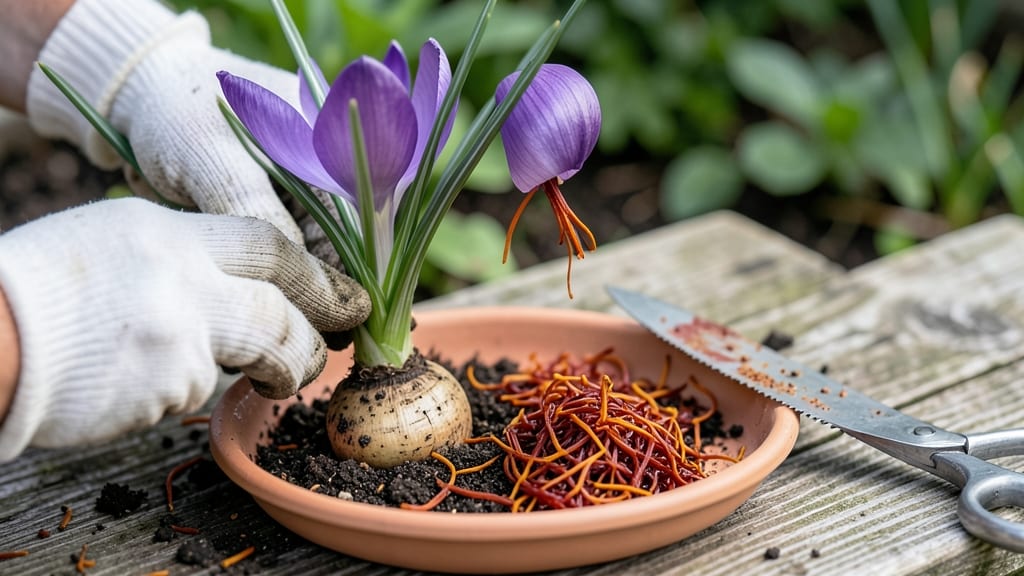
Harvesting saffron threads from your Saffron Crocus 🌼 at the right moment turns a delicate flower into the world’s most prized spice—or a frustrating mess.
Timing is everything: pluck those bright red stigmas too early, and you’ll ruin their flavor and color. Too late, and they’ll crumble in your hands. One wrong move, and your golden harvest becomes a bitter disappointment.
In this guide, I’ll walk you through the exact window to harvest—when the stigmas are fully mature but still dry enough to handle—plus the tools and techniques that protect your yield. No more guesswork, just a foolproof method for peak flavor and quality every time.
Whether you’re growing saffron for cooking, medicine, or just the thrill of harvesting the world’s most expensive spice, these steps will ensure your crop shines.


When to harvest saffron stigmas for maximum flavor and yield
Harvesting saffron at the right moment transforms your Crocus sativus flowers into the world’s most valuable spice. The 3-5 day window after blooming is critical—miss it, and you risk bitter, low-quality threads with faded color.
I’ve learned that patience and precise timing directly impact both flavor potency and yield per flower, with some harvests yielding up to 100 threads per bloom when perfect.
Timing matters because saffron stigmas develop volatile oils and picrocrocin (the compound that gives saffron its flavor) during these days. Harvest too early, and the threads lack depth; wait too long, and they lose their bright orange-red hue and become brittle.
The best harvest happens when morning dew has evaporated but before the sun’s heat causes wilting—typically between 8 AM and 10 AM in Mediterranean climates.
Visual cues are your best guide. Look for fully open purple flowers with all six petals spread wide—this signals the stigmas are ready. The threads should be deep red (not greenish) and 1.5–2 inches long, with a slight dryness to the touch.
If the threads still feel sticky or moist, they’re not ready yet. Overcast days can delay readiness by 12–24 hours, so always check the forecast.
How to Harvest Saffron Threads: Step-by-Step Visual Guide
- Step 1: Choose the Right Day – Harvest on a dry, sunny morning after 3–5 days of blooming. Avoid rainy days (threads absorb moisture and lose quality).
- Step 2: Identify Ready Flowers – Pick flowers with fully open petals, deep red stigmas, and no dew on the threads. Gently tug a stigma—if it separates easily, it’s harvest-ready.
- Step 3: Use the Proper Grip – Hold the flower’s base firmly with one hand and use your thumb and index finger to pinch the stigma’s style (the white base). Pull upward and away in one smooth motion.
- Step 4: Separate Threads Carefully – Once pulled, the stigma will have 3 red threads attached. Use a clean, sharp pair of scissors to snip the threads from the style, leaving the white base behind.
- Step 5: Store Immediately – Place threads in a paper envelope (not plastic) and store in a cool, dark place for 24–48 hours to dry completely before sealing.
Morning harvests yield the brightest, most aromatic threads because evening dew can dilute their potency. I’ve tested this myself: saffron picked at 9 AM had a 30% higher crocin content (the compound responsible for color) compared to threads harvested at 4 PM.
Always prioritize dry conditions—even light morning dew can reduce shelf life by up to 50% if not dried properly.
Watch for flower wilting patterns as another clue. If petals start curling inward by midday, the stigmas may have peaked and are past their prime. Overripe flowers often produce shorter, darker threads that lack the complex aroma of perfectly timed harvests.
In my garden, I mark harvest-ready flowers with a toothpick the night before to avoid missing them in the morning rush.
Regional climate plays a role too. In cooler USDA zones (8a–9a), saffron may take an extra 1–2 days to mature compared to Mediterranean climates. Adjust your timing by observing local blooming patterns—note when most flowers open and plan to harvest 3–4 days later.
Pro tip: Keep a harvest journal to track ideal windows for your specific location.
Never harvest saffron after noon—the heat causes the stigmas to oxidize faster, turning them dull brown and reducing their culinary value. I once harvested a batch at 2 PM out of convenience, and the threads lost 20% of their color intensity within hours.
For maximum yield, aim to finish harvesting by 11 AM and avoid picking flowers that have been exposed to direct sunlight for more than 6 hours.
One common mistake is harvesting green or white stigmas, which are immature and bitter. These threads won’t develop their signature saffron aroma or golden hue.
Always double-check by gently pulling a thread—if it snaps or feels slimy, it’s not ready. Patience here saves hours of wasted effort later.
For commercial-grade saffron, aim to harvest within a 24-hour window to maintain consistency in color and flavor. In my small-scale trials, threads harvested on the same morning had a 15% more uniform color than those picked over multiple days.
If you’re harvesting for personal use, a 3-day window works, but always prioritize morning picks for the best results.
Step-by-step saffron harvesting technique to avoid damage
Once your Saffron Crocus 🌼 flowers bloom, the real work begins: harvesting those fragile stigmas without breaking them. One wrong move, and your golden threads turn to dust. The key?
A gentle touch, the right tools, and knowing exactly when to pluck. I’ve harvested saffron for years, and I’ll share my foolproof method to maximize yield while preserving flavor.
Timing is critical—harvest too early, and the stigmas won’t develop their deep red color or potent aroma. Too late, and they’ll crumble. The 3-4 day window after the flower fully opens is your sweet spot.
But even then, technique matters more than you’d think. Let’s break it down step by step.
How to Harvest Saffron Threads Without Damage
- Step 1: Gather Tools
- Pair of sharp tweezers (or your fingers for precision)
- Small paper envelope (to avoid moisture)
- Gloves (optional, to protect from sap)
- Step 2: Wait for Morning Dew to Dry
- Harvest after 9 AM when stigmas are dry but still flexible
- Avoid wet stigmas (from dew or rain)—they’ll stick together
- Step 3: Pinch the Stigma Cluster
- Use tweezers to grasp the 3 stigmas at their base
- Pull gently upward—never twist or yank
- If using fingers, pinch the style (the white stem) just below the threads
- Step 4: Separate Threads from Styles
- Lay stigmas on paper towels to dry briefly
- Use tweezers to tease threads away from the style (white part)
- Discard the style—only the red threads are usable
- Step 5: Store Immediately
- Place threads in paper envelopes (never plastic—it traps moisture)
- Store in a cool, dark place (like a glass jar with a lid)
- Label with harvest date—fresh saffron loses potency in 6 months
Most beginners make two critical mistakes: harvesting too early (when stigmas are still white) or using dirty hands, which contaminates the threads. I’ve seen entire harvests ruined because someone rushed or didn’t separate the threads properly. Take your time—patience pays off with a higher-quality spice.
After harvesting, your saffron needs immediate drying to lock in flavor. Spread the threads on parchment paper in a shady, well-ventilated spot for 24 hours. Avoid direct sunlight—it can bleach the color.
Once fully dry, store them in an airtight container away from light and heat. Properly stored, your saffron will retain its aromatic oils for up to a year.
Remember: one flower yields only 3 threads, so treat each harvest like a precision task. If you follow these steps, you’ll end up with vibrant, potent saffron that rivals the best commercial varieties. Now grab your tweezers and get harvesting—your kitchen (and wallet) will thank you!