
How To
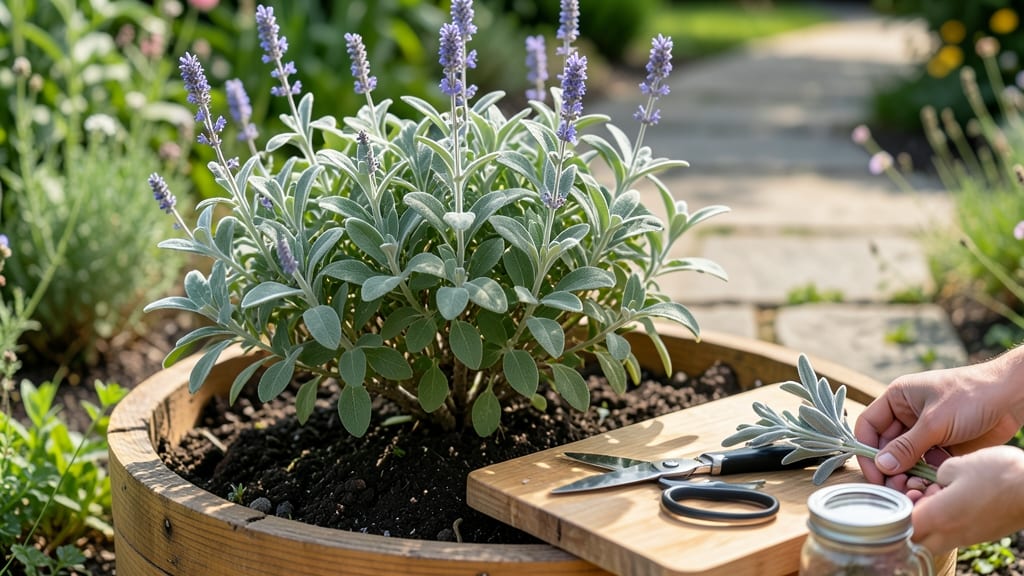
To harvest sage so it keeps growing, focus on trimming just above a leaf node before the plant flowers—this encourages bushier, healthier regrowth.
Picture this: you snip a few leaves, expecting fresh herbs for your next meal, only to watch your sage turn woody and sparse. That’s the difference between a mindful harvest and a plant that struggles to bounce back.
Sage thrives when you cut it at the right time—summer to early fall—and avoid over-pruning. The key is patience: never take more than one-third of the plant at once, and always use clean, sharp shears to prevent damage.
In this guide, I’ll walk you through the exact steps, from when to trim to how to care for your sage afterward so it stays lush, fragrant, and ready for your next harvest.


When and how to harvest sage for continuous growth
Harvesting your sage plant at the right time isn’t just about collecting fresh leaves—it’s about encouraging new growth for years to come. The key lies in understanding when to trim and how to prune without stressing the plant.
Sage thrives when you follow its natural growth cycle, particularly by harvesting before flowering and focusing on specific stems.
Sage produces its most flavorful leaves when it’s actively growing, which means avoiding cuts during dormant seasons or when buds form. If you wait too long, the plant redirects energy toward flower production, leaving your leaves bitter and stunted.
Instead, aim to harvest in late spring or early summer when stems are woody but flexible and leaves are fully developed.
Here’s the science behind it: Sage grows best when you remove 1/3 or less of its foliage at a time. This mimics natural pruning and stimulates bushier growth. If you cut too aggressively, you risk exposing the central stem to sunlight, which can scorch it or invite pests.
Think of it like giving your sage a haircut—just enough to shape it, not enough to bald it!
How to Harvest Sage for Continuous Growth
- Timing is everything: Harvest in late spring or early summer, before flowers appear. This ensures the plant focuses on leaf growth, not seed production.
- Choose the right stems: Select non-flowering stems that are at least 6-12 inches tall. Avoid cutting the central leader stem—this keeps the plant balanced.
- Use clean, sharp tools: Grab bypass pruners or scissors and make cuts at a 45-degree angle, about 1/4 inch above a leaf node.
- Trim strategically: Cut just above a set of healthy leaves (not bare wood) to encourage new shoots to sprout from that node.
- Never harvest more than 1/3: Remove only 1/3 of the plant’s foliage per session to avoid shocking it. Spread harvests over 2-3 weeks if needed.
- Post-harvest care: Water deeply after harvesting to reduce stress, and avoid fertilizing for 4-6 weeks to let the plant recover.
When harvesting, focus on the outer stems first. These are the oldest and least critical for the plant’s structure. By prioritizing them, you allow the inner, younger growth to mature and take over.
This method also improves airflow, reducing the risk of fungal diseases like powdery mildew, which loves dense, humid foliage.
Another pro tip: Harvest in the morning after dew dries. The leaves will be most aromatic and hydrated, making them ideal for cooking or drying. Plus, trimming in the morning gives the plant the entire day to recover before nightfall stress sets in.
If your sage is potted, container-grown plants can handle slightly more frequent harvesting—every 2-3 weeks—as long as you follow the 1/3 rule. Just ensure the pot has drainage holes to prevent root rot, which can be triggered by over-harvesting combined with poor drainage.
For outdoor garden beds, mark your harvesting spots with stakes or flags to avoid over-pruning the same area. Rotate your harvest zones to keep the plant evenly balanced and prevent bare patches. This also makes it easier to spot new growth as the season progresses.
Finally, pay attention to your sage’s regrowth signals. Within 2-3 weeks of a proper harvest, you should see new shoots emerging from the leaf nodes where you cut. If growth stalls, it’s a sign you’ve over-harvested or the plant needs more sunlight or nutrients.
With the right timing and technique, your sage will reward you with abundant, flavorful leaves season after season—no bitter surprises here! 🌿✂️🌱
Common mistakes that kill sage growth after harvesting
Even with perfect harvesting techniques, your sage can still struggle if you make these critical mistakes. I’ve seen gardeners accidentally turn their thriving sage into a woody, sparse bush by ignoring simple post-harvest care. The good news? These errors are easy to avoid once you know what to watch for.
One of the biggest killers is over-pruning. Cutting more than one-third of the plant at once shocks the sage, leaving it vulnerable to stress and disease.
I’ve had clients prune their entire sage bush back by half, only to watch it take months to recover—or worse, never bounce back at all.
Another common mistake is harvesting at the wrong time of year. Trimming in late summer or fall, when sage is preparing for dormancy, forces the plant to divert energy to survival instead of regrowth. Even worse, cutting during flowering season turns your leaves bitter and stunts future harvests.
⚠️ How NOT to Harvest Sage
- ✂️ Cutting more than 1/3 of the plant at once—this stresses the sage and stunts regrowth.
- 🌸 Harvesting during flowering—this shifts energy to seed production, making leaves bitter.
- 🌧️ Trimming after rain—wet leaves spread disease faster when cut.
- 🔥 Using dull shears—ragged cuts invite pests and slow recovery.
- 🌱 Ignoring post-harvest care—skipping water or fertilizer after cutting can leave the plant weak.
Many gardeners also make the mistake of neglecting post-harvest care. After harvesting, your sage needs immediate attention: deep watering to compensate for lost foliage and a 4-6 week break from fertilizer to let it recover.
I’ve seen sage plants wilt dramatically after harvest because they weren’t given enough water to rebound.
Finally, cutting the central stem is a silent growth killer. This is the plant’s main structural support, and removing it leaves sage vulnerable to flopping over or drying out. Always trim outer stems first to maintain balance and encourage bushier growth from the center.
To keep your sage thriving, remember these three rules: harvest before flowering, never take more than 1/3, and always water deeply afterward. With these adjustments, your sage will stay lush, fragrant, and ready for your next harvest—season after season! 🌿✂️💧