How To
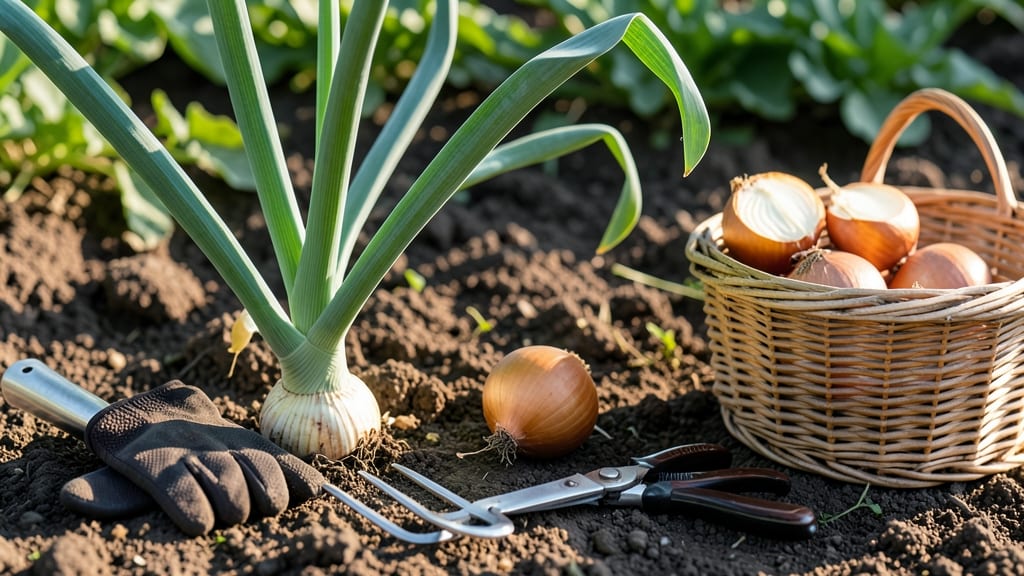
Telling when to harvest onions means catching them at the perfect moment—when flavor peaks and storage life begins.
Picture this: you’ve nurtured your 🧅 all season, but pull them too soon and you’re left with puny bulbs. Wait too long and they split or rot. The key? Watching for those telltale signs—yellowing tops, papery skins, and a bulb that feels firm but gives slightly when squeezed.
Timing matters even more if you’re growing long-day vs. short-day varieties. Late summer is prime for most onions in Zone 6a, but regional climate shifts that window. Miss it, and you risk flavorless harvests or wasted effort.
Below, I’ll walk you through the four foolproof signs to nail your harvest, plus how to cure and store them for months. No more guesswork—just perfect onions every time.


4 Visual signs your onions are ready for harvest (with photos)
Knowing exactly when to harvest onions can make the difference between sweet, storable bulbs and bland, soft ones. Storage onions and green onions (scallions) mature at different times, so I’ll show you how to spot each type’s readiness.
The key is watching for these four visual cues that signal your onions are finally ready to pull.
First, leaf color is your best friend. For storage onions, the tops turn a straw-yellow color and begin to flop over. This happens naturally as the plant redirects energy from leaves to the bulb.
Green onions, however, stay bright green until harvested—so if your onions are still green and growing, they’re not ready yet.
Next, check the bulb size by gently brushing away soil. Mature storage onions should be 2-3 inches in diameter and feel firm when squeezed. If they’re smaller than a golf ball, they need more time.
Green onions, on the other hand, are ready when their stems are 1/4-inch thick and the white bulb is 4-6 inches long.
Now, let’s talk about the neck thickness. For storage onions, the neck (the part connecting the bulb to the leaves) should shrink and dry out.
This is your cue that the bulb is fully developed. Green onions don’t have this neck—just a continuous stem—so this sign only applies to storage varieties.
Finally, examine the skin texture. Ready-to-harvest storage onions have a papery, dry skin that peels easily. If the skin is still glossy or tight, the bulb isn’t mature. Green onions don’t develop this papery skin, so focus on their stem and bulb size instead.
| Sign | Storage Onions | Green Onions (Scallions) |
|---|---|---|
| Leaf Color | Straw-yellow, flopping over | Bright green, upright |
| Bulb Size | 2-3 inches in diameter | Stem 1/4-inch thick, 4-6 inches long |
| Neck Thickness | Shrinks, dries out | No neck—continuous stem |
| Skin Texture | Papery, dry, peels easily | Smooth, no papery skin |
If you’re still unsure, do a quick soil check. Gently dig up one onion and examine the bulb. If it’s firm and well-rounded, it’s ready. If it’s soft or still small, leave it in the ground for another week.
Remember, onions harvested too early won’t store well, but those left too long may split or rot.
Timing matters too! Long-day onions (like Yellowstone or Sweet Spanish) mature in late summer (August-September), while short-day onions (like Texas Early White) are ready in early summer (June-July). Check your variety’s days-to-maturity label for a general idea, but always rely on visual cues for the final call.
Once you’ve confirmed your onions are ready, harvest on a dry, sunny day to speed up curing. Use a fork to loosen the soil, then gently pull the onions.
Shake off excess dirt and let them cure in a shady, well-ventilated spot for 2-3 weeks. This step is crucial for storage life—skipping it leads to soft, moldy onions.
Pro tip: If you’re growing onions for immediate use (like cooking), you can harvest green onions anytime their stems are tender. But for long-term storage, wait for all four signs above. Trust me, the extra patience pays off with onions that last all winter!
Now that you know what to look for, grab your gardening gloves and head outside. Your perfect harvest is just a few visual checks away! 🧅
When to harvest onions for best flavor: green vs storage varieties
Harvesting onions at the wrong time can mean the difference between sweet, flavorful bulbs and bitter, shriveled disappointments. The key? Knowing whether you're growing green onions (scallions) for quick use or storage onions for long-term keeping. Each type has its own perfect harvest window—and missing it means wasted effort.
Green onions thrive when harvested young, while storage onions need full maturity. For green onions, you can snip what you need every few weeks, but storage onions demand patience. Let’s break down the critical differences so you never guess again.
🌱 PROS-CONS BOX: HOW TO TELL WHEN ONIONS ARE READY
Green Onions (Scallions)
- Harvest anytime after 4-6 weeks
- Snip outer leaves to keep growing
- Mild, fresh flavor when young
- No storage life if pulled mature
- Overgrowth makes leaves tough
- Requires frequent harvesting
Storage Onions
- Stores for 6-8 months if cured properly
- Deeper, sweeter flavor when mature
- One-time harvest for bulk use
- Must wait 100+ days for maturity
- Late harvest risks splitting or rot
- Requires proper drying/curing
For green onions, watch for 6-inch-tall stems with tender white bases. Snip just above the soil line, leaving the roots intact so regrowth continues. You can harvest them every 2-3 weeks all season long—no waiting required.
Storage onions, however, need yellowing tops that flop over naturally. The bulbs should be 2-3 inches wide with papery skins. Gently squeeze a bulb—if it feels firm but yields slightly, it’s ready. Wait too long, and you’ll end up with split bulbs or moldy onions.
Seasonal timing matters too. In Zone 6a, aim for late summer (August-September) for long-day varieties. Short-day onions mature earlier, around July. Always check your variety’s days-to-maturity label—it’s your harvest roadmap.
Pro tip: Test one bulb by peeling back the skin. If it’s thick and dry, the rest are ready. Store your harvest in a cool, dry place with good airflow to prevent rot. With the right timing, you’ll enjoy homegrown onions all winter long.