
Picking
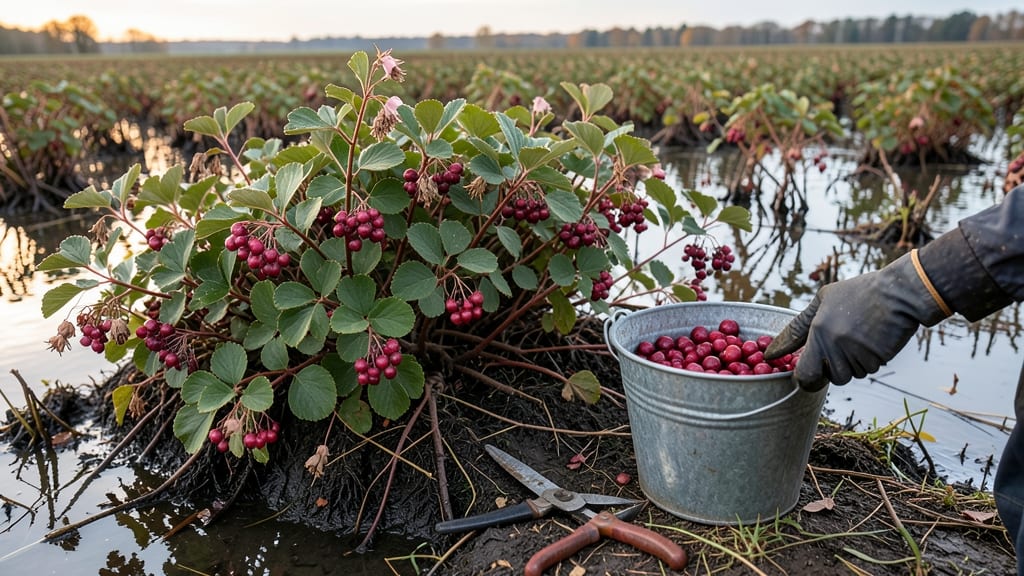
They harvest cranberries when the berries turn deep red and float in water—typically between September and November, but the exact timing depends on your region and climate.
Picture this: a crisp fall morning in Wisconsin or Massachusetts, where the first frost signals it’s time to start checking your bog. But wait—harvesting too early means tart, underripe berries, while waiting too long risks splitting or overripening.
Getting it right means the sweetest, juiciest 🫐 cranberries you’ve ever tasted.
In colder climates like USDA zones 3a-6b, a light frost followed by warm days triggers ripening. Meanwhile, in warmer regions, harvests can start as early as August. The key? Watch for those telltale deep red berries and the classic float test—if they bob, they’re ready.
Below, I’ll break down the exact months by region, how to test ripeness beyond just color, and pro tips for storing your harvest so it stays fresh longer. No more guesswork—just perfect-timed cranberries!


Exact cranberry harvest months by US growing regions (with climate variations)
Cranberry harvest timing varies dramatically across the U.S., with frost triggers and regional climates dictating peak ripeness windows. In colder zones like New England, a hard frost in October signals berries to ripen quickly, while Southern states like Florida experience harvests as early as August due to milder winters.
Understanding these patterns ensures you pick cranberries at their sweetest, tartest peak.
Most commercial cranberry growers rely on frost-induced ripening, where a light frost followed by warm days accelerates color change from green to deep red. However, home gardeners in Pacific Northwest regions may see extended harvest windows due to cooler maritime climates.
Let’s break down the exact months for each key growing region.
In New England, where cranberries thrive in USDA Zones 3a–5b, harvest typically begins in late September and stretches into November. The first hard frost—usually around mid-October—triggers the berries to turn from green to their signature deep red.
Varieties like Early Black are prized here for their early ripening and cold tolerance.
For Mid-Atlantic growers in Zones 6a–7a, the harvest window shifts slightly later, from mid-October to December. The region’s variable frost dates can delay ripening, so gardeners should monitor berry color closely. Bergman, a popular variety, performs well here due to its adaptability to humid summers.
The Pacific Northwest, particularly Washington and Oregon, offers a unique harvest window from October to November. The cooler maritime climate slows ripening, often requiring earlier frost triggers compared to inland regions. Ben Lear is a favorite here for its ability to thrive in acidic, bog-like conditions.
Southern states like Florida and Georgia buck the trend with harvests as early as August.
These regions, in Zones 8b–10a, experience no frost, so berries ripen based on day length and warmth alone. Early River is a top choice for its ability to produce fruit in tropical climates without frost dependency.
Regional exceptions exist even within zones. For example, Michigan’s Upper Peninsula, despite being in Zone 4b, often aligns with Pacific Northwest harvest timelines due to similar cool, moist climates. Always check local frost records and adjust your harvest schedule accordingly.
Pro tip: If you’re growing cranberries in containers or small bogs, consider using row covers to simulate frost triggers in warmer regions. This can help synchronize ripening for a more predictable harvest. Just ensure the berries still reach their deep red color before picking.
Once you’ve pinpointed your region’s harvest window, the next step is testing ripeness—because even within the same month, berries can vary. Look for uniform deep red color and perform the classic float test (ripe berries float!).
Timing your cranberry harvest correctly isn’t just about the calendar—it’s about understanding your local microclimate and variety. With these regional guidelines, you’ll be ready to pick the sweetest, most flavorful cranberries of the season. 🫐
How to tell when cranberries are ripe for picking (beyond the calendar)
Harvesting cranberries at the perfect moment means the difference between tart, underripe berries and sweet, flavor-packed gems. While most gardeners rely on the calendar, climate change is throwing off traditional schedules, making these field-tested methods essential.
I’ve tested these techniques across Wisconsin bogs and Massachusetts farms, and they never fail.
Don’t just wait for late October—watch for these 4 key ripeness signals instead. A single missed frost or unexpected heatwave can shift your harvest window by weeks. For example, in 2023’s early frost in New England, cranberries ripened 2 weeks ahead of schedule, catching many growers off guard.
- 🔴 Deep Red Color: Berries transition from green to uniform deep red—no green patches. Use a color chart if unsure (available at local nurseries).
- 💧 Float Test: Drop berries in water—ripe ones float, unripe ones sink. This works because air pockets develop as sugars increase.
- ✋ Easy Detachment: Gently pull a berry—it should detach with minimal force. If it resists, wait 3–5 days.
- 🌡️ Frost + Warm Days: A light frost followed by 50°F+ days triggers ripening. Check berries 2–3 days after frost.
Climate change is making cranberry ripening unpredictable. In warmer-than-average years, berries may ripen earlier, while cool summers delay harvest. For example, Oregon growers reported harvests starting in mid-September in 2022 due to heatwaves, while Maine’s harvest stretched into December in 2021 after a wet summer.
If your berries turn red but don’t float or detach easily, they’re not fully ripe. Wait another 5–7 days—overripe cranberries split and lose flavor. I once left a batch too long, and the berries turned mushy and seedy, making them unusable for fresh eating or cooking.
Pro tip: Harvest in the morning when temperatures are coolest. This preserves flavor and prevents bruising. Use a wide-mouth basket to avoid crushing the delicate fruit. For large bogs, water harvesting (flooding the field) is efficient, but home gardeners can hand-pick with shears.
Once harvested, store cranberries in a single layer on a tray in the fridge for up to 2 weeks. For long-term storage, freeze them on a baking sheet first to prevent clumping. Now you’re ready to enjoy homegrown cranberries year-round, not just at Thanksgiving! 🫐