
Picking
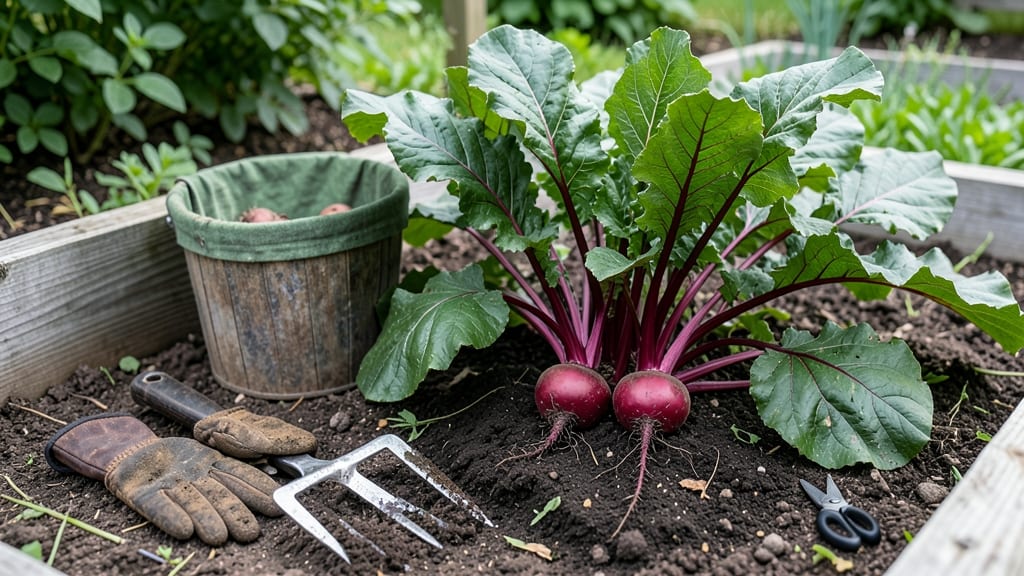
Harvesting beets from your garden at the right time means the difference between tender, sweet roots and tough, woody messes.
Picture this: you’ve nurtured your 🍠 beets all season, and now they’re ready—but how do you know when to pull them? Grab them too early, and you’ll miss out on peak flavor.
Wait too long, and they’ll turn bitter or crack in the soil. The secret? Size, color, and leaf health all play a role in timing your harvest perfectly.
In USDA Zone 6a, most varieties are ready between 50 and 70 days after planting, usually landing in June or July. But don’t just count the days—watch for roots that are 1 to 3 inches wide and deep green leaves.
These visual cues are your best friends for knowing when to harvest beets from your garden.
Below, I’ll walk you through the exact signs to look for, how to avoid common mistakes, and even how to store your harvest so it stays fresh longer. Let’s make sure you get the sweetest, most flavorful beets possible!


How to determine the perfect harvest time for beets by size and color
Knowing when to harvest beets from your garden is an art that balances size, color, and leaf health. Beets mature at different rates depending on whether you're growing baby beets, medium-sized varieties, or full-grown roots.
The key is to pull them when they're at their sweetest and most tender—before they become tough and woody. I've learned that even a few extra days can make a big difference in flavor and texture.
Beets typically reach harvest readiness 50 to 70 days after planting, but this varies by variety. For example, 'Babybeat' or 'Little Ball' varieties are ready in as little as 45 days when roots reach 1 to 1.5 inches in diameter.
Meanwhile, larger varieties like 'Detroit Dark Red' or 'Golden' need closer to 60 to 70 days to reach their ideal 2 to 3 inches size. Paying attention to these visual cues ensures you harvest at peak flavor.
Here’s a quick reference to help you determine the perfect harvest time based on size, color, and leaf health:
| Beet Type | Root Diameter | Top Height | Color Indicators | Days to Harvest |
|---|---|---|---|---|
| Baby Beets | 1–1.5 inches | 3–4 inches | Vibrant green leaves, deep red/purple tops | 45–55 days |
| Medium Beets | 1.5–2.5 inches | 4–6 inches | Deep green leaves, uniform color | 55–65 days |
| Mature Beets | 2.5–3.5 inches | 6–8 inches | Rich color, no yellowing | 60–70 days |
Color is another critical clue for determining harvest time. Healthy beets develop a deep, uniform color—whether red, golden, or striped—when they're ready. For example, 'Chioggia' beets should have bold pink and white rings, while 'Detroit Dark Red' should be a rich, deep burgundy.
If the color fades or the roots look pale, they may be past their prime. Always dig up one beet to check the root color before harvesting the whole batch.
Don’t overlook the leaf health as a sign of readiness. Vibrant, deep green leaves indicate a thriving plant, while yellowing or wilted leaves suggest stress or overmaturity.
If the leaves start to curl or bolt (send up a flower stalk), it’s a clear signal that the beets are ready to be harvested—even if they haven’t reached their full size. This is especially true in hot summer months when beets may mature faster due to heat stress.
Seasonal variations also play a role in harvest timing. In cooler spring or fall weather, beets grow more slowly, so you might need to wait closer to the 70-day mark for mature roots.
Conversely, in warm summer conditions, beets can mature in as few as 45 days, especially if you're growing baby beet varieties. Always adjust your expectations based on your local climate and the specific variety you're growing.
One trick I’ve found helpful is to harvest a few beets every 5 to 7 days once they near maturity. This way, you can taste-test them to determine when they’re at their sweetest.
Baby beets are best for quick cooking and salads, while larger beets hold up better for roasting or pickling. By experimenting with harvest times, you’ll quickly learn what works best for your garden and taste preferences.
If you’re growing beets for their greens, you can harvest the outer leaves as soon as they reach 4 to 6 inches tall, leaving the center leaves to keep producing. This method extends your harvest season and ensures you get both the roots and greens.
Just be sure to leave at least 2 to 3 inches of foliage on the plant to support root growth.
Finally, avoid harvesting beets after a hard frost, as the roots can become pithy and lose their sweetness. If frost is in the forecast, harvest your beets a few days early and store them in a cool, dark place.
With these tips, you’ll always know exactly when to harvest beets for the best flavor and texture.
🌱
Signs your beets are overripe: how to avoid woody, pithy roots
Beets are one of those versatile garden vegetables that reward patience—but only up to a point. When left too long in the soil, they transform from tender, sweet roots into woody, pithy messes that even your favorite beet recipes can't save.
The key is recognizing the subtle (and not-so-subtle) signs of overripeness before they ruin your harvest.
Overripe beets aren't just about size—they're about internal changes that happen long before the roots become massive. The first warning sign appears above ground: yellowing leaves that start at the bottom and creep upward.
This isn't just old age; it's your beet's way of saying, "I've been neglected, and my quality is declining fast."
🚨 When to Harvest Beets Before They Go Bad
Don't wait for perfect conditions—act when you see these 3 red flags:
- 🌿 Leaf yellowing beyond 30% of foliage (sign of nutrient depletion)
- 🪴 Root cracking visible at soil surface (water stress + overgrowth)
- 🔄 Concentric rings forming inside root when cut (woody core development)
Pro Tip: Check roots every 7-10 days starting at 50 days after planting. Early varieties (like 'Babybeat') need harvesting every 5-7 days to prevent overripeness.
Below ground, the damage becomes even more obvious. Root cracking is a classic sign of overripe beets—these unsightly fissures appear when roots grow faster than their skins can stretch. What starts as tiny lines becomes a network of woody ridges that make even the most forgiving beet lover wince.
The real kicker? These cracks create entry points for rot and pests, turning your harvest into a science experiment.
If you slice into a suspect beet, you'll find another dead giveaway: concentric rings forming in the center. These aren't just unsightly—they're a textural nightmare, signaling the development of a woody core.
The outer layers might still look edible, but the inner 1-2 inches will be tough enough to chew like leather. This happens because beets shift their energy from leaf production to root thickening when left unharvested.
Your climate and beet variety play huge roles in how quickly overripeness sets in. In hot, dry climates, beets mature faster but also develop woody textures quicker—sometimes in as few as 60 days.
Cool-season varieties like 'Detroit Dark Red' can handle 70+ days before quality drops, while baby beet types (like 'Little Ball') must be harvested in 45-50 days or they'll turn bitter. Adjust your harvesting schedule based on these factors.
To avoid the overripe beet trap, I recommend a staggered harvesting approach. Plant successive crops every 2-3 weeks and check the smallest roots first. For continuous harvests, aim to pull 20-30% of your crop every 7-10 days once they reach 1-2 inches in diameter.
This keeps your plants producing fresh, tender roots instead of letting a few monsters dominate the patch.