
How To
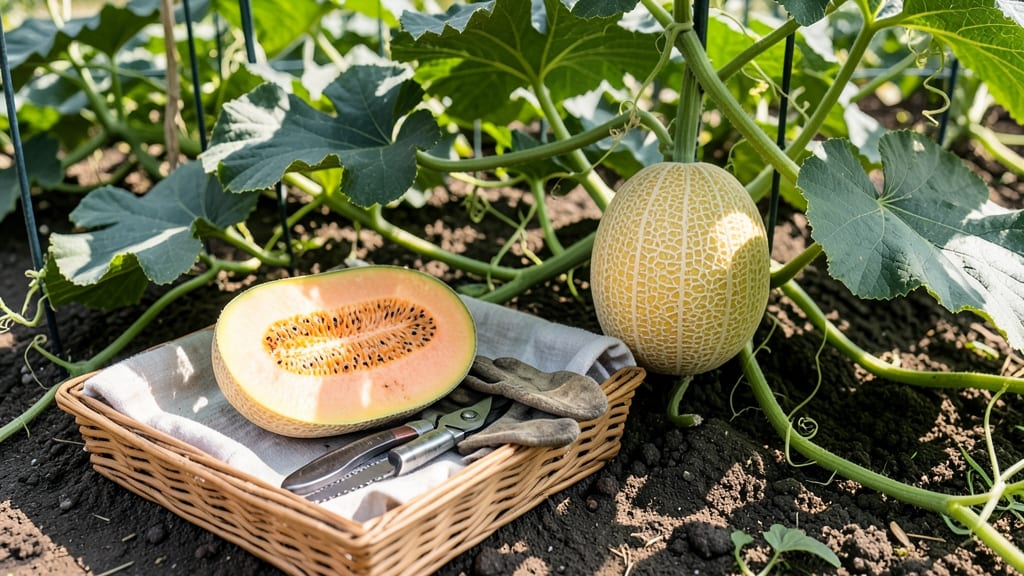
Harvesting cantaloupe melons 🍈 at the right time means the difference between sweet, juicy perfection and bland, underripe disappointment.
Picking too early gives you a meal of tough skin and watery flesh, while waiting too long can turn your hard work into a mushy mess. The good news?
You don’t need to cut into every melon to know when it’s ready—just look for three simple clues that tell you it’s time to harvest.
From the creamy yellow rind to the sweet scent near the stem, these visual and physical cues make it easy to spot peak ripeness without guessing. Even if you’re new to growing cantaloupes, these tricks will help you pull perfectly ripe fruit from the vine every time.
Below, I’ll walk you through the exact signs to watch for, how to test firmness the right way, and the best time of day to pick for maximum flavor. No more wasted melons—just sweet, ready-to-eat cantaloupes straight from your garden.


3 Visual and physical signs your cantaloupe is ready to harvest
Harvesting cantaloupe at the perfect moment transforms your garden labor into sweet, juicy rewards. The key lies in recognizing three foolproof visual and physical cues that signal peak ripeness—without ever cutting into the fruit.
These signs work for both vining cantaloupes and bush varieties, making them universally applicable for home gardeners.
Unlike some fruits that rely on color alone, cantaloupes combine multiple indicators to ensure you pick them at their sweetest. Missing these cues often leads to underripe melons with bland flavor or overripe melons that fall apart.
I’ve learned the hard way—once I harvested a cantaloupe that was still rock-hard inside despite looking ripe!
Here’s how to spot a perfectly ripe cantaloupe using only your eyes, nose, and gentle touch—no guesswork required.
🍈 3 Signs Your Cantaloupe Is Ready to Harvest
-
1. Stem Slips Easily
Gently grasp the stem near the fruit and give a slight twist. If it slips free with minimal resistance, your cantaloupe is ready. A stubborn stem means it needs more time. -
2. Creamy Yellow Blush
Look for a dull, creamy yellow patch (called the "blush") near the stem. Avoid bright green or pale spots—these indicate underripe fruit. -
3. Sweet Aroma Near Stem
Sniff the stem end of the melon. A strong, sweet musky scent (like honeydew mixed with fresh corn) means it’s prime. No smell? Wait a few days.
Let’s break down each sign in detail so you can confidently harvest cantaloupes that burst with flavor. The stem slip test is my top recommendation because it’s the most reliable indicator of internal ripeness. I’ve used this method for years, and it’s never failed me—even with tricky heirloom varieties.
The color change from green to creamy yellow is the most obvious visual clue, but it’s easy to misjudge if you’re new to gardening. Some cantaloupes develop a net-like pattern on the rind, which is another good sign—but not all varieties do.
Don’t rely on this alone, as it’s not universal.
Your nose plays a crucial role too. That sweet, musky aroma near the stem is nature’s way of telling you the sugars have fully developed. If your cantaloupe doesn’t smell sweet yet, give it 2–3 more days.
Pro tip: Check in the late morning when scents are strongest—early morning dew can mask the aroma.
One common mistake I see is harvesting cantaloupes based on size alone. A large melon isn’t necessarily ripe—it could just be overwatered! Always combine size, color, stem slip, and scent for the best results. For example, a cantaloupe that’s 8–12 inches in diameter with a creamy blush is usually spot-on.
Regional differences can affect ripening too. In hot climates (Zones 8–10), cantaloupes ripen faster and may need harvesting in late June or early July. In cooler zones (Zones 4–6), wait until mid-to-late August when daytime temps consistently reach 80°F+ (27°C+).
I’ve found that morning harvests in hot weather preserve sweetness longer.
Once you master these three signs, you’ll never struggle with cantaloupe ripeness again. The next time you’re tempted to cut into a melon to check, remember: these visual and physical cues give you all the answers you need—without damaging the fruit. Happy harvesting!
How to test cantaloupe ripeness without cutting (the gentle method)
Testing cantaloupe ripeness without cutting is all about three key indicators: the stem, the skin, and the scent. Start by gently twisting the stem near the melon—if it slips free with slight pressure, that’s a green light for harvest.
This slippery stem means the fruit’s natural sugars have fully developed.
Next, check the skin color on the side facing the ground. A ripe cantaloupe will show creamy yellow or beige patches, especially near the stem. Avoid green spots—those mean it’s still maturing. Run your thumb over the skin: if it feels slightly resistant but not hard, it’s ready.
Finally, take a deep sniff near the stem. A ripe cantaloupe releases a sweet, musky aroma—like a mix of honey and fresh-cut grass. If you smell nothing or just a faint vegetable scent, wait a few more days.
This scent is your best indicator of sweetness without opening the fruit.
If your melon’s skin turns dull or net pattern fades, it’s past peak ripeness. Overripe cantaloupes develop a fermented smell (like vinegar) and mushy flesh. Harvest 1-2 days before you see these signs—melons don’t ripen further after picking!
🍈 Pro Tip: Morning is the best time to check ripeness—cooler temps make scent and firmness easier to judge.
For the thump test, give the melon a gentle tap with your knuckle. A ripe cantaloupe will sound dull and hollow, like knocking on a wooden table.
If it sounds high-pitched or metallic, it’s underripe. Pair this with the stem test for accuracy—some melons trick you with a hollow sound but aren’t fully sweet.
If your cantaloupe isn’t ready yet, don’t worry! Leave it on the vine and check every 2-3 days. Overripe melons lose flavor fast, so timing is everything.
For uneven ripening, harvest the ripest first—they’ll soften quickly off the vine. Store them in a cool, dry place (50-55°F) to slow further ripening.
With these methods, you’ll never guess again. My personal trick? Mark the ripest melons with a soft fabric tie so you know which ones to watch closely. Happy harvesting—your taste buds will thank you!