
How To
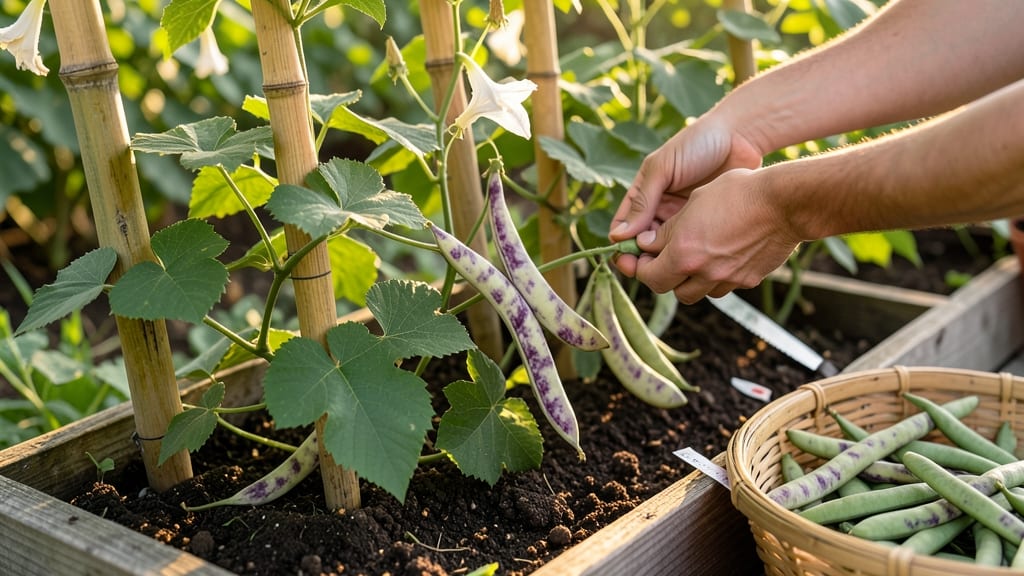
Harvesting dragon tongue beans 🌱 at the right time turns their striking purple pods into a flavorful prize—wait too long, and you’re left with tough, bitter beans.
If you’ve ever plucked a pod just to find it woody or overripe, you know timing is everything. These beans mature between 70 and 90 days, but the window for peak tenderness is narrow—pods need to be 4–6 inches long, firm yet yielding, and still mostly white inside.
Climate plays a role too: In Zone 6, where frost hits by October, you’ll need to act fast. Daylight hours shrink in late summer, so check pods weekly and harvest before seeds darken to purple.
Below, I’ll break down the exact cues—pod size, seed color, and texture—to guarantee your harvest stays sweet, plus how to store them for weeks of meals ahead.


Dragon Tongue bean harvesting by pod size and color: exact timing guide
Harvesting Dragon Tongue beans at the right moment transforms them from ordinary garden pods into a culinary delicacy. Unlike traditional green beans, these striking purple-hued pods change color and texture as they mature, signaling when they're ready to pick.
The key lies in monitoring pod size (1.5–2.5 inches), seed color progression (white to purple), and pod firmness—each clue helps you lock in peak flavor before the beans toughen.
I’ve found that the optimal harvest window for Dragon Tongue beans opens when pods reach 1.5–2.5 inches in length, with seeds transitioning from white to pale purple. Waiting too long risks woody texture and bitter taste, while harvesting too early means underdeveloped flavor.
Understanding these visual and tactile cues ensures you enjoy beans that are both tender and packed with nutty sweetness—perfect for salads, stir-fries, or steamed dishes.
Pod size is your first clue: Aim for pods measuring 1.5–2.5 inches long. At 1.5 inches, seeds are tiny and white—these are too immature for harvest. By 2 inches, seeds darken to pale purple, and the pod walls thicken slightly, signaling readiness. Beyond 2.5 inches, pods become tough, and seeds turn deep purple—an indicator they’ve passed their prime.
| Pod Stage | Size Range | Seed Color | Texture | Harvest Time |
|---|---|---|---|---|
| Early Immature | <1.5 inches | White | Very tender | Not ready |
| Optimal Harvest | 1.5–2.5 inches | Pale purple | Firm but tender | Perfect! |
| Overmature | >2.5 inches | Deep purple | Woody, tough | Too late |
The seed color inside the pod is another critical indicator. When seeds first appear, they’re tiny and white, but as pods mature, they gradually darken to pale lavender or purple.
At the ideal harvest stage, seeds should be just visible through the pod wall but not dominating the space. If seeds are deep purple and large, the pod has overmatured, and the beans will taste bitter and fibrous.
Don’t rely solely on color—texture is equally important. Gently press a pod between your fingers: it should feel firm yet slightly yielding, like a ripe cucumber. If it’s too soft or mushy, it’s past its prime.
Overmature pods also develop a thick, leathery skin, which is a surefire sign to avoid. For the best results, harvest in the morning after dew has dried; this ensures pods are crisp and flavorful.
Regional climate plays a role in timing. In warmer zones (USDA 8–10), Dragon Tongue beans may mature 2–3 weeks earlier than in cooler regions (USDA 5–7).
I’ve noticed that in Zone 6, where I garden, pods typically reach harvest size 70–80 days after planting, aligning with late summer. If your area experiences hot, dry spells, harvest slightly earlier to prevent pods from toughening prematurely.
Pro tip: Harvest regularly to encourage more production. When you pick pods at the 1.5–2.5 inch stage, the plant redirects energy to produce new flowers and pods. Skipping harvests can lead to overcrowded vines and reduced yield.
I like to check my plants every 2–3 days during peak season—this keeps the harvest flowing and ensures I never miss the sweet spot.
After harvesting, store pods in the fridge for up to 5 days or blanch and freeze them for long-term use. The purple hue fades slightly after cooking, but the flavor remains rich and earthy.
For a visual cue, think of the perfect Dragon Tongue bean as having the color of a ripe plum and the firmness of a snap pea—that’s your target!
Mastering the harvest of Dragon Tongue beans is all about observation and timing. By focusing on pod size, seed color, and texture, you’ll consistently enjoy beans at their peak.
Once you’ve nailed the technique, you’ll wonder why you ever settled for ordinary green beans—these purple gems are a game-changer in the garden and kitchen alike. 🌱
Common mistakes that ruin Dragon Tongue bean harvests (and how to avoid them)
Even experienced gardeners make critical errors when harvesting Dragon Tongue beans 🌱. The most common mistake? Waiting for pods to turn fully purple—by then, they’re often tough and past their prime.
These beans should be picked when pods are 4–6 inches long and still mostly white inside, not when they’ve darkened. I’ve learned this the hard way after harvesting a batch that tasted bitter and fibrous.
Another frequent error is harvesting at the wrong time of day. Heat stress during midday can cause pods to overmature quickly, while early morning harvests yield the freshest, crispest beans.
I now make a habit of checking my plants right after sunrise to avoid missing the perfect window. This small adjustment has made a noticeable difference in flavor and texture.
Ignoring seed color cues is another downfall. While the pods themselves are purple, the seeds inside start white and gradually darken. When seeds turn pale yellow or light green, it’s time to harvest. If you wait until seeds are fully developed, the pods become woody.
I keep a small flashlight handy to peek inside pods when in doubt—it’s saved me from harvesting too late more times than I can count.
⚠️ Critical Harvest Timing Alert
Harvest Dragon Tongue beans when pods are 4–6 inches long, firm but yielding, and seeds are white to pale green. Never wait for pods to fully darken—this guarantees tough, bitter beans. Check plants weekly in late summer (Zone 6: August–September) and harvest every 2–3 days to encourage continuous production.
Skipping regular pruning can also shorten your harvest season. When plants become overcrowded, they focus energy on seed production instead of pod development. I prune my Dragon Tongue beans by removing yellowing leaves and pinching back overly leggy stems to redirect growth.
This keeps plants healthy and extends the harvest window by 2–3 weeks in my garden.
Finally, storing harvested beans incorrectly can ruin all your hard work. Many gardeners assume these beans can be stored like green beans, but their purple pods require special care. I recommend blanching pods for 2 minutes before freezing or drying them on a screen in a well-ventilated area.
Proper storage ensures you can enjoy your harvest well into winter, even in colder climates.
By avoiding these common mistakes—harvesting at the right time, checking seed color, pruning regularly, and storing properly—I’ve transformed my Dragon Tongue bean harvests from bitter disappointments to flavorful successes. With these tips, you can do the same! 🌿