
Picking
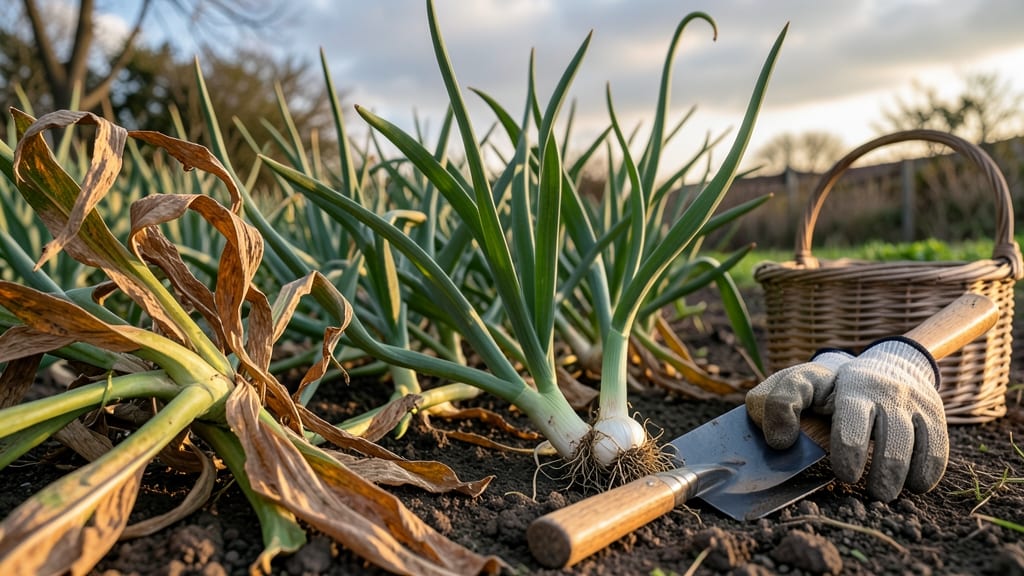
Harvesting garlic in Georgia at the right time ensures plump, flavorful bulbs instead of shriveled disappointment — and the key is watching for those brown stems and papery skins.
Timing your harvest in Georgia’s humid climate can mean the difference between success and failure. One week too early, and you’ll pull underdeveloped bulbs. One week too late, and you risk mold or sprouting cloves.
Most Georgia gardeners in USDA zones 7b-8b should harvest between late April and early May, when lower leaves turn crispy brown and the bulb skins tighten like parchment. But don’t rely solely on the calendar — soil conditions and rainfall can shift that window by a week or more.
Below, I’ll walk you through the exact signs to watch for, how to adjust for Georgia’s microclimates, and what to do if you miss the window. You’ll learn how to salvage partially harvested garlic and store it properly for months of kitchen use.


Key signs your Georgia garlic is ready for harvest (brown stems & papery skins)
Georgia’s humid climate creates the perfect conditions for growing garlic, but knowing exactly when to harvest can be tricky. Unlike cooler climates, our longer growing season and occasional summer heat can throw off your timing if you’re not watching for the right visual cues.
The most reliable indicators are brown stems and papery skins, but Georgia’s regional differences—especially between North Georgia’s cooler zones and South Georgia’s heat—can shift your harvest window by weeks.
For most Georgia gardeners, hardneck varieties like Music or Silverskin typically reach harvest readiness in late April to early May, while softneck varieties like Artichoke may linger until June.
However, these dates are just a starting point—your garlic’s actual readiness depends on observing three key signs: stem browning, leaf yellowing, and the development of papery skins around the bulbs. Ignoring these cues can lead to premature harvest (small, weak bulbs) or overripe garlic (sprouting or moldy cloves).
| Sign | Description | North Georgia (Zones 7b-8a) | South Georgia (Zones 8a-8b) |
|---|---|---|---|
| Brown Stems | Lower stems turn brown and crispy, while upper leaves remain green. | Late April - Early May | Early May - Mid-May |
| Papery Skins | Bulbs develop tight, dry papery skins (like onion skins). | Late April - Early May | Early May - Late May |
| Leaf Yellowing | Lower leaves yellow and die back, leaving 3-4 green leaves at the top. | Late April | Early May |
| Bulb Firmness | Bulbs feel firm when gently squeezed; cloves are plump and well-defined. | Early May | Mid-May |
| Stem Drying | Stems begin to dry and flop over, signaling maturity. | Early May | Late May |
The first sign to watch for is stem browning, which typically starts with the lower leaves turning yellow and crispy.
In North Georgia’s cooler climate (USDA zones 7b-8a), this usually happens by late April, while in South Georgia’s warmer zones (8a-8b), you might not see it until early May.
The key is to wait until at least 50% of the stems show this browning—harvesting too soon can leave you with underdeveloped bulbs that lack flavor.
Next, focus on the papery skins forming around your bulbs. These dry, papery layers protect the cloves and indicate the bulb has reached maturity. In Georgia’s humidity, these skins can develop unevenly, so dig up one bulb to check for tight, dry coverage.
If the skin is still loose or wrinkled, wait another 1-2 weeks. Pro tip: Use a small trowel to gently loosen the soil and inspect a few bulbs without disturbing the entire patch.
Another critical cue is the leaf count. When harvesting garlic, you should see 3-4 green leaves remaining at the top of the plant. This ensures the bulb has fully developed while the plant still has enough energy to support it.
In South Georgia’s heat, leaves may yellow faster due to water stress, so monitor your plants closely and water deeply if the soil feels dry. Overwatering here can cause rot, so aim for moderate moisture—about 1 inch per week—leading up to harvest.
Georgia’s microclimates can create significant variations in harvest timing. For example, mountain regions in North Georgia (like Blue Ridge) may experience earlier frosts or cooler springs, pushing harvest dates back by 1-2 weeks. Conversely, coastal areas in South Georgia (like Savannah) often see
Best harvest months in Georgia: a month-by-month guide for hardneck vs. softneck varieties
Georgia gardeners know timing is everything when harvesting garlic, and the first step is choosing the right variety for your microclimate. Hardneck garlic thrives in cooler North Georgia regions, while softneck varieties handle the heat better in South Georgia. Both types need precise timing to avoid those dreaded shriveled bulbs.
Don’t assume a one-size-fits-all approach—Georgia’s climate varies dramatically from the mountains of Zone 7b to the coastal plains of Zone 8b. In cooler mountain areas, hardnecks may be ready by late April, while South Georgia’s heat might delay softnecks until early June.
- 🌱 Late April - Early May: Hardneck varieties in North Georgia (Zone 7b) are ready when 50% of leaves turn brown and crispy. Check bulbs for tight papery skins.
- 🌿 Mid-May: Transition zone (Zone 7b-8a) gardeners should harvest hardnecks by May 15 and monitor softnecks for early signs of readiness.
- ☀️ Late May - Early June: South Georgia (Zone 8b) softnecks peak when lower leaves brown fully and bulbs reach 2-3 inches in diameter.
- ⏰ June 15 (absolute deadline): Never harvest after this date in South Georgia—bulbs risk sprouting or mold from summer heat.
For hardneck varieties, watch for the stem to brown and fall over—this is your cue. In North Georgia, I’ve found that ‘Music’ and ‘German White’ varieties often mature 7-10 days earlier than others. Use a garden fork to gently loosen soil before pulling to avoid damaging bulbs.
If you’re growing softneck garlic, like ‘Silverskin’ or ‘Artichoke’, wait until the entire plant topples over. These varieties store longer but need perfect timing—harvest too early, and bulbs won’t develop fully; too late, and they’ll split or rot in Georgia’s humidity.
Pro tip: Test one bulb by peeling back the papery skin. If it’s tight and firm with no green shoots, your garlic is ready. If the skin is loose or the cloves feel soft, wait another week.
Georgia’s unpredictable spring rains can delay harvest by 10-14 days—always prioritize visual cues over the calendar.
Once harvested, cure your garlic in a shady, dry spot (like a garage or screened porch) for 2-3 weeks. This step is non-negotiable in Georgia’s damp climate—proper curing prevents mold and extends storage life. Store cured bulbs in a mesh bag at room temperature for up to 6 months.