
Blooming
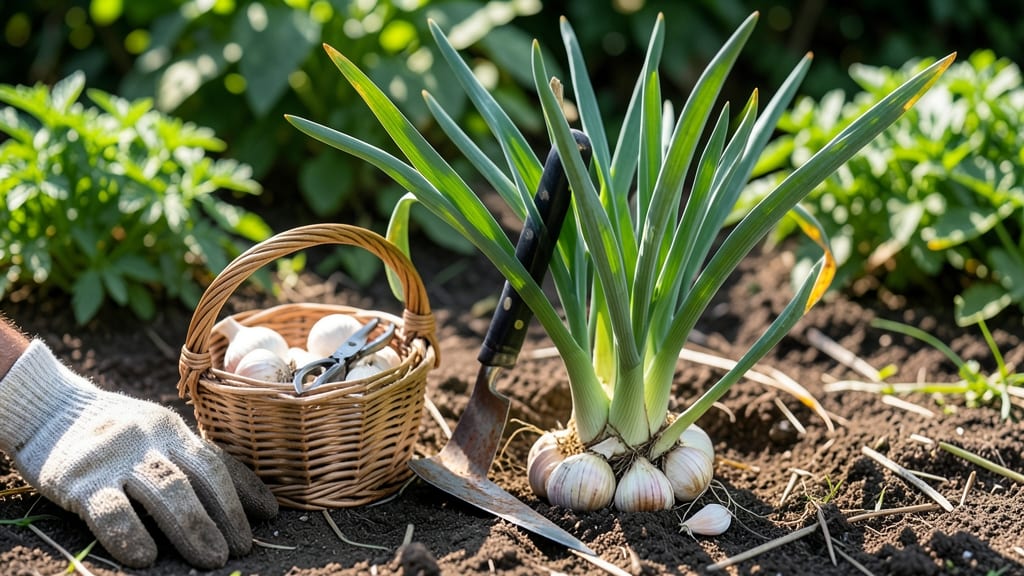
Harvest garlic in North Carolina when the lower leaves turn brown and crispy 🧄 — usually 4-6 weeks after your first hard frost, which lands in late June to early July for most of the state.
North Carolina’s unpredictable frost patterns can turn your garlic harvest from a triumph into a disappointment—unless you know exactly when to pull those perfect bulbs. Timing is everything for flavor, size, and storage potential, and missing the window means wasted effort.
This guide covers the frost-triggered cues that signal harvest time, how hardneck and softneck varieties differ in readiness, and the step-by-step process to avoid common NC pitfalls like over-moisture or premature pulling.
By following these simple but critical steps, you’ll go from digging to curing with bulbs that store like gold—ready to braise, roast, or share all winter long.


How NC’s frost dates determine your garlic harvest window
North Carolina’s diverse microclimates create a 4-6 week harvest window for garlic, triggered by frost. Unlike most crops, garlic needs cold dormancy to develop sweet, well-formed bulbs. The first hard frost signals the start of your countdown—typically in mid-October in the Mountains and late November on the Coast.
Understanding your USDA hardiness zone is key. NC spans zones 6b-8a, meaning frost dates vary dramatically. Mountain regions (zone 6b) get their first frost by October 15, while Coastal areas (zone 8a) may wait until December 1.
This variation explains why your neighbor’s garlic might be ready weeks before yours!
Here’s how to use frost dates to predict your harvest window:
| NC Region | Avg First Frost | Harvest Window | Key Cue |
|---|---|---|---|
| Mountains (Zone 6b) | Oct 15 | Late June - Early July | 50% lower leaves brown |
| Piedmont (Zone 7a) | Nov 1 | Early July - Mid-July | Lower leaves crispy |
| Coastal (Zone 8a) | Dec 1 | Mid-July - Late July | Bulbs firm when dug |
The science behind this timing is fascinating. Garlic bulbs initiate formation after 60-90 days of cool weather (below 60°F). This chilling period stops vegetative growth and redirects energy to bulb development. When frost hits, it accelerates this process, making the countdown to harvest more predictable.
For hardneck varieties (like ‘Music’ or ‘German White’), the harvest window is tighter—typically 4 weeks after frost. Softnecks (like ‘Silverskin’) can stretch to 6 weeks because they prioritize bulb size over scape production. Know your variety to fine-tune your timing!
Use the USDA Plant Hardiness Zone Map to find your exact frost dates. Type your ZIP code into the interactive tool to see localized frost probabilities. Pro tip: Bookmark the NC State Climate Office for real-time updates during critical harvest months.
Don’t rely solely on dates—watch for visual cues. When 50% of lower leaves turn brown but the top leaves stay green, your garlic is ready. This balance ensures bulbs are fully mature but haven’t started to rot in the soil.
Ignore this rule, and you risk small, pithy bulbs or premature sprouting.
NC’s humidity and spring rains can delay harvest by 1-2 weeks. If your soil stays soggy, bulbs may rot before reaching maturity. Amend clay-heavy soils with compost or sand to improve drainage, especially in Piedmont and Coastal regions where waterlogging is common.
Mark your calendar now: 4-6 weeks after frost is your garlic’s prime harvest window. Miss it, and you’ll either pull underdeveloped bulbs or wait too long and risk bolted scapes or moldy cloves.
With this frost-triggered strategy, you’ll harvest garlic that stores like a pro—ready to flavor your dishes all winter long.
Step-by-step guide: when and how to harvest garlic in NC
Harvesting garlic in North Carolina requires watching for specific leaf signals and timing your dig perfectly to avoid underdeveloped bulbs or overripe spoilage.
The key moment arrives when 50-60% of the leaves turn brown—typically 4-6 weeks after your first hard frost, which usually occurs in late June to early July.
Hardneck varieties like ‘Music’ or ‘German White’ often mature slightly earlier than softneck types such as ‘Silverskin’, so check each variety separately.
For NC’s USDA zones 6b-8a, this usually lands between late June and early July, but mountain regions may extend into early August due to cooler temperatures.
🌱 Step-by-Step Harvesting Process
- 1 Check leaf browning: Harvest when 50-60% of lower leaves are brown and crispy, but top leaves stay green. Use your fingers to gently pull back the soil near the base—if bulbs are 1-2 inches wide, they’re ready.
- 2 Choose a dry day: Pick a sunny, dry morning to harvest. Avoid wet soil, which can cause rotting during curing. Use a garden fork to loosen soil around the bulb, then lift gently to avoid breaking stems.
- 3 Shake off excess soil: Gently tap bulbs to remove loose dirt, but don’t wash them. Any moisture speeds up spoilage during the 2-4 week curing process. Trim the roots to 1/2 inch below the bulb for better storage.
- 4 Cure in a dry, shaded spot: Lay bulbs in a single layer on a mesh screen or wooden rack in a well-ventilated area with 60-70°F temperatures. Avoid direct sunlight, which can scorch the skins. Cure for 2-4 weeks until skins are papery and dry.
- 5 Store properly: Once fully cured, trim the stems to 1 inch above the bulb and store in a cool, dark place with good airflow (e.g., mesh bags or open cardboard boxes). NC’s hardneck varieties store best for 6-8 months, while softnecks last up to 12 months.
If you harvest too early, bulbs will be small and pithy, while waiting too long risks sprouting or rotting. For NC gardeners, late June is your sweet spot—just in time to beat the summer heat and humidity that can accelerate spoilage.
Pro tip: Save a few bulbs for next year’s planting! Choose the largest, firmest ones with the most cloves, and plant them in October or November for a fresh harvest in 2025.