
Vegetables
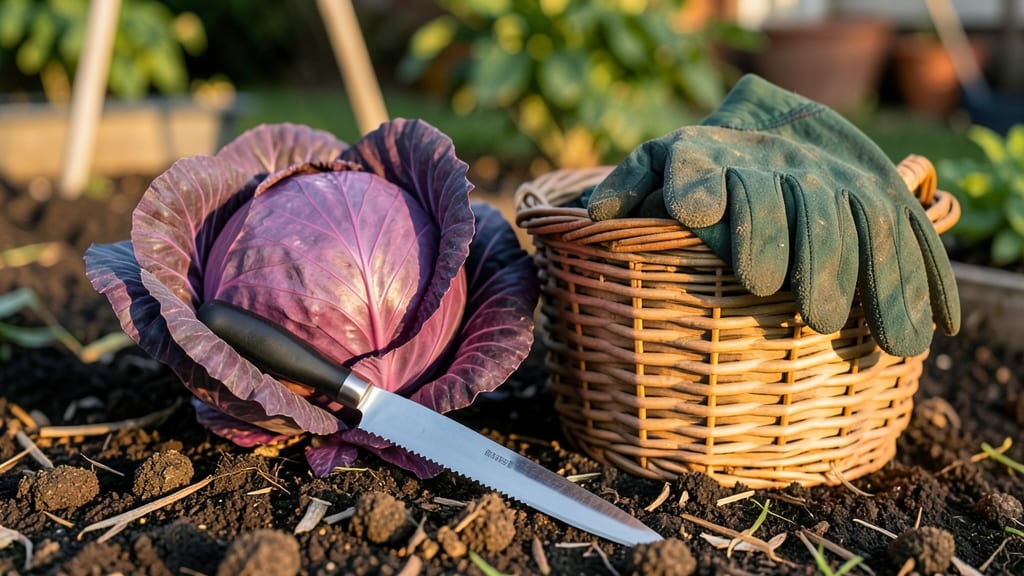
Harvesting purple cabbage at the right time means the difference between a sweet, crisp head 🥬 and a tough, bitter one you’ll regret.
Picture this: you’ve waited months for those deep purple leaves to form a tight, compact head, only to pull it too early and end up with a sad, underdeveloped cabbage. Or worse, you wait too long, and the flavor turns woody and the texture mushy.
Timing matters because purple cabbage doesn’t just change color—it shifts in flavor and texture as it matures. A firm head with vibrant purple leaves that snap cleanly when twisted is your cue to grab the knife. Miss it, and you’ll either waste a harvest or deal with a less-than-stellar meal.
In this guide, I’ll walk you through the exact visual cues—color shifts, head size, and the all-important stem snap test—to know when your purple cabbage is ready. Plus, I’ll cover how weather and planting season tweak the perfect harvest window so you never guess again.


How to identify purple cabbage’s perfect harvest timing using color and size
Harvesting purple cabbage at the right time ensures sweet, crisp heads packed with flavor. The key lies in watching for color shifts and head development—two clear indicators that your cabbage is ready.
For loose-leaf varieties, timing differs slightly, but the same principles apply. Let’s break down how to spot the perfect moment to harvest.
First, focus on the leaf color intensity. Mature purple cabbage develops a deep, vibrant purple hue, especially when exposed to cool temperatures. Younger leaves may appear lighter or greenish.
If the outer leaves are uniformly purple and the inner leaves are still forming a tight head, it’s time to harvest.
Next, check the head size. For head-forming varieties, aim for 4-6 inches in diameter. Smaller heads (under 3 inches) are often too young, while oversized heads (over 8 inches) can become woody or bitter. Loose-leaf varieties should have 4-6 mature outer leaves before harvesting.
Here’s a quick reference to help you decide:
| Maturity Sign | Head Varieties | Loose-Leaf Varieties |
|---|---|---|
| Color | Deep, uniform purple | Vibrant purple outer leaves |
| Size | 4-6 inches in diameter | 4-6 mature outer leaves |
| Texture | Firm, crisp leaves | Tight, crisp leaves |
| Growth Rate | Slowing growth | Steady leaf production |
| Weather Impact | Cooler temps enhance color | Sunny days speed maturity |
Weather plays a surprising role in harvest timing. Purple cabbage develops its signature color in response to cooler temperatures, typically between 50-65°F. If your summer is unusually hot, heads may mature faster but could lose some color intensity.
Conversely, a cool spring or fall will slow growth, giving you more time to harvest at peak maturity.
Growth rate also signals readiness. Once your cabbage reaches 70-90 days from transplanting (or 60-80 days for loose-leaf varieties), check for slowed growth. If the head stops expanding and leaves remain crisp, it’s time to harvest.
Overlooking this can lead to bitter, tough leaves, so don’t wait too long!
For loose-leaf varieties, harvest outer leaves first to encourage continued growth. This method extends your harvest window by 2-4 weeks compared to cutting the entire plant. Just ensure the remaining leaves stay vibrant and crisp—a sign they’re still producing well.
Finally, avoid harvesting after a hard frost, as this can damage the plant and reduce storage life. If frost is forecasted, harvest 2-3 days before the expected freeze. Store harvested cabbage in a cool, dark place (like a root cellar) to preserve freshness for up to 2 weeks.
With these visual cues and timing tips, you’ll never miss the perfect moment to harvest your purple cabbage—just in time for the most flavorful, vibrant heads. Happy harvesting! 🥬💜
The stem snap test: a reliable method to confirm purple cabbage readiness
When your purple cabbage reaches the right size but you’re still unsure if it’s fully mature, the stem snap test is your secret weapon. This simple technique tells you whether the head is ready to harvest or needs more time to develop its signature sweetness and crisp texture.
Here’s how it works: grasp the main stem of the cabbage head and gently twist it. If the stem snaps cleanly with a slight crackling sound, your cabbage is ready for harvest. This clean break indicates the plant’s natural separation point has formed, signaling maturity.
The snap test works because as purple cabbage matures, it develops a natural abscission layer—a weak point where the stem will separate easily. This layer forms when the head reaches its ideal size and flavor profile, making it the perfect time to harvest.
⚠️ WARNING: Avoid These Common Mistakes!
⚠️ Testing Too Early (before 60 days after transplanting) may give false negatives. Wait until heads are at least 4 inches wide.
⚠️ Ignoring Weather Stress—hot, dry conditions can make stems brittle, leading to premature snaps. Confirm readiness with color and size cues first.
A successful snap should sound like a dry, crisp break, not a wet tear or a limp bend. If the stem bends instead of snapping, the cabbage needs more time—usually 7-10 more days of growth.
Listen closely: a hollow crack means maturity, while a dull snap suggests stress or immaturity.
For loose-leaf varieties, the snap test is less critical since you harvest outer leaves as they mature. But for head-forming cabbages, this test is your best bet for timing a harvest that’s sweet, crisp, and flavorful.
Combine it with visual cues—like deep purple color and firm heads—to never miss the window again.
Pro tip: Perform the snap test in the morning when stems are firmest. Avoid testing after heavy rain or drought, as moisture levels can skew results. With this method, you’ll harvest purple cabbage at peak perfection every time! 🥬