
Vegetables
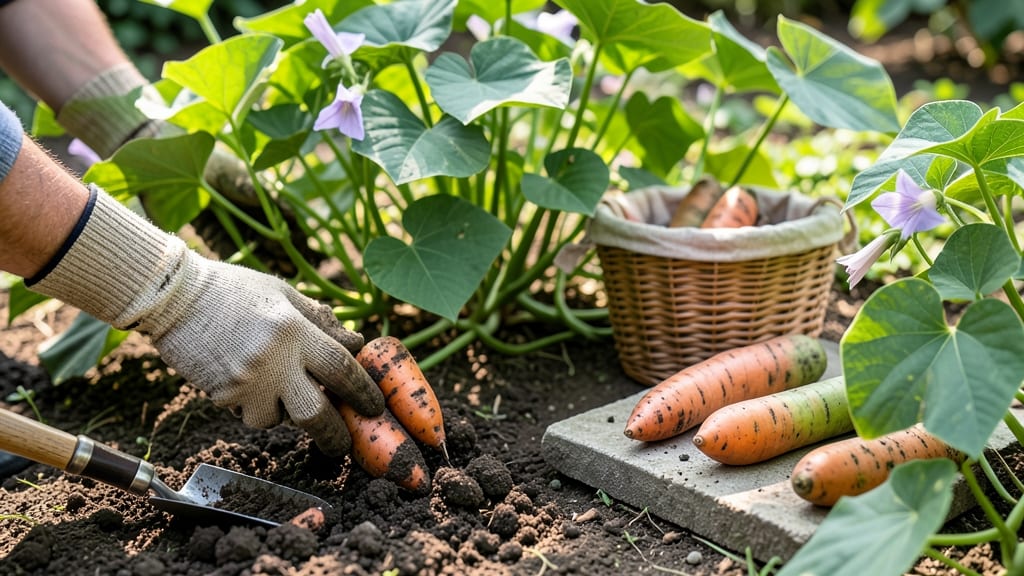
Harvest sweet potatoes in Texas when vines yellow and tubers resist gentle pull—usually between mid-September and November, depending on your region.
Texas gardeners know sweet potatoes thrive in warm climates—but timing their harvest wrong can mean smaller yields or even rotten tubers. Missing the perfect window between vine yellowing and tuber maturity could cost you weeks of waiting or ruined harvests.
North Texas growers should watch for first frost warnings in October, while South Texas can often stretch harvests into November. Soil temperatures above 85°F signal peak sweetness, but dropping below 60°F triggers storage starches to convert into sugar.
Here’s how to test maturity: vines should be fully yellowed, leaves crispy, and tubers should feel firm when pressed but not rock-hard. Once you’ve got these signs, dig carefully to avoid bruising—your 100-day investment is about to pay off.


Texas sweet potato harvest timeline: months, weather signs, and soil temperature rules
Timing your sweet potato harvest in Texas depends on three critical factors: monthly calendar cues, soil temperatures, and regional heat zones. Unlike cool-season crops, sweet potatoes need warm soil (85°F+) to develop their signature sweetness.
Harvest too early, and you'll get small, starchy tubers. Wait too long, and you risk frost damage or rot in saturated soil. The ideal window spans September through November, but your exact timing varies by Texas region.
North Texas gardeners (USDA Zones 7-8) should aim for late September to early October, when nighttime temperatures dip toward the 50s°F. Central Texas (Zones 8-9) has a longer window—mid-September through November—while South Texas (Zones 9-10) can extend harvests until mid-December before frost risk arrives.
The key is watching vine yellowing (not just days on the calendar) paired with soil temps staying above 70°F.
Here’s your Texas sweet potato harvest timeline broken down by region, including soil temperature rules and weather signs to watch for:
| Region | Ideal Harvest Months | Soil Temp Rule | Key Weather Sign | Action |
|---|---|---|---|---|
| North Texas (Zones 7-8) | Late Sept–Early Oct | 70°F+ (nighttime dips to 50s°F) | Vines yellow 50% | Harvest before first frost |
| Central Texas (Zones 8-9) | Mid-Sept–Nov | 80°F+ (avoid rain >3 days) | Leaves curl/brown edges | Test tubers at 90 days |
| South Texas (Zones 9-10) | Sept–Mid-Dec | 85°F+ (humidity <70%) | Vines fully yellow | Harvest before heavy rains |
🌱 Pro Tip: Use a soil thermometer to confirm temps—sweetness peaks at 85°F+.
Soil temperature is your non-negotiable rule for sweetness. Tubers grown in cooler soils (below 75°F) develop higher starch content and less sugar. In North Texas, where soils cool faster, prioritize harvesting when daytime temps stay above 70°F—even if vines look ready.
Central Texas gardeners can afford to wait slightly longer, but avoid harvesting after three consecutive rainy days, which increases rot risk.
Watch for these three key weather signs to time your harvest perfectly: vine yellowing (50% in North Texas, 100% in South Texas), leaf drop (especially in mornings), and soil firmness. Gently probe the soil with your finger—if tubers resist a light pull, they’re ready.
Ignore the calendar and focus on these cues, especially in South Texas, where vines may stay green until December if unstressed.
Regional variations matter more than you might think. In North Texas, where first frosts can hit as early as October 15, rush harvests if nighttime temps drop below 55°F.
Central Texas has a two-week buffer—aim for mid-October—while South Texas gardeners can stretch harvests until Christmas if soil stays warm. The critical cutoff is when soil temps fall below 60°F, which halts tuber growth and risks black rot.
Don’t rely solely on days-to-maturity labels (which assume ideal conditions). Instead, combine soil temperature data with visual vine cues. For example, if your Beauregard variety (a Texas favorite) shows yellowing vines but soil is still 90°F, wait 5–7 days for maximum sweetness.
Conversely, if vines yellow but soil is 65°F, harvest immediately to avoid tuber shriveling.
One common mistake Texas gardeners make is overwatering before harvest, which softens tubers and makes them prone to bruising. Stop irrigating 1–2 weeks before your target harvest date to let soil
How to test sweet potato maturity: 5 visual and physical checks before harvesting
Don't guess when your sweet potatoes are ready—use these 5 foolproof checks to avoid harvesting too early or too late. In Texas, where growing seasons vary from North to South, these visual and physical cues will help you pinpoint the perfect moment for digging.
Premature harvesting means small, starchy tubers, while waiting too long risks frost damage or rot. The key is catching them when vines yellow but tubers still resist gentle pressure. Let's break down each test so you can harvest with confidence.
- 1 Vine Color Change: Look for fully yellowed vines (not just tips). Green leaves indicate tubers need more time, while crispy brown leaves mean you might be late.
- 2 Leaf Drop Pattern: 70-80% leaf drop signals maturity. Check for dried, papery leaves—this means tubers are storing energy underground.
- 3 Soil Resistance Test: Gently press a finger into the soil near vines. If tubers resist movement (like hitting a small rock), they're ready. No resistance? Wait 1-2 weeks.
- 4 Gentle Pull Method: Grasp a vine and gently tug upward. If the tuber doesn't budge easily, it's not ready. Ready tubers will slip free with minimal force.
- 5 Tuber Size Check: For Texas heat zones, aim for tubers the size of a baseball (2-3 inches). Larger doesn't always mean better—overgrown tubers can be woody.
Common mistakes like digging when vines are still green or waiting until leaves are completely dead can ruin your harvest. Green vines mean tubers are still growing, while waiting too long risks frost damage (especially in North Texas) or rot from prolonged soil moisture.
Pro tip: In South Texas, where frost comes later, you can stretch harvests into early November. But in North Texas, start digging by mid-October to avoid cold snaps. Always harvest on a dry, sunny day to prevent soil-borne diseases.
Once you've confirmed maturity with these checks, dig carefully with a fork or shovel, being mindful not to pierce the tubers. Cure them properly (75-85°F for 10 days) to develop their signature sweetness—your Texas-grown harvest will be worth the wait! 🌱