
Picking
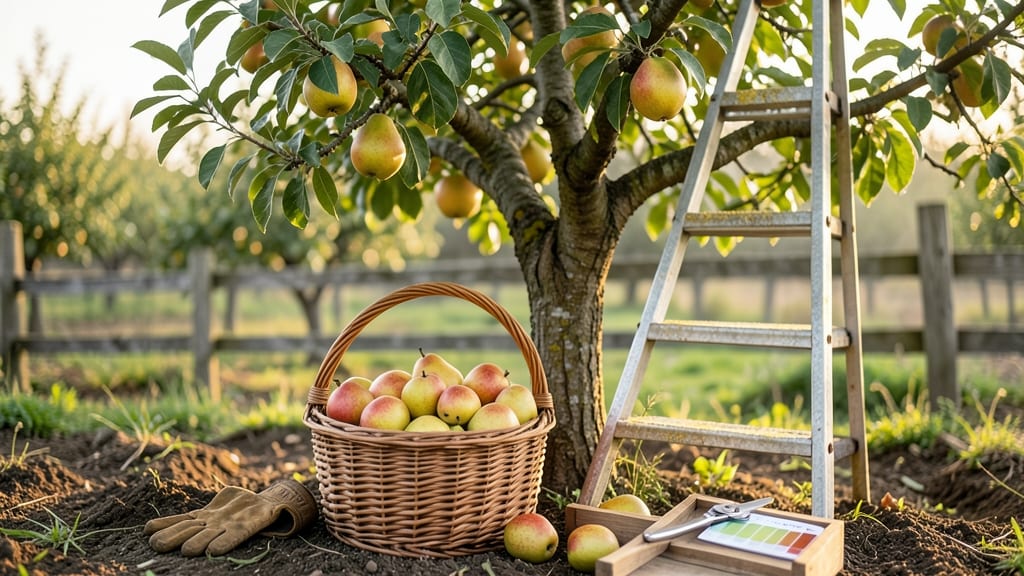
Harvesting Bartlett pears at the right time means the difference between buttery sweetness and bland disappointment — and the secret isn’t just waiting for them to turn yellow.
Wondering if your Bartlett pears are truly ripe—or just tricking you into picking them too early? The stem snap test holds the secret to harvesting at peak sweetness, and you don’t even need a knife.
Here’s the deal: Bartlett pears 🍐 are ready when they’re fully golden-yellow, slightly soft to the touch, and the stem snaps cleanly when you give it a gentle twist. Miss this window, and you’re left with pears that never fully ripen on the counter.
Below, I’ll walk you through the exact steps to test ripeness, how climate affects your harvest timeline, and the best way to store them so they stay juicy for weeks.

When to harvest Bartlett pears using the stem snap test
The Bartlett pear reaches its peak flavor when harvested at the perfect moment—just before it overripeness turns sweetness to mush. The stem snap test is my go-to method because it’s foolproof, requires no tools, and reveals the fruit’s true ripeness without damaging the tree.
Unlike color alone (which can be misleading), this test checks both internal ripeness and stem separation, giving you confidence every time.
Timing is everything with Bartlett pears. Picking too early means tart, underdeveloped fruit, while waiting too long risks mealy texture and fallen pears. The stem snap test bridges this gap by focusing on the stem’s resistance and how cleanly the fruit detaches.
I’ve used this method for years, and it’s saved me from countless batches of bland pears. Let’s break it down step by step so you can master it too.
How to Perform the Stem Snap Test
- Step 1: Choose a ripe-looking pear Look for golden-yellow skin (not green) and a slight give when gently squeezed. Avoid pears with bruises or soft spots.
- Step 2: Grasp the stem firmly Hold the pear’s stem between your thumb and forefinger, about 1 inch from the fruit. Apply gentle pressure—no yanking!
- Step 3: Twist slightly while pulling Apply a quarter-turn twist (like unscrewing a jar) as you pull upward. The stem should separate cleanly from the branch.
- Step 4: Listen for the snap A ripe Bartlett pear will make a distinct snapping sound and detach with the stem intact. If it tears or resists, it’s not ready.
- Step 5: Check the stem The stem should pull out easily with minimal force. If it breaks off mid-stem or leaves a stub, the pear needs more time on the tree.
✅ Ready to pick: Clean snap + stem pulls out intact
❌ Not ready: Stem tears or resists; fruit stays attached
The stem snap test works because Bartlett pears naturally detach when their abscission layer (a separating tissue at the stem base) fully develops. This layer forms as the fruit ripens, making the test more reliable than checking color alone.
For example, a pear might look yellow but still feel firm—this means it’s not ripe enough. The snap test confirms both external color and internal sweetness.
Pay attention to the resistance level during the test. A ripe pear should separate with light pressure and a satisfying pop. If you’re pulling hard and the stem tears, wait 3–5 days and retest.
I’ve found that mornings are ideal for testing because cooler temperatures make the fruit firmer, giving you a clearer reading. Avoid testing after rain, as moisture can make stems slippery and give false results.
One common mistake is assuming all Bartlett pears ripen at once. In reality, they mature over 1–2 weeks, so you’ll need to test multiple fruits daily. Start with pears on the shade side of the tree—they often ripen first.
Keep a harvest log to track which branches produce early or late. For instance, my south-facing branches always ripen 2–3 days ahead of the north side due to extra sunlight.
If you’re harvesting for long-term storage, aim to pick pears when they’re fully yellow but still slightly firm to the touch. These will soften further during storage. For immediate eating, wait until they’re slightly soft (like a ripe avocado).
The snap test helps distinguish these stages: a firm pear with a clean snap is storage-ready, while a softer pear with a snap is eating-ripe.
Regional climate plays a role in timing. In cooler zones (USDA 5–6), Bartlett pears typically ripen in late September, while in warmer zones (USDA 8–9), harvest can extend into early October. Heat waves can speed up ripening, so monitor your tree closely during hot spells.
I once had a batch of pears ripen 2 weeks early after a heatwave, and the snap test saved me from picking them too soon.
After harvesting, store Bartlett pears in a cool (32–40°F), humid environment (like a root cellar or fridge). They’ll keep for 2–4 weeks if not eaten immediately. The snap test ensures you’re starting with the best possible fruit, which means fewer mealy pears later.
Pro tip: Place harvested pears in a single layer to prevent bruising, and avoid stacking them—this can accelerate spoilage.
Mastering the stem snap test takes practice, but it’s a skill that pays off with perfectly ripe, sweet Bartlett pears every season. Once you get the hang of it, you’ll never second-guess your harvest again. Happy picking! 🍐
Bartlett pear ripening timeline: month-by-month harvest guide
Your Bartlett pear 🍐 harvest window shifts dramatically based on your USDA zone and whether you planted in spring or fall. In Zone 5, pears typically ripen 2-3 weeks later than in Zone 9, while cooler summers may delay sweetness development.
Understanding these climate-specific timelines helps you avoid the frustration of picking pears that never fully ripen indoors.
Temperature plays a crucial role in Bartlett pear ripening. Cooler summers (65-75°F) slow sugar development, while hotter summers (>85°F) can accelerate ripening but sometimes reduce flavor quality. Spring-planted trees generally bear fruit 1-2 years earlier than fall-planted ones, giving you a head start on harvest planning.
| Month | Zone 5 | Zone 6-7 | Zone 8-9 | Key Notes |
|---|---|---|---|---|
| June | Fruit sets; monitor for pests | Active growth phase | Fruit begins coloring | Thin fruit for size |
| July | Green fruit; test stems | Color change begins | Yellowing starts | Reduce watering |
| August | Early harvest window opens | Peak ripening | Full harvest | Test stems weekly |
| September | Main harvest period | Late harvest | End of season | Store unripe fruit |
In Zone 5, Bartlett pears typically reach harvest readiness in late August to early September, while gardeners in Zones 8-9 can expect their peak harvest in mid-August to late August.
The key difference lies in the cumulative heat units required for ripening—warmer climates accelerate the process, but cooler zones may need to wait until after the first frost threat has passed.
If you planted your Bartlett tree in spring, you’ll likely see fruit 1-2 years sooner than with fall planting. Spring-planted trees establish roots during the growing season, giving them a head start for flowering and fruiting.
For fall plantings, expect your first harvest 2-3 years later as the tree focuses on root development before bearing fruit.
Pro tip: Keep a harvest journal to track your Bartlett pears' ripening progress. Note the first day you see golden-yellow skin and when stems begin snapping cleanly. Over time, you’ll predict your harvest window with near-perfect accuracy—no more guessing games! 🌱
Remember that Bartlett pears continue ripening after harvest, so don’t rush to pick them just because they’re yellow. Wait for that clean stem snap—it’s your golden ticket to perfect pears! 🍐