
Picking
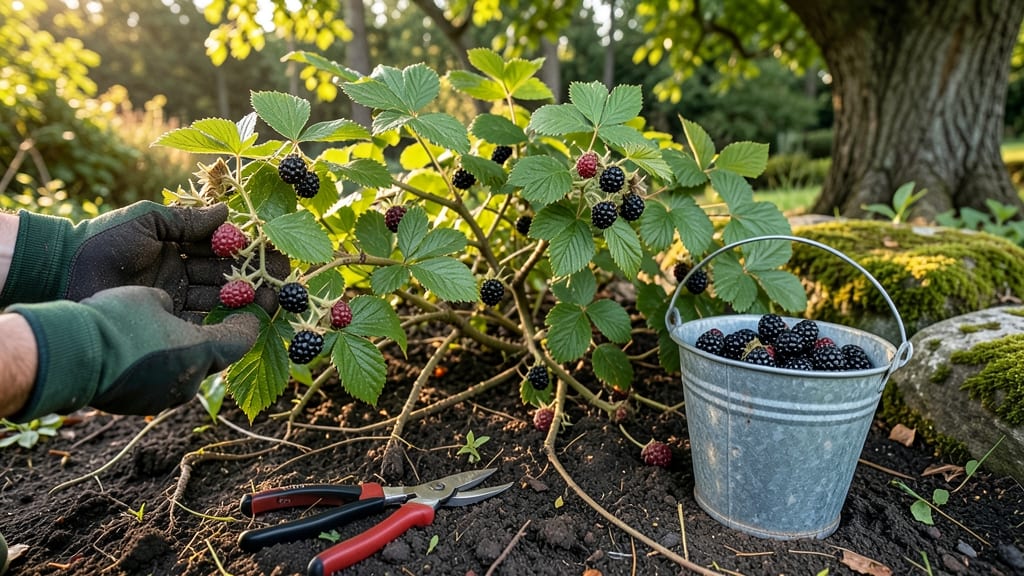
The Northern Hemisphere’s blackberry harvest season in summer is your chance to turn those juicy 🫐 berries into jam, pies, or fresh snacks—but timing is everything.
Picture this: you’ve spent months tending to your blackberry patch, only to pick berries that are either rock-hard or mushy. The difference between a perfectly ripe harvest and a disappointing one often comes down to knowing exactly when to pick—without cutting a single berry.
This summer, avoid the guesswork by learning the 5 foolproof ripeness tests that tell you when blackberries are ready to harvest, plus how climate, variety, and even your region can shift the ideal harvest window.
From early summer varieties in cooler zones to late-season sweeteners in warmer areas, I’ll walk you through what to watch for so you never miss peak ripeness again.


How to test blackberry ripeness without cutting berries (5 simple methods)
Summer in the Northern Hemisphere means blackberry season is in full swing, but knowing exactly when to pick those juicy blackberries can be tricky. Overripe berries turn mushy, while underripe ones lack flavor. The good news?
You don’t need to slice open a single berry to test its ripeness. With these 5 simple methods, you’ll master the art of picking blackberries at their peak—sweet, plump, and ready to eat.
Why does ripeness matter so much? Underripe blackberries taste tart and mealy, while overripe berries become soft and seedy. The key is catching them at that perfect moment when they’re fully black, slightly soft, and bursting with flavor.
These non-destructive tests will help you avoid wasting a single berry and ensure every harvest is a delicious success.
🌱 5 Non-Destructive Ways to Test Blackberry Ripeness
- 1. Color Check: Fully ripe blackberries are deep, glossy black with no red or purple hues. Avoid berries that are still partially colored.
- 2. Gentle Squeeze: A ripe berry should yield slightly to light finger pressure but not feel mushy. Think "soft like a ripe peach," not "squishy like jelly."
- 3. Scent Test: Hold a berry near your nose—ripe blackberries emit a sweet, fruity aroma. Underripe ones smell bland or slightly tart.
- 4. Stem Separation: Gently pull the berry away from the plant. If it detaches easily with minimal force, it’s ready to pick.
- 5. Leaf Inspection: Check the leaves around the berry. If they’re starting to yellow or drop, it’s a sign the berry is nearing peak ripeness.
Let’s start with the easiest method: color cues. A fully ripe blackberry should be uniformly black with no traces of red or purple. Early in the season, berries might start as red and gradually darken.
If you see any pink or purple patches, the berry isn’t ready yet. Pro tip: Look for a glossy sheen—this indicates the berry has reached its sugar peak and is ready to eat.
Next up is the gentle squeeze test, a foolproof way to gauge ripeness without damaging the berry. Place your thumb and index finger on opposite sides of the berry and apply light pressure. A ripe blackberry should feel slightly soft but still hold its shape.
If it feels rock-hard, it’s underripe. If it squishes between your fingers like overcooked pasta, it’s past its prime. Aim for that "just right" texture—like a perfectly ripe avocado.
Don’t underestimate your nose! The scent test is one of the most reliable ways to tell if a blackberry is ready. Hold a berry close to your nose and take a sniff. A ripe blackberry will release a sweet, jammy aroma.
If it smells bland or slightly fermented, it’s either underripe or overripe. This trick works especially well when you’re unsure about the color or texture. Trust your sense of smell—it’s a built-in ripeness detector!
Here’s a trick that saves time during harvest: the stem separation test. Gently grasp a berry and pull it away from the plant. If it detaches with minimal effort, it’s ready to pick.
If the stem snaps or the berry resists, it’s not ripe yet. This method is perfect for large harvests because it lets you quickly assess multiple berries without damaging the plant. Just be gentle—no yanking!
Finally, keep an eye on the leaves and surrounding foliage. As blackberries ripen, the plant signals its readiness by yellowing leaves or dropping older foliage. This is nature’s way of telling you it’s time to harvest.
Pay attention to the canes too—ripe berries often cluster near the tips of the canes, where the leaves are more mature. If you notice these signs, grab your basket and start picking!
Now that you know these 5 simple methods, you’ll never miss a perfect blackberry again. Remember, the best time to pick is in the early morning when temperatures are cooler, and the berries are at their firmest.
Store your harvest in the fridge for up to 3 days to preserve freshness. Happy picking—and enjoy those sweet, juicy blackberries straight from your garden!
Best blackberry varieties for Northern Hemisphere summer harvests (with ripening timelines)
Not all blackberries ripen at the same time in the Northern Hemisphere summer—and choosing the right variety can mean the difference between a short, intense harvest or a prolonged, steady supply of sweet berries.
If you live in cooler zones (USDA 5-7), early-ripening varieties like 'Triple Crown' will give you berries by early July, while gardeners in warmer climates (USDA 8-10) can enjoy late-season varieties like 'Natchez' well into September.
Your location isn’t the only factor—sunlight exposure, soil pH, and even trellis support can shift ripening by 1-2 weeks. For example, blackberries grown in full sun (6+ hours daily) will ripen 2 weeks earlier than those in partial shade.
Meanwhile, well-draining, slightly acidic soil (pH 5.5-6.5) ensures consistent ripening across all varieties.
| Variety | Ripening Window | Climate Zone | Key Notes |
|---|---|---|---|
| Triple Crown | Early July | USDA 5-9 | Thornless, high yield, needs trellis |
| Natchez | Late August-Sept | USDA 6-10 | Sweetest variety, heat-tolerant |
| Ouachita | Mid-July | USDA 5-8 | Disease-resistant, compact |
| Chester | Late July | USDA 6-9 | Large berries, needs pruning |
| Arapaho | Early July | USDA 4-8 | Cold-hardy, thornless |
If you’re in a cooler region (USDA 4-6), prioritize early-ripening varieties like Arapaho or Triple Crown, which thrive in shorter growing seasons. These varieties need 6-8 hours of sun and well-draining soil to ripen by mid-summer.
In contrast, warmer zones (USDA 8-10) can grow late-season varieties like Natchez, which ripens in late August or September and handles heat stress better than most.
One common mistake I see is assuming all blackberries ripen at the same time—they don’t. Even within the same patch, berries can ripen over a 2-3 week window. To extend your harvest, plant multiple varieties with staggered ripening times.
For example, pair Triple Crown (early July) with Chester (late July) to enjoy berries for 4+ weeks instead of just 10 days.
Pro tip: Prune your blackberries in late winter to encourage larger, earlier fruit. Remove last year’s canes (they won’t produce well) and thin out crowded growth. This simple step can shift ripening by 10-14 days and improve berry size.
Pair pruning with a balanced fertilizer (10-10-10) in early spring to give your plants the boost they need for a sweet, abundant harvest.
Now that you know which varieties ripen when—and how to adjust for your climate—you’re ready to plan your summer blackberry feast. Whether you’re freezing for winter or enjoying fresh berries straight from the vine, timing is everything.
Grab your harvesting basket, and let’s make this the best blackberry season yet! 🫐