
Picking
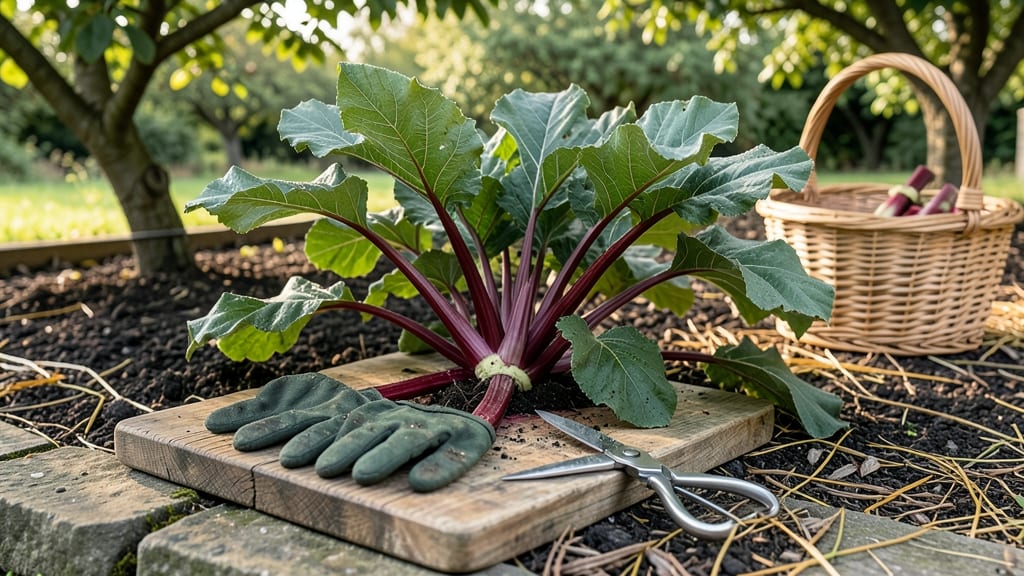
Harvesting rhubarb in October is possible—but only if your 🍃 rhubarb plants are mature, your climate is mild, and you know the exact signs of readiness.
Picture this: You’ve spent months waiting for those bright red stalks, and now October’s chill is creeping in. Should you pull every last one, or risk damaging next year’s crop?
The answer depends on your plant’s age, your zone’s frost date, and whether you’re willing to gamble on fibrous, less flavorful stalks.
In USDA Zone 6a, where hard frosts arrive by mid-October, harvesting should stop by early October unless you’re in a sheltered microclimate. But in warmer regions, you might snag a second flush of stalks—if you know what to look for.
Below, I’ll break down the maturity cues that tell you when to stop, how to harvest without harming the plant, and whether your late-season rhubarb is worth the effort—or just destined for the compost.


When October harvesting is safe: rhubarb maturity stages explained
October can be a tricky month for harvesting rhubarb—too early, and you miss peak flavor, but too late, and frost ruins your crop. The key lies in understanding your plant’s maturity stage, hardiness zone, and how your climate affects growth.
In my Zone 6a garden, I’ve learned that established rhubarb plants often produce a second flush of stalks in late summer, making October harvests possible if timed correctly.
Young rhubarb plants (first-year growth) should never be harvested in October—they need all their energy to establish strong roots for next year. Focus on second-year plants or older, which have developed robust crowns and can handle light harvesting before dormancy.
The ideal harvest window shifts based on your last frost date and whether your region experiences hard frosts by mid-October.
| Stage | Plant Age | October Harvest? | Frost Risk | Stalk Quality |
|---|---|---|---|---|
| Establishment | Year 1 | No | Low (focus on roots) | N/A |
| Mature Growth | Years 2-3 | Yes (early Oct) | Moderate (after first frost) | Firm, crisp |
| Full Maturity | Year 4+ | Yes (mid-late Oct) | High (after hard frost) | Tender, sweet |
| Late Season | All Ages | No (post-frost) | Very High | Mushy, bitter |
In USDA Zones 3-5, where hard frosts arrive by mid-October, harvesting should wrap up by early October to avoid damage. My Zone 6a rhubarb often pushes new stalks in late September, giving me a 2-3 week window before temperatures drop.
For Zones 7-9, where mild winters delay frost, you can extend harvesting into November—but watch for nighttime temperatures below 32°F (0°C), which signals the end of the season.
Frost tolerance varies by variety. Victoria rhubarb, a classic choice, handles light frosts better than Cherry Red, which becomes woody if exposed to cold. Always harvest stalks before the first hard frost—even if they’re still firm, freezing temperatures will ruin texture and flavor.
I’ve found that morning harvests in October yield the crispest stalks, as nighttime cooling can make them slightly softer.
Plant age dramatically affects October harvest potential. A 2-year-old rhubarb plant might produce 10-15 stalks by October, while a 5-year-old specimen can yield 50+ stalks. The key is selective harvesting: never take more than 30% of the stalks from a mature plant, or you’ll weaken its winter survival.
I leave the thickest, healthiest stalks to store energy for next spring’s growth.
Soil temperature also plays a role. If your garden soil stays above 50°F (10°C) at night, rhubarb may keep producing. But once soil temps drop below 40°F (4°C), growth slows, and stalks become woody and less palatable.
In my experience, late September is the last safe harvest window in colder climates, while early October works in milder areas. Always check your local frost forecast and adjust accordingly.
One common mistake is assuming all rhubarb is ready for October harvests. First-year plants should be left entirely alone—their energy goes into building roots, not producing stalks. Even second-year plants may only have 5-10 stalks by October, and harvesting them can stunt future growth.
Prioritize 3+ year-old plants for late-season harvests, as they’ve established strong crowns to handle the stress.
If you’re unsure whether to harvest in October, test stalk quality: snap a sample. If it bends without breaking, it’s not ready. If it snaps cleanly with a crisp sound, it’s perfect for harvesting.
I also avoid stalks with yellowing leaves or soft spots, as these indicate declining quality. In my garden, I mark harvest-ready stalks with flags to track which ones are safe to pick.
Protecting your rhubarb for future harvests
Signs your rhubarb is ready (or overripe) in October: what to watch for
October’s crisp air signals the end of rhubarb’s prime harvest season, but don’t toss those stalks just yet. Your rhubarb plants might still yield tender, flavorful stalks—if you know what to look for.
The key lies in visual cues and tactile tests that reveal whether your stalks are harvest-ready or past their peak.
First, check the stalk height—ideal harvest size is 10-12 inches. Stalks shorter than 8 inches are underdeveloped, while those over 14 inches often become woody and tough. In October, focus on stalks that meet the 10-12 inch mark, as they’ll offer the best balance of tenderness and flavor.
⚠️ callout-warning
Risk: Frost-damaged stalks (🌡️ below 28°F) or forcing regrowth weakens the rhubarb crown for next year. Never harvest stalks after the first light frost in your zone—even if they look ready!
Solution: Stop harvesting by mid-October in Zone 6a. In warmer zones (e.g., Zone 8+), you may extend harvest until early November—but only if stalks pass the snap test (see below).
Pro Tip: Mulch heavily with straw or leaves to insulate crowns if you’re unsure about frost dates.
Next, perform the snap test: Gently bend a stalk near the base. If it snaps cleanly (like celery), it’s ready to harvest. A stalk that bends without snapping is overripe and will be fibrous or hollow.
This test is especially critical in October, when stalks may appear plump but lack structural integrity.
Examine the stalk color and texture. Ready-to-harvest stalks should be vibrant red, pink, or green (depending on variety) with a firm, crisp exterior. Overripe stalks often develop dull, blotchy patches or soft spots, signaling they’ve absorbed too much water and lost sweetness.
For late-season storage, harvest only stalks that pass all tests. Trim leaves close to the stalk (but leave 1-2 inches of leaf attached) to slow moisture loss. Store in the fridge crisper drawer for up to 2 weeks, or freeze whole stalks (trimmed) for 6-12 months.
Avoid storing overripe stalks—they’ll spoil quickly and may cross-contaminate your harvest.
If your rhubarb crown is young (1 year old), prioritize its growth over October harvests. First-year plants need all their energy to establish roots. For mature plants, limit harvesting to 1/3 of stalks per plant to avoid stressing the crown before winter dormancy.