
How To
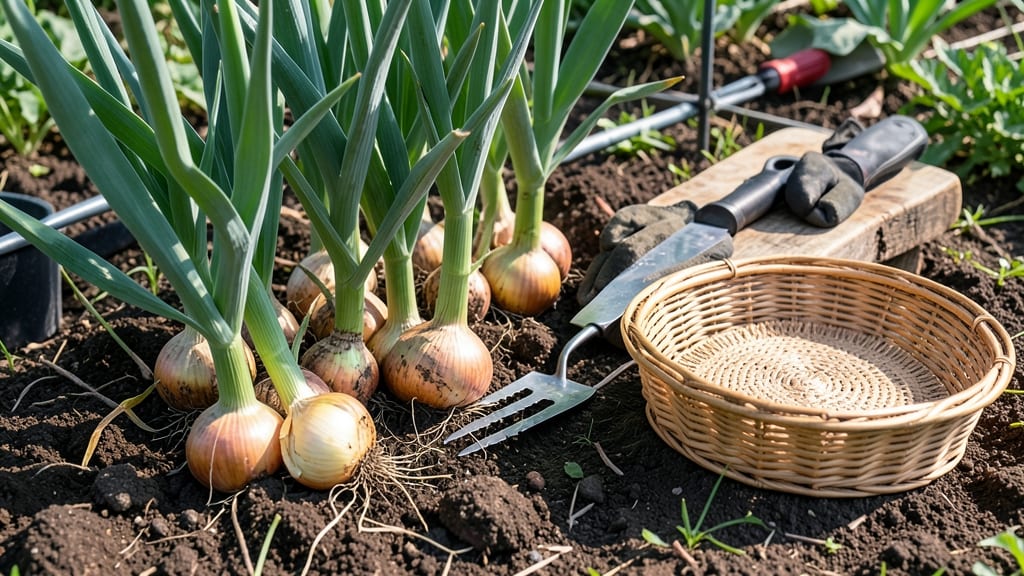
Harvesting onion bulbs at the right time to decide it's time to harvest onion bulbs transforms good crops into great storage-quality harvests—when the tops yellow and flop like a tired flag.
You’ve nurtured these 🧅 all season, and now the question isn’t if you’ll harvest, but when—because waiting too long means tough, pungent bulbs, while pulling them too soon wastes your effort. The key? Watching for those papery skins tightening and the neck shrinking like a drum.
This isn’t just about color or size—it’s about texture and timing. Bulbs ready to pull will feel firm when squeezed, with tops that’ve turned golden and collapsed. Skip these cues, and you might end up with onions that store poorly or taste bitter.
Below, I’ll break down the exact visual and tactile signs to look for, plus how to handle them post-harvest so they last through winter. No more guesswork—just perfect timing for your 🧅 harvest.

5 Clear signs your onion bulbs are ready for harvest (beyond just floppy foliage)
Harvesting onions at the perfect moment transforms your garden into a treasure trove of storage-friendly bulbs. But beyond the classic floppy foliage, subtle cues reveal when your onions are truly ready.
I’ve learned that ignoring these signs can lead to tough, pungent bulbs that spoil faster—so let’s dig deeper into what your plants are telling you.
Most gardeners focus on the yellowing tops, but the real magic happens below ground. The skin tightness, neck thickening, and even the bulb firmness all play critical roles. In my experience, these tactile clues often appear before the tops flop, giving you a head start on harvest timing.
Let’s explore these five key indicators that your onions are begging to be pulled.
- 1. Papery skins tighten like drumheads – When the outer layers resist gentle pressure, bulbs are ready.
- 2. Tops yellow fully and flop dramatically – Classic sign, but check bulbs first—they may be ready earlier.
- 3. Neck shrinks and dries slightly – The stem above the bulb tightens, signaling maturity.
- 4. Bulbs feel firm when squeezed – Soft spots mean they need more time; hard bulbs are harvest-ready.
- 5. Leaf color shifts from green to straw-like – Even if tops aren’t fully floppy, this indicates bulb development.
Let’s start with the most overlooked clue: skin tightness. When I first grew onions, I assumed floppy tops meant harvest time—but many bulbs were still soft inside. The real test is pressing your thumb against the bulb’s skin.
If it feels taut and resists slightly, your onions are ready. In my Zone 6a garden, this often happens 2-3 weeks before the tops fully collapse, especially for short-day varieties.
Next, pay attention to the neck thickening. The stem connecting the bulb to the foliage will shrink noticeably, almost like a dried cord. This isn’t just about appearance—it’s a biological signal that the bulb has completed its nutrient storage phase.
I’ve found that in warmer climates (Zones 7-9), this neck shrinkage occurs earlier, sometimes while tops are still partially green.
Don’t overlook the leaf color shift. While yellowing tops are the classic cue, the true transformation happens when leaves turn from vibrant green to a straw-like hue. This indicates the bulb’s sugars have converted to storage compounds.
In my container gardens, I’ve seen this shift happen faster due to limited soil moisture, so I harvest slightly earlier than in-ground onions.
The bulb firmness test is non-negotiable. Gently squeeze the bulb—if it feels solid and doesn’t dent, it’s ready. Soft bulbs mean they’ll either rot in storage or develop a harsh flavor.
I learned this lesson the hard way when I harvested a batch too early; they lasted only 2 weeks before molding. For long-day varieties, this firmness usually aligns with the floppy-top stage, but short-day onions may firm up before their tops fully collapse.
Seasonal adjustments matter more than you’d think. In cooler climates (Zones 4-5), onions often mature later, and I’ve had to wait until late July or early August for all signs to align.
Meanwhile, in warmer southern regions (Zones 8-10), harvest can begin as early as June. The key is to monitor all five signs together—no single cue should dictate your harvest timing.
One mistake I see often is harvesting based solely on day count. While onions typically mature in 90-120 days, environmental factors like rainfall patterns and temperature swings can shift this window dramatically.
For example, my 2022 crop took 105 days to mature in Zone 6a due to a wet spring, while the same variety in 2023 matured in just 95 days with drier conditions.
Pro tip: If you’re unsure, dig up one bulb to check its readiness. This sample test saves you from harvesting too early or too late. I keep a small notebook where I record the date when each sign appears—this helps me predict future harvests more accurately.
For storage onions, aim to harvest when 3-4 of these signs appear simultaneously for the best balance of flavor and shelf life.
Remember, the goal isn’t just to harvest—it’s to harvest well. Onions pulled at the perfect moment will store for months, while those harvested too soon or too late become bitter, sprouty, or prone to rot.
By mastering these five signs, you’ll transform your onion harvest from a gamble into a reliable, flavorful success every season. 🧅
Harvesting mistakes that ruin onion storage (and how to avoid them)
One of the biggest mistakes I see gardeners make is leaving onion bulbs in the ground too long after they’ve reached maturity. When you ignore those golden-yellow tops and tightened skins, the bulbs start converting sugars into bitter compounds, ruining flavor and storage life.
The result? Onions that last only weeks instead of months.
Another common error is harvesting without proper curing. Skipping this step means bulbs stay too moist, leading to rot or mold during storage. Even if you pull them at the perfect time, improper drying turns a great harvest into a disappointing one.
⚠️ Critical Harvest Warning
Don’t harvest when:
- Tops are still green and upright (bulbs aren’t mature)
- Soil is waterlogged or rainy (increases rot risk)
- Bulbs feel soft or spongy (overripe or diseased)
Wait for: Tops yellow and flop, skins tighten like drumheads, and neck shrinks noticeably.
Timing is everything—trim tops immediately after harvest but leave 1 inch of stem attached. This helps the bulb dry properly while protecting it from soil-borne diseases. If you cut too much, the bulb may absorb moisture from the soil, leading to premature spoilage.
For ideal storage, cure onions in a dry, shaded spot with good airflow for 2–3 weeks. I use a well-ventilated garage or porch during warm, dry days. Avoid direct sun, which can over-dry the skins and make them brittle.
Never store onions in plastic bags or sealed containers—this traps moisture and speeds up rot. Instead, braid tops together or store in mesh bags in a cool, dark place like a basement. Properly cured and stored onions can last 6–8 months without losing flavor.
If you notice sprouting or soft spots during storage, it’s a sign they’ve been harvested too late or stored too warm. In this case, use them first or freeze them for cooking to salvage the harvest.