
How To
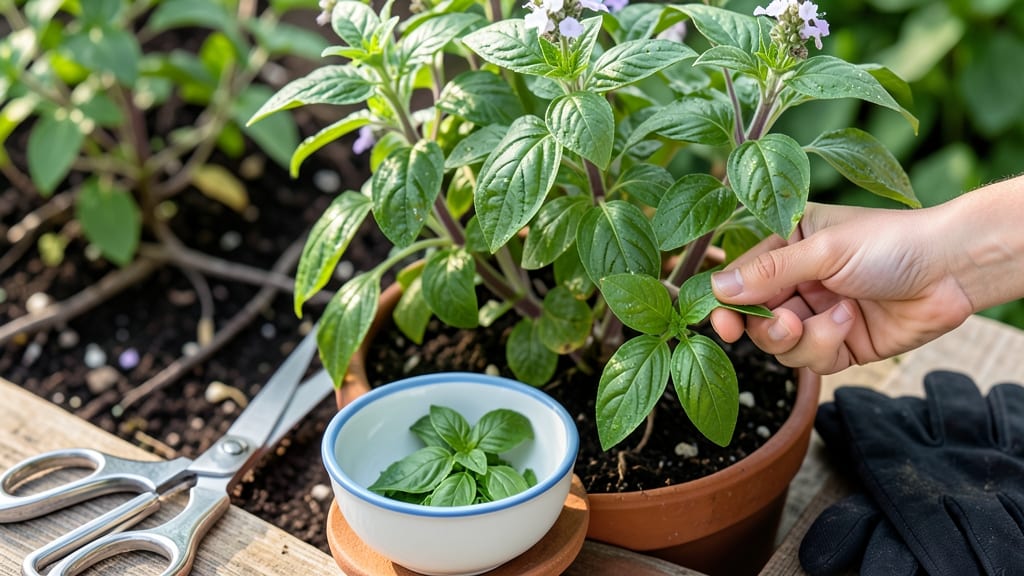
To harvest basil at its peak flavor, focus on the stem snap test and timing—cutting too early or too late ruins both taste and regrowth.
Picture this: you pinch a stem, and it snaps cleanly with a slight resistance. That’s your cue—June through September is prime time for harvesting 🌿 basil in Zone 6, but doing it wrong can leave you with bitter leaves or a plant that bolts too soon.
Most gardeners overlook the morning harvest rule, which locks in the freshest flavor, or cut too close to the base, stunting future growth. I’ve made those mistakes, and I’ll show you how to avoid them while maximizing your yield.
Below, I’ll walk you through the exact steps—from the stem snap test to proper pruning techniques—that keep your basil bushy, flavorful, and ready for another round of harvesting all summer long.


The stem snap test: when and how to harvest basil for maximum flavor
Harvesting basil at the perfect moment transforms your garden from a leafy green bush into a flavor powerhouse. The stem snap test is my go-to trick for determining when your basil is ready—it’s simple, science-backed, and ensures you get the most aromatic leaves while keeping your plant thriving.
This method helps you avoid the bitter, woody taste that develops when basil matures too long.
The stem snap test works by assessing the cell structure of your basil stems. When basil is at peak flavor, the stems contain just the right balance of water and fiber.
A gentle snap between your fingers signals that the plant’s essential oils (what gives basil its signature taste) are concentrated in the leaves. If the stem bends instead of snapping, it’s not ready yet—wait a few more days.
Timing is everything when it comes to basil. Harvest too early, and you’ll get small, underdeveloped leaves. Wait too long, and the plant starts producing flower buds, which trigger a chemical change that makes the leaves bitter.
The stem snap test helps you strike that sweet spot between 30 and 60 days after planting, when the leaves are large, dark green, and packed with flavor.
Before you grab your pruning shears, make sure your basil plant meets these visual cues: the stems should be firm but not woody, and the leaves should be dark green and glossy.
If you crush a leaf between your fingers, it should release a strong, sweet aroma. These signs, combined with the snap test, guarantee you’re harvesting at the perfect time.
How to Harvest Basil Using the Stem Snap Test
- 1 Choose a healthy stem: Select a main stem or side branch that’s at least 6 inches tall and has 3-4 sets of leaves.
- 2 Perform the snap test: Hold the stem between your thumb and forefinger about 1 inch below a leaf node. Gently bend it—if it snaps cleanly, it’s ready to harvest.
- 3 Cut at a 45-degree angle: Use clean pruning shears or sharp scissors to cut the stem just above a leaf node (where new leaves grow). This encourages bushier growth.
- 4 Avoid cutting too close: Never trim more than 1/3 of the plant at once, and leave at least 2-3 inches of stem to prevent stressing the plant.
- 5 Harvest in the morning: Basil’s essential oils are most concentrated in the cool morning hours. This ensures the best flavor and aroma in your harvest.
Harvesting basil correctly isn’t just about the stem snap test—it’s also about how you cut. Always use clean, sharp tools to avoid crushing stems or spreading disease.
A 45-degree angle cut just above a leaf node promotes healthier regrowth because it allows water to flow more efficiently to the remaining parts of the plant.
If you’re growing basil in containers, the stem snap test works just as well. In fact, potted basil often benefits from more frequent harvesting because it encourages a denser, bushier plant.
Just be mindful not to over-harvest—even container-grown basil needs time to recover. Aim to harvest every 2-3 weeks during the peak growing season to keep your plant productive.
One of the biggest mistakes gardeners make is waiting until the basil bolts (sends up a flower stalk). Once this happens, the leaves become bitter and tough, and the plant’s energy shifts from leaf production to flowering.
By mastering the stem snap test, you’ll avoid this pitfall and enjoy sweet, aromatic basil all season long.
Pro tip: After harvesting, rinse the leaves gently under cool water to remove any dirt, but avoid soaking them. Pat them dry with a paper towel and store them in the fridge for up to a week, or freeze them in ice cube trays for later use.
This preserves the freshness and flavor you worked so hard to cultivate.
With the stem snap test in your gardening toolkit, you’ll never second-guess when to harvest basil again. Your plants will stay healthy and productive, and your kitchen will always be stocked with the freshest, most flavorful basil possible. Happy harvesting!
Best harvesting practices to encourage basil regrowth and prevent bolting
Harvesting basil correctly isn’t just about cutting leaves—it’s about preserving your plant’s health and flavor for weeks to come. When done right, a single basil plant can produce continuous harvests all summer, but improper techniques often lead to bolting (flowering) or stunted growth.
I’ve learned through trial and error that timing, pruning method, and seasonal adjustments make all the difference.
The key to long-term basil production lies in regular, strategic harvesting. Most gardeners wait until the plant is fully grown, but by then, it’s often too late to avoid woody stems or bitter flavors.
Instead, I start harvesting when plants reach 6-8 inches tall, using the stem snap test to ensure I’m cutting at the perfect moment. This early intervention keeps your basil bushy and productive.
⚠️ callout warning ⚠️
⚠️ Avoid These Harvesting Mistakes
To encourage regrowth after harvesting, always cut just above a leaf node (where leaves attach to the stem). This signals the plant to branch out, creating a fuller, more productive bush.
I like to use clean, sharp pruning shears or even my fingers for smaller stems—just avoid crushing the stems, which can damage the plant. After each harvest, give your basil a light fertilizer boost (like a diluted 10-10-10 mix) to replenish nutrients.
Seasonal adjustments are critical for preventing bolting. In early summer, when temperatures rise, basil grows rapidly but may bolt faster. To slow this down, provide partial shade during the hottest hours (12 PM–3 PM) and increase watering frequency to every 1–2 days.
In late summer, reduce harvesting frequency as the plant prepares for dormancy, but keep pinching off flowers to extend the season.
For container-grown basil, harvesting practices differ slightly. Potted plants dry out faster, so I harvest more frequently (every 5–7 days) to encourage dense growth. Always water thoroughly after harvesting to prevent stress.
In Zone 6, I stop heavy harvesting by early September to let the plant harden off before frost. This ensures a stronger root system for next year’s growth.
With these practices, my basil plants have thrived for multiple harvest seasons, producing flavorful leaves well into fall. The secret? Treat harvesting like a conversation with your plant—listen to its cues, respond with care, and it’ll reward you with abundant, aromatic leaves all season long. 🌿