
How To
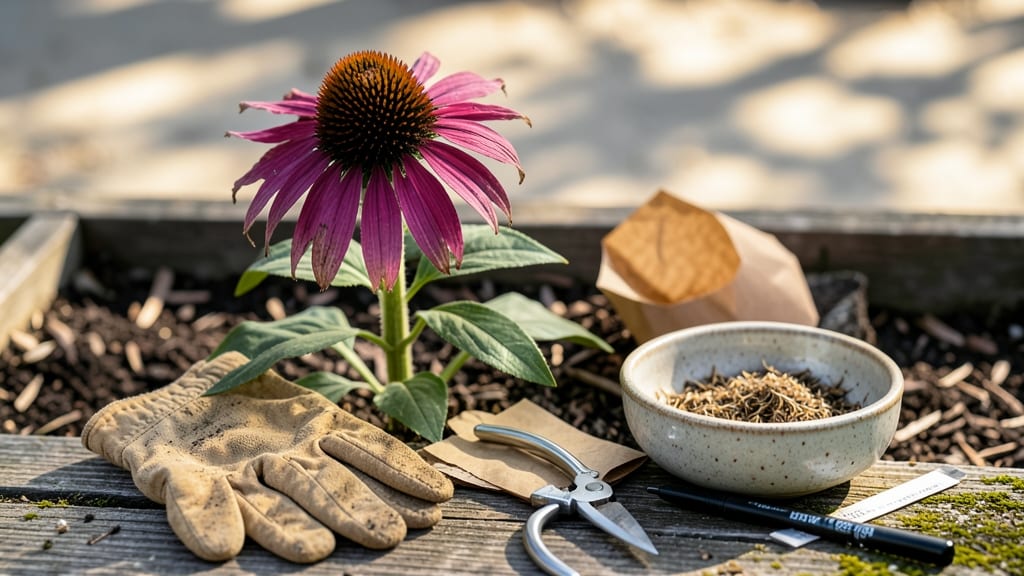
To harvest purple coneflower seeds 🌼, wait until the seed heads turn fully brown and rattle when shaken—this is your signal that the seeds are ready for collection.
Watching your purple coneflower blooms fade into dry, rust-colored seed heads isn’t just the end of the season—it’s your cue to harvest seeds that will bring next year’s pollinators back to your garden.
But timing is everything: harvest too early, and the seeds won’t be viable; wait too long, and they’ll scatter in the wind, leaving you with nothing to save for planting.
In this guide, I’ll walk you through the exact steps to identify mature seed heads, dry them properly, and store them for future use—so you can enjoy these beautiful, pollinator-friendly flowers year after year.


When to harvest purple coneflower seeds: the perfect ripeness checklist
Harvesting purple coneflower seeds at the wrong time can mean the difference between viable seeds for next year’s garden and wasted effort. The key is watching for three critical signs that signal perfect ripeness: color change, texture, and sound.
Miss these cues, and your seeds may lose viability or scatter before you can collect them.
Timing matters because overripe seeds shatter easily, while underripe seeds won’t germinate. In USDA Zone 6a (like much of the Midwest), aim to harvest between late August and October.
But in warmer climates like Zone 9b, you might start as early as July—always adjust based on your local frost dates and weather patterns.
Here’s my go-to ripeness checklist for harvesting Echinacea purpurea seeds without a second thought:
| Ripeness Indicator | What to Look For | Action to Take |
|---|---|---|
| 🟤 Cone Color | Central cone turns deep brown (not green or tan) | Harvest within 3-5 days—seeds dry out fast! |
| 🌿 Petal Condition | Petals wilt completely, turn brittle, and may crumble | Cut stems 1-2 inches below the seed head |
| 📜 Sound Test | Shake seed head—seeds rattle inside like marbles | Hang upside down to dry fully (7-10 days) |
| 🌡️ Weather Window | Dry, sunny days (humidity >50% risks mold) | Harvest early morning to avoid afternoon heat stress |
| ⏰ Seasonal Timing |
|
Prioritize before first frost—seeds won’t survive freezing |
Pro tip: If you’re in a humid climate, harvest slightly earlier—moisture accelerates mold on drying seed heads. I’ve lost entire batches to fungal growth because I waited too long in my Zone 7 garden during rainy Septembers.
Always err on the side of earlier harvests if weather turns unpredictable.
Never harvest seeds when the cone is still green or the petals remain upright—these are underripe and won’t germinate. I once tried harvesting a half-brown cone and ended up with only 10% viable seeds.
Patience pays off here; wait until the entire cone is uniformly brown and the petals are completely dry.
One common mistake is assuming all seed heads ripen at once. In my experience, mature plants produce flowers over 6-8 weeks, so you’ll need to monitor—and harvest—multiple batches throughout the season. Use twine or clothespins to mark stems you’ve already harvested to avoid confusion.
For gardeners in cooler climates, like Zone 4 or 5, focus on harvesting by mid-October at the latest. The first frost can damage seed heads, but more importantly, it signals the end of the drying window.
If your area gets early frosts, consider harvesting green seed heads (still with petals) and drying them indoors under a fan for 2-3 weeks.
Once you’ve mastered the ripeness checklist, the next step is proper drying and storage. But that’s a topic for our next section—where I’ll share my foolproof method for separating seeds from chaff and storing them for 90%+ germination rates.
Step-by-step purple coneflower seed harvesting method for maximum yield
Once you’ve identified your purple coneflower seed heads are ready (fully brown, papery, and rattling with seeds), it’s time to harvest them before they scatter. The key to a high-yield harvest lies in careful cutting, proper drying, and efficient seed processing.
Skipping any step risks losing seeds to birds, wind, or spoilage—so let’s maximize your seed-saving success with this foolproof method.
Gather your harvesting tools first: sharp pruning shears, paper bags or breathable fabric sacks, a clean workspace, and a gentle fan or sieve for seed separation. Work on a dry, sunny day to prevent moisture from ruining your seeds.
Remember, timing is everything—harvest too early, and seeds won’t be viable; wait too long, and they’ll blow away or attract pests.
🌼 Step-by-Step Purple Coneflower Seed Harvesting
- 1 Cut the seed heads at the base using clean pruning shears. Leave a 1-inch stem to prevent moisture from seeping into the cut. Place heads in paper bags immediately to catch any loose seeds.
- 2 Dry the heads for 1-2 weeks in a well-ventilated, dry space. Hang them upside down in a garage or shed (outdoor option) or lay them on a screen indoors near a dehumidifier. Avoid direct sunlight to prevent overheating.
- 3 Separate seeds from chaff by rubbing the dry seed heads between your hands over a clean tray or paper bag. Alternatively, use a gentle fan to blow away lightweight debris, leaving the heavier seeds behind.
- 4 Store seeds in a cool, dry place (like a paper envelope or airtight container) with a desiccant packet to absorb moisture. Label with the harvest year and variety name. Viable seeds last 2-3 years if stored properly.
For maximum efficiency, process seeds as soon as they’re fully dry—don’t let them sit too long, or they’ll lose viability. If you’re harvesting a large batch, consider using a seed sieve or mesh screen to speed up separation.
Pro tip: Wear gloves when handling dried seed heads to avoid skin irritation from the fine chaff.
Indoor drying works best in humid climates, while outdoor drying suits dry, warm conditions. If rain is forecasted, bring your heads inside immediately to avoid mold. Once seeds are clean and dry, you’ll have a ready-to-plant stash for next spring—just don’t forget to label them!
With these steps, you’ll turn your wilted coneflowers into a treasure trove of seeds that’ll attract butterflies and bees for seasons to come. Happy harvesting! 🌱