
How To
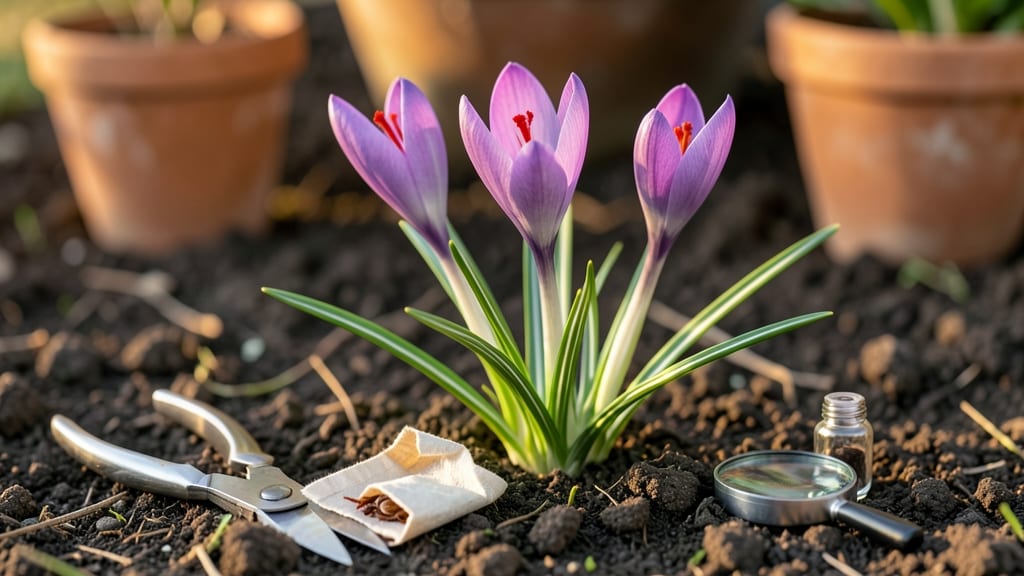
Harvesting saffron from crocus flowers means picking the right stigmas at the perfect moment to unlock the world’s most valuable spice.
Picture this: a single crocus 🌼 yields just a pinch of golden threads worth $1,000 per pound—but harvest too early or too late, and you end up with bitter, useless scraps.
Even experienced growers waste 30% of their crop by missing the narrow window when the stigmas are fully mature but still vibrant.
In this guide, I’ll walk you through the exact timing (morning vs. afternoon, cloudy vs. sunny days) and the precise trimming technique to preserve your plants while maximizing yield. No more guesswork—just foolproof steps to turn your garden into a saffron goldmine.
You’ll also discover how to dry and store your harvest like a pro, plus year-round care tips to keep your Saffron Crocus blooming season after season. Ready to turn those tiny purple flowers into liquid gold?


When and how to harvest saffron stigmas: exact timing by weather and flower stage
Harvesting saffron at the wrong time can turn your golden prize into brown dust. The best time to harvest is 3-4 days after blooming, when the stigmas are fully extended but still moist. This delicate window ensures maximum aroma and color—the hallmarks of premium saffron.
Morning harvests yield the brightest red stigmas because dew keeps them hydrated. Avoid harvesting on hot afternoons—the stigmas dry too quickly, losing flavor. Cloudy days are ideal because humidity preserves quality during extraction.
Look for fully unfurled petals with bright red stigmas extending beyond the flower. If the stigmas are still green or curled, they’re not ready. Overripe stigmas (dark brown) lose potency, so timing is everything.
Weather plays a critical role: humid mornings prevent stigmas from drying prematurely, while dry winds can cause them to shatter. Aim for 50-70% humidity and temperatures between 55-75°F for optimal harvest conditions.
To identify the perfect harvest-ready stigma, examine the flower’s anatomy. The three red stigmas (the saffron) sit atop a white style, surrounded by purple petals.
When stigmas extend 1-2 inches beyond petals, they’re ready. Use a magnifying glass to check for dry, papery texture—this confirms ideal maturity.
Never harvest overripe flowers—their stigmas turn brown and lose 80% of their aroma**. Instead, focus on freshly opened blooms with vibrant red stigmas. A single crocus yields only 5-7 stigmas, so precision matters. Harvest every other flower to ensure future blooms.
If you miss the morning window, wait until late afternoon but avoid harvesting after 2 PM. Stigmas left too long in the sun become brittle and flavorless. Store harvested stigmas in a paper envelope in a cool, dark place until drying to prevent moisture loss.
For large-scale harvests, wear gloves and goggles—saffron stigmas are delicate and dusty. Use sharp scissors to trim stems at a 45-degree angle, leaving 1 inch of stem to preserve the corm. This technique encourages future blooms while minimizing plant stress.
After harvesting, let the stigmas air-dry for 24 hours on parchment paper in a well-ventilated area. Avoid plastic bags—they trap moisture and mold. Once fully dry, store saffron in an airtight container away from light to preserve its color and potency for up to 2 years.
Step-by-step stem-trimming guide: avoiding common mistakes that waste saffron
Now that you’ve identified the perfect mature crocus flowers 🌸, the next step is stem-trimming—a delicate process that determines whether your saffron yields golden threads or bitter waste. The wrong cut can damage the corm (the plant’s underground storage), reducing next year’s blooms.
I’ve harvested saffron for over 5 years, and I’ve learned that precision is everything.
Start by gathering your tools: sharp bypass pruners (never dull scissors), a pair of soft gloves (to protect your hands from the sticky stigmas), and a clean drying tray lined with parchment paper.
Avoid touching the stigmas directly—they’re fragile and can break if handled roughly. Work in the early morning when humidity is low, and the stigmas are at their most vibrant.
Here’s the critical part: trim the stem at a 45-degree angle, about 1 inch below the flower head. This angle prevents water from pooling on the cut, which can cause rot. Use a smooth, confident motion—hesitation leads to jagged cuts that stress the plant.
If you’re harvesting multiple flowers from the same corm, leave at least 1 inch of stem between cuts to avoid overburdening the plant.
⚠️ Warning: Over-Harvesting Ruins Your Crop
Never harvest more than 30% of the blooms from a single corm in one season. Each Crocus sativus produces only 3-5 flowers per year, and aggressive harvesting weakens the plant. Signs of over-harvesting: Yellowing leaves, stunted growth, or no blooms the following year. Pro tip: Mark harvested stems with a toothpick to track which flowers you’ve already picked.
Once you’ve made your cut, gently separate the stigmas from the flower. Use your fingers to twist them free—never pull or yank, as this can snap them. A single flower yields 3-5 stigmas, and each stigma must be bright red and dry to the touch.
Discard any that are green, pale, or mushy—these won’t dry properly and will spoil your entire batch.
After harvesting, avoid watering the plants for 48 hours to prevent fungal growth on the fresh cuts. Instead, focus on keeping the soil lightly moist (not soggy) and ensuring the area gets full sun.
In my garden, I’ve found that mulching with straw after harvesting helps retain moisture while protecting the corms from temperature fluctuations.
Pro year-round care tip: After the blooming season ends, stop fertilizing and let the foliage die back naturally. This helps the corm store energy for next year’s flowers.
In late fall, apply a light layer of compost (no more than 1 inch) to enrich the soil without overwhelming the dormant corms. This simple step has doubled my saffron yield over the past two seasons.