
How To
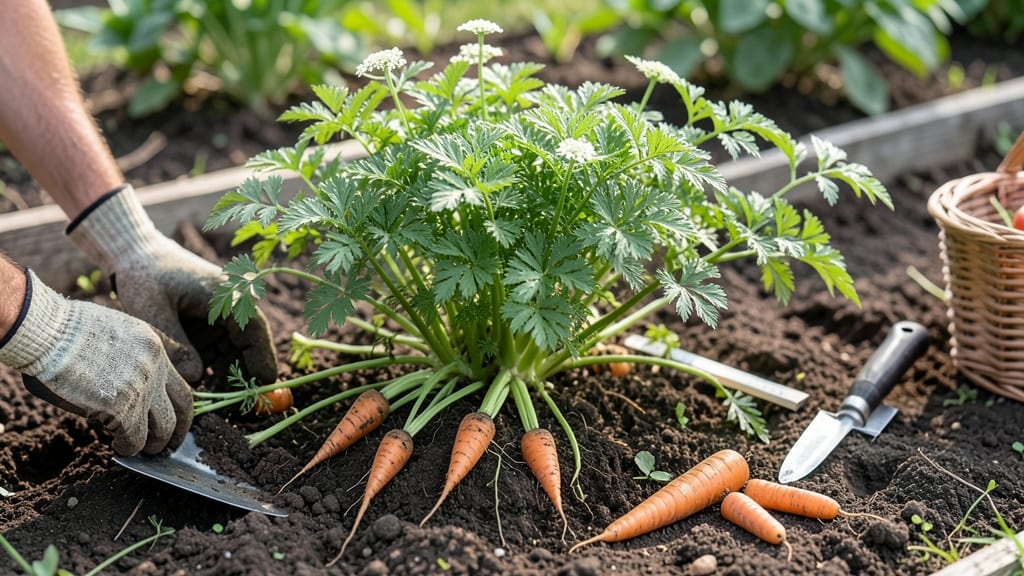
To know when to harvest carrots, watch for 3-4-inch-tall tops and roots that are 1-1.5 inches thick—these are your best cues for peak sweetness 🥕.
Carrots left too long in the ground turn woody and bitter, while harvesting too early means missing out on their sweetest flavor—so how do you know the perfect moment?
Most gardeners rely on size, but the real secret lies in the leaves and soil. A healthy carrot plant will have lush, vibrant foliage and roots that snap crisply when pulled gently. Below, I’ll show you how to test for readiness without digging.
You’ll also learn how to avoid common mistakes like overwatering before harvest or pulling by the tops, plus tips for storing your freshly pulled carrots to keep them crisp for weeks.


3 Tactile tests to harvest carrots at peak sweetness
Harvesting carrots at the right moment means the difference between a sweet, crisp root and a tough, bitter one. The key is to check them without digging—because once you pull them, you’ve lost your chance to test again.
These three simple tactile tests let you gauge readiness by feel, leaf health, and even sound, so you can harvest when they’re at their best.
I’ve used these same methods in my garden for years, and they’ve helped me avoid both underripe and overmature carrots. The best part? You don’t need any special tools—just your hands, eyes, and a little patience. Let’s start with the easiest clue: the leaf size.
- 🌱 Test 1: Leaf Size Check
Healthy tops should reach 3-4 inches tall with 4-6 vibrant leaves. If leaves are smaller, wait a week or two. - 🥕 Test 2: Root Firmness
Gently squeeze the soil near the base—if the root feels firm but not rock-hard, it’s ready. Soft spots mean it’s still growing. - 🔊 Test 3: The Tap Test
Tap the soil surface near the carrot—if it sounds hollow (like a drum), the root is fully developed. A dull thud means it needs more time.
First, focus on the carrot tops. Mature carrots have foliage that’s 3-4 inches tall with 4-6 broad leaves. If the leaves are still clustered close to the ground or look sparse, your carrots need more time.
I once harvested a batch too early because I ignored the leaf size—those carrots were tiny and watery. Pro tip: Compare your plants to a ruler or measuring tape for accuracy.
Next, use your fingers to test root firmness. Gently squeeze the soil near the base of the plant. If the root feels firm but not rock-hard, it’s ready to harvest.
A soft or mushy spot means the carrot is still growing. Overwatered soil can trick you here—if the ground feels soggy, wait a few days before testing again. Drainage matters!
The tap test is my favorite trick because it’s so simple. Tap the soil surface near the carrot with your knuckles. A hollow, drum-like sound means the root is fully developed and ready.
A dull thud? That’s your cue to wait. I learned this from an old gardening mentor, and it’s saved me from pulling underripe carrots more times than I can count.
Don’t forget to check the color of the exposed root tip if any is visible. A vibrant, deep hue (like rich orange, purple, or yellow) is a good sign. Pale or uneven coloring means the carrot isn’t fully mature yet.
In my garden, I’ve noticed that purple carrots often show their color more vividly when ready, while orange varieties stay a consistent shade.
Timing is everything, especially for baby carrots. If you’re growing short varieties like ‘Paris Market’ or ‘Little Finger,’ harvest when the tops are just 2 inches tall and the roots are ½-inch thick.
These types are sweeter when smaller, so don’t wait too long. For standard varieties, stick to the 3-4 inch leaf rule.
One mistake I’ve made? Harvesting based on days after planting alone. While most carrots take 60-80 days to mature, soil temperature and variety can shift that window.
For example, short-day varieties (like ‘Danvers’) mature faster in cooler weather, while long-day varieties (like ‘Nantes’) need more time. Always double-check with tactile tests.
Finally, harvest on a cool, cloudy day to reduce stress on the plant. Pull gently but firmly—if the carrot resists, wiggle it loose. Never pull by the tops, or you’ll risk breaking the root.
After harvesting, store them in the fridge for up to 3 weeks or enjoy them fresh for the sweetest flavor.
With these three tests, you’ll never guess again when your carrots are ready. The next time you’re kneeling in the garden, take a moment to feel, tap, and observe—your taste buds will thank you! 🥕
Carrot growth stages: when size isn’t the only factor
Understanding carrot growth stages helps you time harvests for maximum sweetness and texture. While most gardeners focus on root size, factors like soil temperature, variety type, and seasonal conditions play equally critical roles in determining the perfect harvest window 🥕.
For example, short-day varieties like 'Nantes' mature faster in cooler climates, while long-day varieties such as 'Danvers' thrive in extended sunlight but take longer to reach harvest. Even within the same variety, a 60°F soil temperature accelerates growth by 20% compared to cooler conditions.
| Growth Stage | Days After Planting | Key Indicators | Harvest Window |
|---|---|---|---|
| Seedling | 7-14 | First true leaves appear | None |
| Early Root | 30-45 | Roots reach 1/2 inch thick | Baby carrots |
| Mature Root | 60-80 | Tops 3-4 inches tall, roots 1-1.5 inches thick | Prime harvest |
| Overmature | 80+ | Woody texture, bitter flavor | Avoid |
Seasonal timing also impacts harvest windows. In spring-planted crops, aim to harvest between 60-70 days before summer heat causes bolting. For fall varieties, extend harvests into cooler months when roots develop sweeter flavors due to lower soil temperatures.
My pro tip: Plant short-day varieties like 'Paris Market' in early spring for baby carrots, then succession-plant long-day varieties such as 'Chantenay' for a continuous harvest. This staggered approach ensures you always have fresh carrots when they're at their peak 🌱.
Don't overlook soil conditions either. Sandy soils speed up growth but may produce smaller roots, while clay-heavy soils slow development but yield larger, sweeter carrots. Always test your soil's drainage and pH before planting to optimize timing.
For fall harvests, watch for frost warnings—carrots can tolerate light frosts but become pithy and lose sweetness if exposed to hard freezes. Mulch with straw to protect roots and extend the harvest season by 2-3 weeks ✂️.