
How To
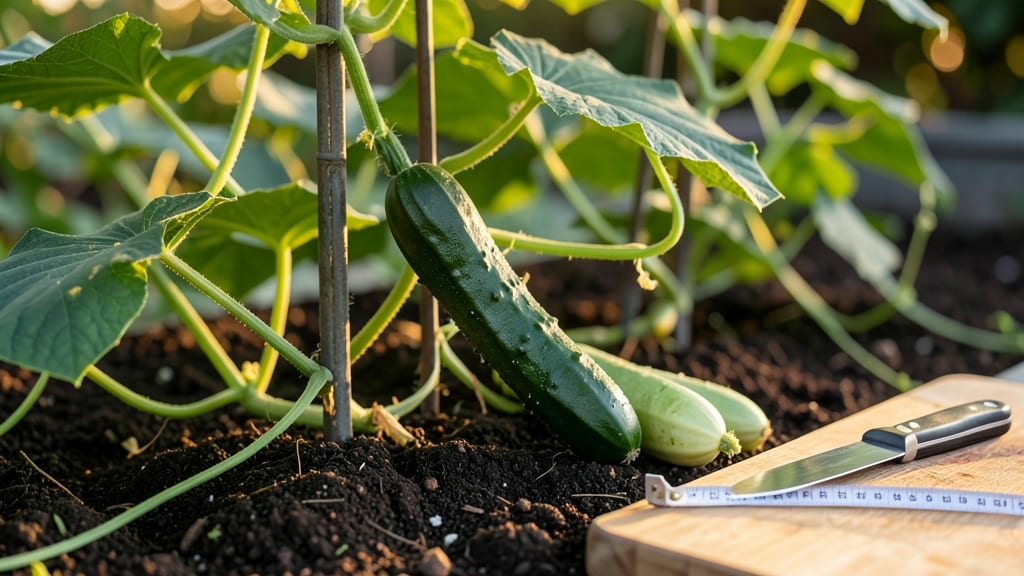
To know when to harvest cucumbers, watch for 6-8 inches of length and a deep, even green skin that yields just slightly to gentle pressure—these are your perfect cues before they turn bitter.
Picking cucumbers at the wrong time means sacrificing crisp texture and flavor—here’s how to master the exact moment for harvest using simple, foolproof tests every gardener should know.
Most varieties reach peak ripeness when they’re firm to the touch but not rock-hard, with a stem that snaps cleanly when bent. Morning harvests are ideal because cucumbers lose moisture and firmness as the day heats up.
Below, I’ll walk you through three tactile tests—finger pressure, size comparison, and stem separation—to guarantee you never miss the window for juicy, vine-ready 🥒 harvests.


3 Tactile tests for determining cucumber ripeness
Harvesting cucumbers at the perfect moment transforms your garden bounty from bland to bursting with crisp sweetness. The key lies in three simple tactile tests that reveal a cucumber's true readiness—without guessing.
These methods work for both slicing varieties (like 'Straight Eight') and pickling types (such as 'Boston Pickling'), ensuring you never miss the window between underripe toughness and overripe bitterness.
First, let's debunk the myth that color alone determines ripeness. While deep green often signals maturity, texture and firmness are far more reliable indicators. The tests below let you feel the difference between a cucumber that's ready to eat and one that needs more time on the vine.
Master these techniques, and you'll enjoy cucumbers at their peak—crisp, tender, and packed with flavor—for weeks.
⚠️ Pro Tip: Always harvest in the morning when cucumbers are coolest. This prevents sun-scald damage and gives you the most accurate reading on firmness.
-
1. Thumbnail Pressure Test
Press your thumbnail firmly into the cucumber's skin. If it resists slightly but doesn't dent deeply, it's ready. For pickling varieties, look for minimal give—they're harvested smaller. -
2. Size Comparison
Hold the cucumber next to a 6-inch ruler. Slicing cucumbers should be 6-8 inches long. Pickling cucumbers are ready at 1-3 inches. Measure from the stem end to the blossom end. -
3. Stem Separation Test
Gently bend the stem where it attaches to the cucumber. If it snaps cleanly with minimal resistance, it's time to harvest. A tough stem means more growing time is needed.
Let's break down the thumbnail pressure test first, as it's the most commonly misunderstood. Many gardeners assume a cucumber must be rock-hard to be ripe, but that's actually a sign of underripeness.
The ideal cucumber yields just enough to your thumbnail that you can feel the slight give of its firm flesh without leaving a dent. For heirloom varieties like 'Lemon Cucumber,' this test is especially critical—they often have thinner skins that bruise easily if harvested too late.
Size matters more than you might think, especially when comparing slicing vs. pickling varieties. A 7-inch slicing cucumber harvested at 5 inches will lack full flavor development, while a 2-inch pickling cucumber left to grow to 4 inches will become seedy and bitter.
Keep a small measuring tape in your gardening toolkit to avoid guesswork. Pro growers even use colored markers on their vines to track ideal sizes for each variety.
The stem separation test reveals a cucumber's internal readiness better than any other method. When a cucumber is fully mature, its plant produces an abscission layer—a natural separation zone that makes harvest effortless.
If the stem tears instead of snapping cleanly, the cucumber needs 3-5 more days on the vine. This test also helps you avoid overripe cucumbers, which develop a yellowing blossom end and lose their crisp texture.
For container gardeners, these tactile tests take on extra importance since space is limited. Bush varieties like 'Bush Champion' produce cucumbers faster than vining types, so you'll need to check ripeness every 2-3 days rather than weekly.
The thumbnail test works best when your fingers are cool—morning harvests prevent the heat of the day from making cucumbers appear softer than they truly are.
What about color changes? While most cucumbers start green, some varieties like 'Armenian Cucumber' turn yellow or white when ripe. Even then, texture remains the priority.
A yellow Armenian cucumber that's still hard to the touch isn't ready, while a green one that yields slightly to pressure might be perfect. Color is just one piece of the puzzle—never rely on it alone.
Here's a bonus tip: If you're growing multiple cucumber varieties, use different-colored harvest baskets to organize them. This prevents mix-ups between your 6-inch slicers and 2-inch picklers when checking ripeness.
I keep red baskets for slicing types and green ones for pickling—it's a simple system that saves time during harvest season.
Remember that environmental stress can affect these tests. In extreme heat (above 90°F), cucumbers may ripen faster and become softer more quickly. Conversely, cool, cloudy weather can slow maturation.
Adjust your harvesting schedule by 1-2 days based on your local 7-day forecast—this keeps your cucumbers at peak texture regardless of Mother Nature's mood swings.
When you master these three tactile tests, you'll transform from a guessing gardener to a harvesting expert. The difference in flavor and texture is night and day—your salads, pickles, and snacks will thank you.
Start practicing these methods now, and you'll enjoy cucumbers at their absolute best all season long.
Cucumber variety-specific harvest timelines (with visual cues)
Not all cucumbers are created equal—and neither are their harvest windows. Slicing cucumbers like 'Straight Eight' or 'Marketmore' need to reach 6-8 inches with firm skin, while pickling varieties such as 'Boston Pickling' or 'Calypso' should be harvested at just 1-3 inches for that perfect crunch. Heirloom varieties, like 'Lemon Cucumber' or 'Armenian', often mature slower and may show unique color shifts before reaching prime harvest time.
Color is your first visual cue: deep green cucumbers with no yellowing or soft spots mean they’re ready to pick. For yellow varieties, look for a consistent golden hue without browning.
Morning is always the best time to harvest—cucumbers lose moisture and firmness as temperatures rise, making afternoon checks less reliable.
Here’s a quick reference for variety-specific harvest timelines, including size, color cues, and ideal harvest windows to keep your cucumbers at peak flavor:
| Variety Type | Size at Harvest | Color Cues | Harvest Window | Texture Test |
|---|---|---|---|---|
| Slicing (e.g., 'Straight Eight') | 6-8 inches | Deep green, no yellow | 50-60 days | Firm but yields slightly |
| Pickling (e.g., 'Boston Pickling') | 1-3 inches | Bright green, glossy | 45-55 days | Crisp, no soft spots |
| Heirloom (e.g., 'Lemon Cucumber') | 4-7 inches | Yellow or striped | 60-70 days | Firm, no wrinkles |
| Bush Varieties (e.g., 'Bush Champion') | 5-7 inches | Even green | 50-65 days | Resists thumb pressure |
For slicing cucumbers, aim to harvest every 2-3 days to prevent overgrowth and bitter flavors. Pickling cucumbers should be picked even more frequently—every 1-2 days—since they mature faster and lose quality quickly once overripe. Heirloom varieties often have longer harvest windows, so monitor them closely for color changes or texture shifts.
If you notice yellowing at the blossom end or wrinkled skin, it’s a sign the cucumber has passed its prime. Overripe cucumbers develop a mealy texture and bitter taste, so don’t wait too long!
Use a sharp knife or pruners to avoid damaging the vine, and always harvest in the morning for the freshest pick.
Pro tip: Label your plants at planting time to track maturity dates. This helps you stay ahead of the harvest game, especially if you’re growing multiple varieties in the same garden. With these cues, you’ll never miss the perfect moment to pick your cucumbers again! 🥒