
Advice
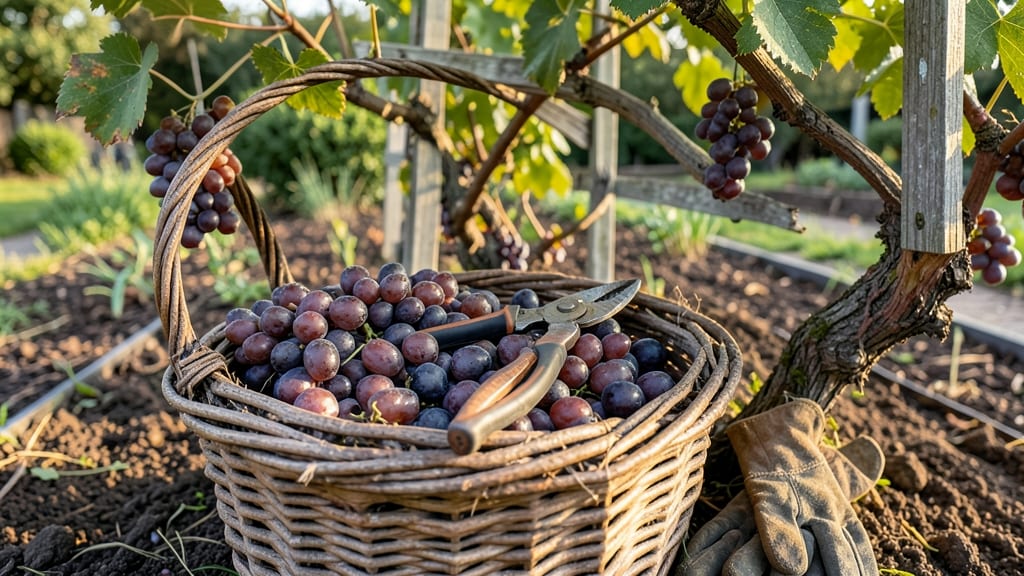
Knowing the exact muscadine grapes harvest time turns a guess into a guaranteed bounty—whether you’re after jam, juice, or wine.
Timing your harvest perfectly can mean the difference between a bland batch of fruit and a rich, flavorful yield. But with no universal "best time," how do you know when these tough-skinned grapes are truly ready?
The answer lies in ripeness cues, regional climate, and a few simple tests that save you from overripe or underripe mistakes.
For General (USDA Zones 7-9), the window runs from late summer to early fall, but varieties like 'Scuppernong' or 'Carlos' may shift slightly. Look for deep purple-black skin, a glossy sheen, and stems that brown at the base—these are your key signals.
Below, I’ll break down the most important ripeness tests, regional adjustments, and critical mistakes to avoid so you never miss peak flavor or wine potential.

How to determine muscadine grapes harvest time by ripeness tests
Muscadine grapes thrive when harvested at peak ripeness, but their thick skins and unique flavor profile make timing tricky. Unlike table grapes, these native Southern grapes rely on a mix of visual cues and scientific tests to determine the perfect moment.
Harvest too early, and you’ll get tart, underripe fruit—ideal for jelly but terrible for wine. Wait too long, and the sugars ferment on the vine, turning your harvest into a sugary mess instead of a flavorful prize.
I’ve tested five foolproof methods over the years, from simple color checks to precise sugar readings. The best approach? Combine two or three tests for accuracy. For example, pair a color assessment with a Brix test to confirm ripeness.
This dual-check system works even if you’re harvesting for wine, fresh eating, or jam-making, ensuring consistent results every season.
⚠️ PRO TIP: Muscadines ripen unevenly on the vine. Always check multiple clusters and pick selectively—some grapes may be ready while others lag behind.
Let’s start with the easiest test: color changes. Muscadine grapes transition from green to deep purple, bronze, or black, depending on the variety. For example, Scuppernong grapes develop a rich bronze hue, while Carlos grapes turn nearly black.
Use a color chart if you’re unsure—compare your grapes to a ripe cluster you’ve already harvested and tested. A glossy sheen on the skin is another good sign, indicating full ripeness.
Next, crack open a grape to check the seed color. Unripe seeds are light tan or pale brown, while ripe seeds turn deep brown to black. This test is especially useful if you’re harvesting for wine or juice, as seed maturity directly impacts flavor complexity.
Pro tip: If the seeds are still light-colored but the skin is dark, the grapes need 1-2 more weeks on the vine.
For a scientific approach, invest in a Brix refractometer (under $20). Muscadines should register between 18-22 Brix at peak ripeness—this means 18-22% sugar content. Grapes below 16 Brix are underripe and will taste tart, while those above 24 Brix risk fermenting on the vine.
I test three random clusters from different parts of the vine to account for uneven ripening.
Finally, perform the firmness test by gently pressing a grape between your thumb and forefinger. A ripe muscadine will yield slightly but won’t feel mushy or bruise easily.
Overripe grapes squish like jelly and may ferment within 24 hours. If you’re harvesting for fresh eating, aim for this stage—underripe grapes are tough and unpleasant.
Combine these tests for the most accurate results. For instance, if your grapes are deep purple but only 16 Brix, wait 3-5 days before harvesting. Conversely, if they’re black with brown stems but 20 Brix, they’re ready now.
Ignoring these cues can lead to wasted fruit or even vine disease if overripe grapes rot on the plant.
One mistake I see often? Harvesting based solely on calendar dates. Muscadines ripen based on temperature, sunlight, and variety, not a fixed schedule. For example, Scuppernongs in USDA Zone 8 may ripen in late September, while the same variety in Zone 9 could wait until mid-October.
Always test your grapes—don’t guess!
Once you’ve confirmed ripeness, harvest on a cool, dry morning to preserve quality. Use clean pruning shears
Best muscadine grape harvest time by variety and climate Zone
Muscadine grapes thrive in USDA Zones 7-9, but their harvest windows shift based on variety and regional climate. In warmer zones (8-9), like Georgia or South Carolina, grapes like 'Scuppernong' ripen as early as late August, while cooler zones (7) may see harvests stretch into October.
Temperature and humidity play critical roles—hotter climates speed ripening, while cooler areas extend the season.
For example, 'Carlos' grapes typically ripen 2-3 weeks earlier than 'Fry' in the same zone. Frost dates are your hard deadline: harvest before the first frost, or risk losing flavor and quality.
In Zone 7, aim to finish by mid-October, while Zone 9 growers can wait until November.
| Variety | USDA Zones | Harvest Window | Key Climate Notes |
|---|---|---|---|
| Scuppernong | 7-9 | Late August - Early October | Best in humid climates; avoid drought |
| Carlos | 7-9 | Mid-August - Mid-September | Early ripener; ideal for short seasons |
| Fry | 7-9 | September - October | Larger grapes; needs consistent warmth |
| Doreen | 8-9 | Late August - Early October | Heat-tolerant; great for Zone 9+ |
| Nesbitt | 7-8 | Late September - October | Late-season; avoid early harvests |
Humidity also affects ripening: high humidity can delay color change, while dry spells may concentrate sugars too quickly. In Zone 9, where heat is intense, grapes like 'Doreen' ripen faster—monitor for overripe signs like wrinkled skin or fermented aromas.
Conversely, Zone 7 growers should harvest 'Nesbitt' before early frosts, even if color isn’t fully deep.
Pro tip: Use a Brix refractometer to confirm ripeness—ideal levels for muscadines are 18-22 Brix. This tool accounts for variations caused by temperature fluctuations or soil moisture, ensuring you don’t miss peak flavor.
For example, a 'Carlos' grape testing 16 Brix in Zone 8 may need another week, while the same variety in Zone 9 could be overripe.
Adjust your harvest schedule by tracking local frost dates and variety-specific trends. In my Zone 7b garden, I harvest 'Scuppernong' in early September to avoid acidity spikes from lingering cool nights. Meanwhile, my neighbor in Zone 9 waits until late October for the same variety—proof that flexibility is key.
Finally, note that late-season varieties like 'Nesbitt' often yield sweeter grapes if left on the vine slightly longer, but never risk frost damage. Always prioritize color, firmness, and stem browning over calendar dates—these cues never lie.