
How To
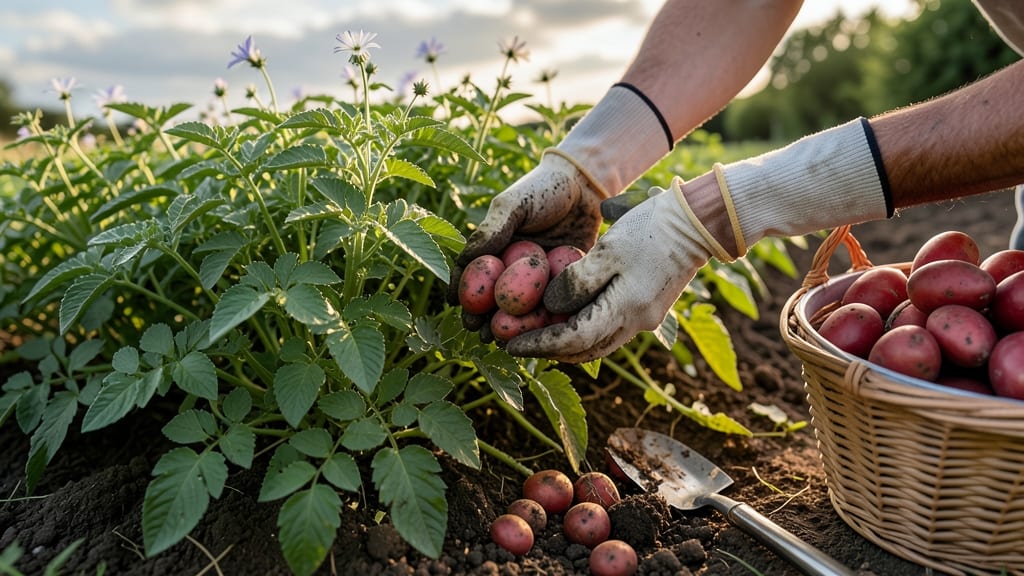
Harvesting red potatoes at the right time means the difference between mealy, dry tubers and creamy, flavorful spuds straight from your garden 🥔.
Yet most gardeners miss that perfect window every year—digging too early and ending up with tiny, underdeveloped potatoes or waiting too long and risking rot. The key? Watching for foliage death and using a simple soil check that never fails.
In cooler climates like USDA Zone 6a, red potatoes typically mature in 75-90 days, but heat and soil conditions can shift that timeline dramatically.
Below, I’ll walk you through the exact signals to look for—plus how to adjust for early or late varieties—and ensure your harvest is both timely and bountiful.
You’ll also discover how to store your potatoes properly to keep them fresh for months, avoiding the common mistakes that turn great harvests into wasted tubers. Ready to dig in?

When to harvest red potatoes: the foliage death & soil check method
Knowing the exact harvest window for red potatoes transforms your garden from ordinary tubers to restaurant-quality spuds. Most gardeners either harvest too early—ending up with small, mealy potatoes—or wait too long, risking sprouted, shriveled tubers.
The secret lies in two foolproof methods: foliage signals and a simple soil check that reveals readiness without guesswork.
Red potatoes mature between 75-90 days after planting, but timing varies by variety and climate. Early varieties like 'Red Norland' may be ready in 60-70 days, while late varieties like 'Red LaSoda' need 90 days or more.
The key is watching for foliage death—when your plants signal it's time to dig. Combine this with the soil check method to confirm tubers are perfectly sized and flavorful.
🌱 Step-by-Step Harvest Guide
-
Step 1: Watch for Foliage Signals
Look for yellowing leaves and stem death—these are the first signs your potatoes are mature. Start checking when 50% of foliage turns yellow. -
Step 2: Test for New Potatoes Early
For small, tender new potatoes, gently dig around the base of stems when plants are 4-6 weeks old. Look for 2-inch tubers—these are perfect for early harvests. -
Step 3: Perform the Soil Check
Use a garden trowel to dig a 6-inch-deep hole near the plant. If you find 2-3 inch tubers with firm skin, it's harvest time. If tubers are smaller than a golf ball, wait 1-2 weeks. -
Step 4: Confirm with the Thumbnail Test
Press your thumbnail into a tuber. If the skin resists pressure and doesn't puncture easily, it's ready. Thin-skinned tubers need more time. -
Step 5: Harvest at the Right Time
For mature harvests, wait until all foliage is dead and stems are brown and crispy. Dig carefully to avoid piercing tubers, which causes bruising.
Timing your harvest based on foliage death alone can be tricky—some varieties drop leaves early but tubers aren't fully mature. That's where the soil check method saves the day. This technique lets you physically verify tuber size without waiting for the entire plant to die back.
For example, if you're growing 'Red Pontiac,' dig a test hole when foliage starts yellowing. If tubers are smaller than a ping-pong ball, wait another week.
One common mistake is assuming green foliage means unripe potatoes. While green leaves indicate active growth, red potatoes often yellow and die back before tubers reach peak flavor. Pay attention to the stem condition: when stems snap easily when bent, it's a clear sign to harvest.
This is especially true for late-season varieties, which may take up to 120 days to mature in cooler climates.
For new potato harvests, timing is even more critical. These small, tender tubers form early in the season, often when plants are just 4-6 weeks old. To find them, gently brush away soil around the base of stems.
Look for 1-2 inch tubers—these are perfect for salads or roasting. If you miss this window, tubers will grow larger but lose their delicate texture.
Climate plays a huge role in harvest timing. In cool, short-season zones (like USDA Zone 4), potatoes may mature 2-3 weeks earlier than in warm climates.
For instance, in Zone 5, I often harvest red potatoes by early July, while in Zone 8, the harvest window extends into late August. Always adjust your expectations based on your last frost date and average growing season length.
After confirming tubers are ready, harvest on a dry, sunny day to allow soil to dry slightly. Use a fork or spade to loosen soil gently, then lift tubers by hand to avoid damage. Never pull plants by the stems—this can tear tubers and leave them vulnerable to rot.
Once harvested, cure potatoes in a dark, humid place (like a garage or basement) for 1-2 weeks to toughen their skins and improve storage life.
Pro tip: If you're unsure whether to harvest, dig one test tuber. Cut it open—if the flesh is firm and dry, it's ready. If it's soft or watery, wait another week. This simple trick ensures you never miss the perfect harvest window again.
Mastering the foliage death and soil check method guarantees a flavorful, high-quality harvest every time. Whether you're growing early new potatoes or full-sized tubers, these techniques take the guesswork out of timing.
Next time you're staring at yellowing potato plants, remember: the soil holds the answer—and a fork is your best friend.
Red potato harvest timeline: weeks after planting by climate Zone
Your red potato harvest time depends heavily on your climate zone—cool northern regions like USDA Zone 6a often need 90 days to maturity, while warmer southern zones may reach harvest in just 70 days.
Early varieties like 'Red Norland' mature faster (60-70 days), while late varieties like 'Kennebec' take 90-100 days.
Even within the same zone, soil temperatures and daylight hours shift your harvest window. For example, Zone 5 gardeners should plan for harvests between late June and early August, while Zone 8 growers might see two harvests—one in May and another in October—by planting at different times.
Below is your climate-zone breakdown for red potatoes, including adjustments for early vs. late varieties and tips to extend the growing season for a second harvest in warm climates.
| Climate Zone | Early Varieties (Days) | Late Varieties (Days) | Harvest Window | Second Harvest Tip |
|---|---|---|---|---|
| Zones 3-4 | 75-85 | 90-100 | Late July-August | Use black plastic mulch to warm soil |
| Zones 5-6 | 65-75 | 85-95 | Late June-July | Plant late varieties in June for fall harvest |
| Zones 7-8 | 60-70 | 75-85 | May-June & Sept-Oct | Succeed early plantings with late-season varieties |
| Zones 9-10 | 55-65 | 70-80 | March-April & Sept-Oct | Plant every 2 weeks for continuous harvest |
For cool climates (Zones 3-6), focus on early-maturing varieties to avoid frost. If your growing season is short, opt for 'Red LaSoda' or 'Yukon Gold'—they mature in 70-80 days and thrive in cooler soils.
In Zones 7-10, you can push for a second harvest by planting late varieties in late summer and using row covers to protect from early cold snaps.
Pro tip: In warm climates, shade cloth during peak summer can prevent greening of tubers (toxic solanine buildup). Always test soil moisture before harvesting—dry soil means it's time to dig, even if foliage isn't fully dead.
Remember, new potatoes can be harvested as early as 50-60 days by gently brushing soil from small tubers. This leaves room for a main harvest later in the season—ideal for Zones 5-10 where time is on your side 🌱.