
Picking
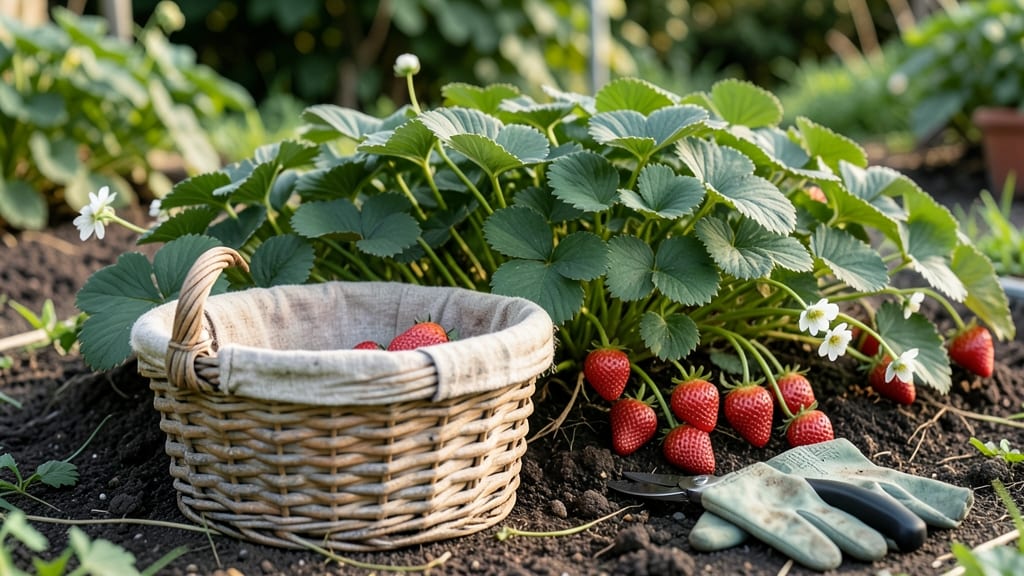
Your strawberry harvest season is the moment when those tiny green buds transform into sweet, juicy 🍓 treasures—but miss the timing, and you’ll end up with mushy waste instead of perfect berries.
Picture this: you’ve nurtured your plants all season, and now the big day arrives. But how do you know when to pick? Waiting too long means squishy, overripe berries, while harvesting too early robs you of that peak flavor.
The key is learning the exact signs of ripeness and how your local climate zone affects the best picking window.
Whether you’re growing June-bearing, everbearing, or day-neutral varieties, the right harvest time depends on color, firmness, and even the time of day. I’ll walk you through the best practices to extend your harvest, avoid common mistakes, and keep those berries tasting like summer for weeks.
From recognizing the perfect red (or yellow or white, depending on your variety) to storing your harvest for maximum freshness, this guide ensures you’ll never waste another berry again.


Strawberry harvest season timeline: when to pick by variety & climate
Timing your strawberry harvest correctly transforms a handful of berries into a bountiful, flavorful reward. The harvest window varies dramatically based on your strawberry variety—whether it's June-bearing, everbearing, or day-neutral—and your local climate.
In USDA Zone 6a, for example, June-bearing varieties peak in late June to early July, while everbearing types stretch harvests from June through October with proper care. Understanding these patterns ensures you never miss the perfectly ripe moment.
Your strawberry plants communicate ripeness through subtle cues: a deep red hue (or the correct color for your variety), plumpness, and a slight give when gently squeezed. Ignoring these signals leads to overripe berries that burst or spoil, wasting your hard work.
In hot climates, like Zone 9-10, strawberries may ripen 2-3 weeks earlier than in cooler regions, while northern gardens in Zone 4 might see delayed harvests until late July. Paying attention to temperature trends and sunlight exposure helps you adjust expectations.
Here’s how the three main strawberry varieties align with harvest seasons and climate zones, along with the ideal picking conditions to maximize sweetness and yield:
The June-bearing varieties are the classic one-time harvesters, delivering 80% of their crop in a 2-3 week window. To avoid missing this peak, set a daily reminder to check for ripeness starting in late June.
These varieties thrive in cooler climates (Zones 4-7) and may struggle in hot summers, where berries can overripe quickly. If you’re in Zone 8+, opt for everbearing or day-neutral types like Seascape or Albion, which handle heat better and extend your harvest.
For everbearing strawberries, think of them as mini harvest seasons. You’ll get two to three waves of berries: the first in late spring, a second in summer, and sometimes a fall crop before frost. In Zone 6a, this means June, August, and October checks.
The key is to remove spent blossoms after each harvest to encourage new growth. In warmer zones, the fall harvest might shrink due to heat stress, while cooler climates can stretch it later into November.
Day-neutral strawberries are the gardeners’ gift for continuous harvests, producing berries as long as the weather cooperates. They’re ideal for containers or greenhouse growing in Zone 5 and below, where they can fruit from spring until frost. In hot climates (Zones 9-10), they may slow production during peak summer but bounce back in fall. Varieties like Ozark Beauty or Tristar are excellent choices for year-round picking in mild areas. To maximize yield, prune old leaves in early spring and mulch heavily to retain moisture.
Spotting the perfectly ripe strawberry is easier than you think. Start with color: a deep, even red (or the correct hue for your variety, like yellow for Golden Queen) means it’s ready.
Next, give it a gentle squeeze—it should feel plump but slightly soft, almost like a ripe peach. If it’s hard, it’s not ready; if it’s mushy, it’s past its prime. Another trick? Look at the cap (the green top). When
How to avoid overripe strawberries: 5 key signs of waste (and how to fix it)
There’s nothing worse than finding your strawberry harvest turning to mush before you can enjoy it. Overripe berries happen when we ignore subtle cues—or worse, wait too long for that "perfect red" moment.
The good news? A few simple checks can save your crop. I’ve learned the hard way that daily harvest routines and the squeeze test are my secret weapons against wasted berries.
The biggest mistake I see is picking too early just because the berries look red. But color alone isn’t enough—some varieties stay partially colored even when fully ripe. Then there’s the opposite problem: waiting until berries collapse on the vine.
By then, they’re often bird bait or too soft to enjoy. The key is catching them at that sweet spot between firm and juicy.
🔍 5 Signs Your Strawberries Are Overripe (And How to Fix It)
- 1
- 2
- 3
- 4
- 5
My biggest breakthrough came when I started harvesting every 2–3 days during peak season. It’s tedious, but it prevents berries from reaching that "too late" stage. I also use white plastic mulch to keep berries off the soil, which cuts down on rot.
For everbearing varieties, I mark my calendar for weekly checks—they produce in multiple flushes, so consistency is key.
Don’t forget: Storage matters. Once picked, store berries unwashed in the fridge for up to 3 days. If you’ve got more than you can eat, try freezing or making jam—waste not, want not!
The goal is to turn your strawberry harvest season into a flavor-packed success, not a mushy disappointment.
Pro tip: Set a reminder for morning harvests. Cool berries stay fresher longer, and you’ll avoid the afternoon heat that speeds up ripening. Trust me, your future self will thank you when you’re not tossing a bowl of squishy berries!