
Picking
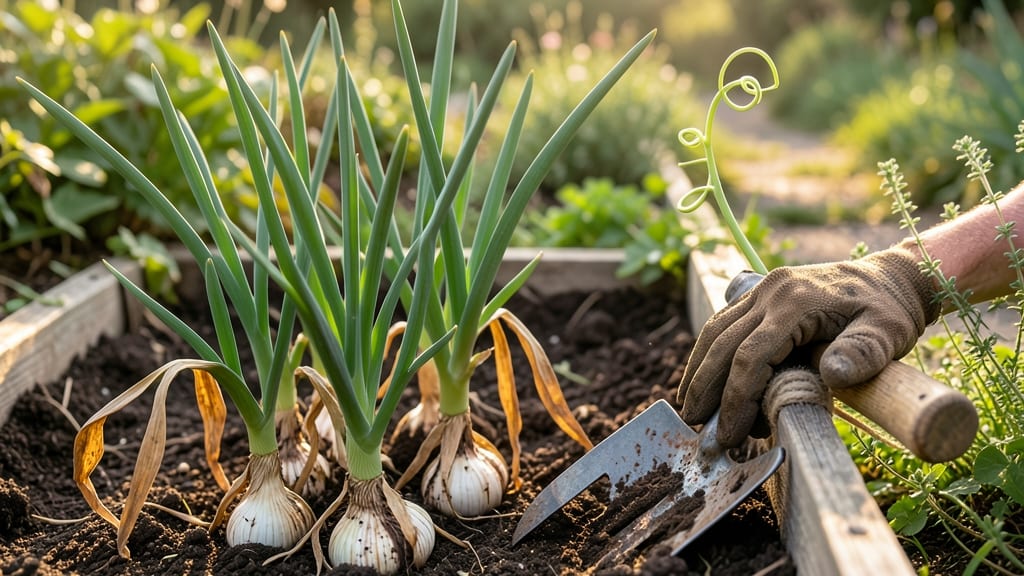
Harvest garlic in Michigan when the lower leaves turn brown and the bulbs feel firm beneath the soil — typically between late June and early July, just before the tops fully die back.
If you’ve ever watched your 🧄 plants’ leaves crisp in the heat only to dig up shriveled bulbs, you know timing is everything. One week too early and you’ll lose flavor; one week too late and rot sets in.
Michigan’s variable climate adds another layer: late spring frosts can delay maturity, while sudden summer rains speed up leaf browning. The key is checking for papery skins and bulbs that snap cleanly when bent — not just color.
Below, I’ll walk you through the exact cues to watch for, how to cure your harvest for long-term storage, and what to do if Michigan’s unpredictable weather throws off your timing.


Signs your Michigan garlic is ready for harvest (beyond just brown leaves)
Harvesting garlic at the right time in Michigan isn’t just about waiting for brown leaves. The Great Lakes climate adds unique challenges, like sudden rain or early frosts, that can throw off your timing.
I’ve learned the hard way—harvesting too early means small, pungent bulbs, while waiting too long risks rot or sprouting. Let’s break down the visual, tactile, and environmental cues that tell you it’s truly time to dig.
First, focus on the lower leaves. In Michigan’s USDA Zones 5b-6b, garlic typically starts showing signs between late June and early July. The bottom 1-2 leaves will turn straw-colored or tan, while the upper leaves stay green.
This isn’t the same as full browning—think of it as a gradual drying from the bottom up. If you see more than 3 leaves fully browned, you’ve likely missed the window.
Next, check the bulb firmness by gently lifting a plant. A ready bulb feels heavy for its size and round, not elongated. If you can’t see the bulb shape through the soil, it’s not ready.
In Michigan’s loamy soil, bulbs often hide deeper—use your fingers to feel for firm, papery skin. If the skin feels loose or wrinkled, it’s either too early or too late.
Don’t ignore the weather forecast. Michigan’s unpredictable June humidity and late frosts can sneak up. Aim to harvest 3-5 days before rain or a forecasted frost. Wet bulbs won’t cure properly, leading to mold.
I once lost half my harvest because I ignored a 48-hour rain prediction—now I check the National Weather Service daily in late June.
Here’s a Michigan-specific pro tip: Hardneck varieties (like Music or German White) mature slightly earlier than softnecks. If you’re growing both, harvest hardnecks first. Their scape (flower stalk) will dry and brown—this is your final green light to dig.
Softnecks, like Artichoke, take longer and may need an extra 1-2 weeks.
One of the most overlooked cues is the soil moisture. Michigan’s June rains can make soil soggy, but bulbs need to dry properly post-harvest. If the ground feels waterlogged, wait a few days or harvest in the morning when soil is drier.
I once tried harvesting after a 24-hour downpour, and my bulbs developed mold during curing—now I always check soil moisture with my finger.
Finally, perform the stem snap test. Bend a stalk near the bulb—if it snaps cleanly, the bulb is mature. A bendy stem means it’s not ready. This test is especially useful for softneck varieties, which mature later.
In Michigan’s short growing season, this test helps avoid the 300-day maximum for garlic to fully mature.
Remember, Michigan’s regional differences matter. Southern Michigan (like Ann Arbor) can harvest 1-2 weeks earlier than the Upper Peninsula due to warmer soils. If you’re unsure, dig up 1-2 test plants in late June.
Cut open a bulb—if it’s fully formed with tight cloves, it’s time to harvest the rest.
Timing your garlic harvest in Michigan is about balancing patience and action. Watch for those straw-colored leaves, check the bulb firmness, and keep an eye on the weather. When all signs align, grab your fork and dig—your flavorful, storable garlic is waiting just beneath the soil.
Step-by-step harvesting guide for Michigan gardeners: from digging to curing
Now that you’ve spotted the perfect harvest signs in your Michigan garlic, it’s time to act fast. The 3-4 week curing process starts with careful digging—use a fork or spade to avoid damaging bulbs.
Work on a dry, sunny day when soil is slightly moist but not wet, typically late June to early July in Michigan’s climate.
Michigan’s humidity levels (often 60-80%) during summer mean proper airflow is critical. After digging, gently shake off excess soil while leaving the papery skins intact. Never wash bulbs—they’ll rot faster.
Lay them in a single layer on a screened rack or mesh in a spot with partial shade and good airflow, like a garage or covered porch.
- 1 Dig Carefully: Use a fork or spade 2-3 inches from bulbs to avoid cuts. Lift gently to preserve papery skins.
- 2 Shake Off Soil: Remove loose dirt by hand—never wash. Wet skins invite fungus and rot during curing.
- 3 Cure in Airflow: Arrange bulbs in a single layer on a screened rack under 50-70% shade. Michigan’s humidity demands constant airflow—avoid enclosed spaces.
- 4 Check Weekly: Remove any bulbs showing soft spots or mold. Healthy bulbs should feel firm and dry within 3-4 weeks.
- 5 Store Properly: Once neck is dry and papery, trim stems to 1/2 inch above bulbs. Store in a cool, dark place (50-60°F) with low humidity for up to 6 months.
Michigan’s variable summer weather can throw off curing times. If rain is forecasted, move bulbs indoors to a well-ventilated area like a basement with a fan. A common mistake is overcrowding bulbs, which traps moisture—always leave 2-inch gaps between each bulb for airflow.
Test for readiness by gently squeezing a bulb; it should feel rock-hard with no give.
After curing, braid the stems of your largest bulbs for a traditional Michigan harvest display—this also extends shelf life. For storage, place bulbs in mesh bags or cardboard boxes (never plastic) to prevent rot.
Check stored garlic monthly for sprouting cloves or mold, which means it’s time to use them up in recipes.
Pro tip: Save your best bulbs for next year’s planting. Michigan’s short growing season means starting with high-quality seed garlic makes all the difference. Plant them in fall (October) or early spring (March) for a head start on next season’s harvest.
By following these steps, you’ll transform your Michigan garlic harvest into plump, flavorful bulbs that last through winter. The key is patience and airflow—don’t rush the curing process, even if your neighbors start bragging about their harvests early! 🌱