
How To
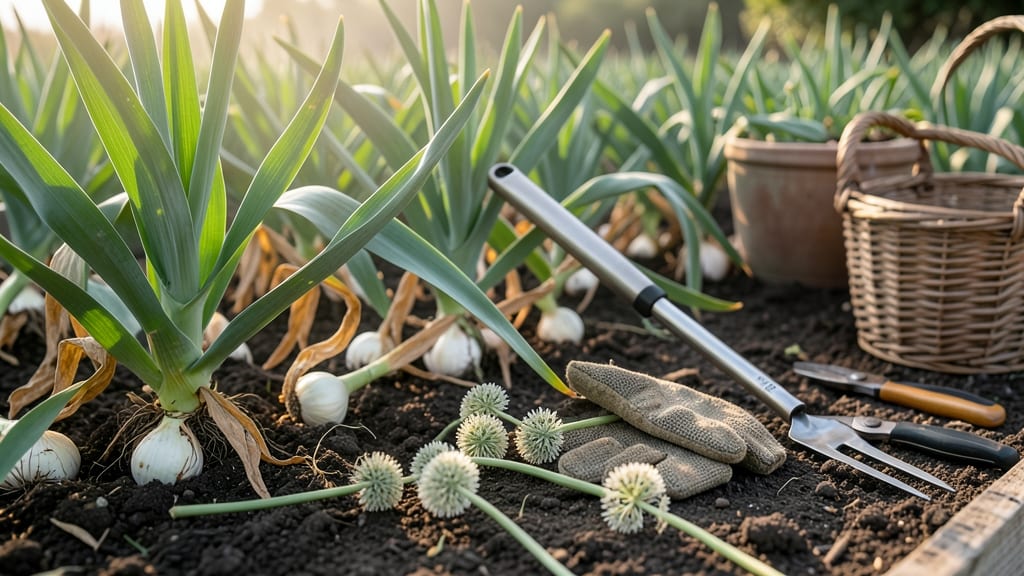
Harvesting garlic in Zone 8 at the right time means the difference between perfect bulbs and ones that split or rot.
You might think a calendar tells you when—maybe late May or early June—but Zone 8’s unpredictable spring weather can throw off those dates. Instead, the key is watching for the scorch-test signal: when the lower leaves turn brown and crispy, but the tops are still standing.
Miss this window, and your garlic won’t store well.
Why does timing matter so much? Because garlic in Zone 8 grows faster than in cooler climates, and waiting too long means the bulbs start separating in the soil.
The right moment isn’t just about the month—it’s about reading your plants’ cues before the heat of summer forces an early harvest.
In this guide, I’ll walk you through the scorch-test method, how to adjust for late winters, and the one post-harvest step that keeps your garlic fresh for months. No more guesswork—just perfect harvests every time.


How to use the scorch-test method for Zone 8 garlic harvest timing
Zone 8 gardeners know that calendar-based garlic harvesting is a recipe for disappointment. While many guides suggest harvesting in late May or June, Zone 8’s unpredictable spring weather can throw off those timelines by weeks.
That’s why I rely on the scorch-test method—a foolproof way to determine when your garlic is truly ready, regardless of the date on your calendar.
The scorch-test method focuses on leaf browning patterns rather than days since planting. This approach works perfectly in Zone 8 because it accounts for variable soil temperatures and spring rainfall, which can delay or accelerate garlic maturation.
By the time you see brown, crispy lower leaves, your bulbs are nearly ready—but timing is everything to avoid shriveled cloves.
Here’s the key insight: Garlic bulbs stop growing when about 50% of the leaves turn brown. Waiting until 75% browning risks bulb separation, while harvesting too early means underdeveloped cloves. The scorch test bridges that gap with precision.
Step-by-Step Scorch-Test Method for Zone 8 Garlic
- 1 Start testing in late April when daytime temps consistently reach 60°F+. This is when garlic begins its final growth phase.
- 2 Check leaves weekly for browning at the base. Use your fingers to gently pull back the outer leaves—if the inner leaves are still green, wait another week.
- 3 Perform the scorch test: Snap off a lower leaf and rub it between your fingers. If it crispies up and turns brown within 30 seconds, your garlic is ready. If it stays green, wait 5–7 days.
- 4 Harvest within 3–5 days of passing the test. Use a fork to loosen soil around the bulb, then gently lift it—don’t pull! Let the soil shake off naturally to avoid damaging the skin.
- 5 Avoid rain for 3–5 days post-harvest. Hang bulbs in a dry, shady, well-ventilated area (like a garage or shed) to cure for 2–4 weeks. This step is critical for storage life—skipping it leads to mold.
The scorch-test method works because it mirrors garlic’s natural maturation process. In Zone 8, where springs can swing from chilly April rains to 90°F heatwaves by May, relying on a fixed date is risky.
For example, I’ve seen garlic planted in early October ready by mid-May, while late-planted varieties might not be ready until June 15.
One common mistake is harvesting when the tops fall over. By then, the bulbs have already stopped growing, and the skin starts to split or rot.
The scorch test catches the sweet spot—when the bulb is fully formed but the leaves are just beginning to crisp and brown. This ensures maximum clove size and minimal waste.
Pro tip: Take photos weekly of your garlic’s leaf progression. Compare them to last year’s harvest notes—this helps you predict timing for future plantings. For instance, if your 2023 crop showed 50% browning on May 10, start testing again around that date in 2024.
Remember, Zone 8’s microclimates vary wildly. If you’re in a cooler inland valley, your garlic may need 2–3 more weeks than a coastal garden with warmer springs. The scorch test adapts to your local conditions, making it the most reliable method for consistent, high-quality harvests.
Once you master this method, you’ll never again guess whether your garlic is ready or rotting underground.
The scorch test gives you clarity and confidence, so you can focus on curing and storing your bulbs properly—because even the best harvest won’t last long if you don’t dry them correctly.
Zone 8 garlic harvest timeline: month-by-month expectations vs. reality
Forget the myth that garlic in Zone 8 always ripens by Memorial Day. The truth is more nuanced—your harvest timing depends on when you planted, how cold your winter was, and whether you got an early spring.
While most gardeners in Zone 8 harvest between late May and early July, the exact month varies wildly. For example, if you planted in early October, you’ll likely harvest in June, but late-planted garlic (November) may not be ready until July.
Another critical factor is soil temperature. Garlic needs consistent warmth above 60°F to mature properly. If your spring starts late (like in 2023’s cold snap), your garlic might not hit harvest readiness until mid-July.
Rushing the process by pulling garlic too early leads to small, underdeveloped bulbs, while waiting too long causes the cloves to split in the soil.
| Month | Expected Stage | Reality Check | Action Needed |
|---|---|---|---|
| February | Dormant (no growth) | Leaves may sprout early if temps rise above 50°F | Monitor soil—if shoots appear, reduce watering |
| March | Early growth (2-4" tall) | Fast growth if warm; slow if late frost | Add compost if soil is cold and compacted |
| April | Active growth (6-12" tall) | Bulbs forming underground; leaves dark green | Reduce watering slightly to toughen skins |
| May | Late growth (12-18" tall) | Lower leaves brown (harvest window opens) | Test for scorch—pull one bulb to check |
| June | Harvest time | Peak harvest for early plantings; late plantings lag | Harvest when 50% of lower leaves brown |
| July | Late harvest (if delayed) | Risk of bulb separation if too late | Prioritize curing over size if leaves fall |
Here’s what I’ve learned from years of growing garlic in Zone 8: March and April are the months where timing becomes critical. If your garlic gets a head start in March (thanks to warm soil), you’ll see rapid growth—sometimes too fast.
In these cases, reduce watering by 30% to slow bulb expansion and improve skin thickness. Conversely, if April brings frost or cold snaps (like we had in 2022), your garlic might stall, pushing harvest into late June or July.
One mistake I see often is assuming that because the tops are still green, the garlic isn’t ready. But by mid-May, even if the leaves look healthy, the bulbs could already be forming. The scorch-test (gently pulling a bulb to check for papery skin) is your best tool.
If you wait until the tops fall over completely, you’ve missed the window—those bulbs will split or rot in storage.
For gardeners in Zone 8, the key takeaway is flexibility. Use the monthly guide above as a starting point, but always adjust based on your plants’ cues. If your garlic is ready in late May, harvest it—don’t wait for June.
The same goes for late plantings: if July rolls around and your garlic still has green leaves, it’s not worth the risk. Harvest early rather than late—your storage life will thank you.