
Vegetables
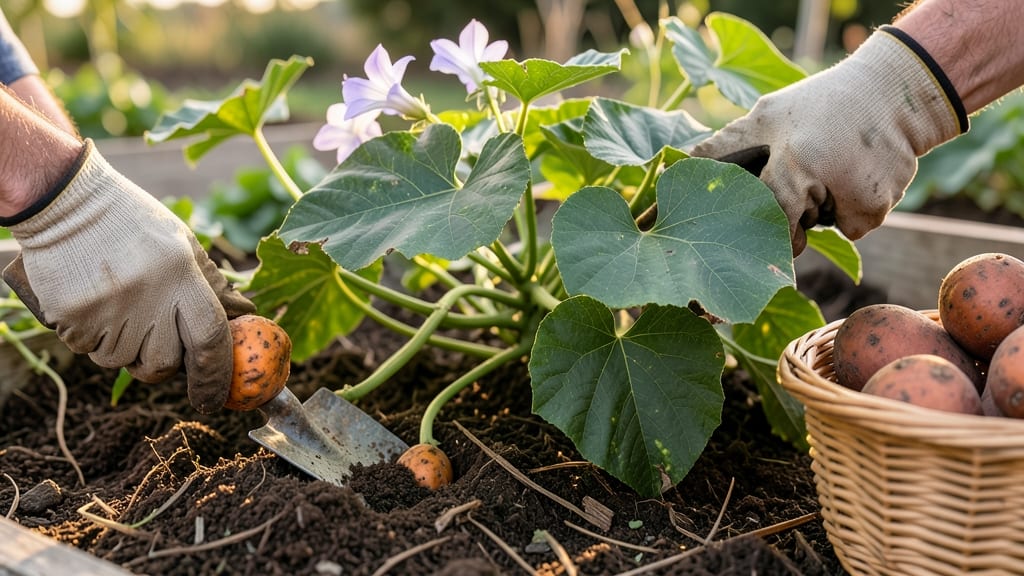
Harvest sweet potatoes when the vines yellow and die back, the skin hardens, and tubers reach 2-3 inches—timing that turns a good crop into a great one 🍠.
Sweet potatoes don’t announce their readiness like tomatoes—so knowing exactly when to harvest can mean the difference between a meal-worthy harvest and a meal of disappointment. Learn the subtle (but critical) signs that reveal peak harvest time.
If you dig too early, the roots stay small and watery; too late, and they shrink or rot in the soil. The key is watching for firm skin, a yellow stem end, and leaves that crisp and brown like autumn paper.
Below, I’ll break down the exact cues to look for, how to handle them gently, and what to do if you miss the window—plus how to store your harvest for months ahead.


How to identify sweet potatoes ready for harvest by plant signals
Sweet potatoes don’t give you a clear "pick me" sign like tomatoes do. Instead, they signal readiness through subtle but unmistakable plant signals that reveal when their tubers are plump and flavorful. Ignoring these cues can lead to underdeveloped roots or woody, less sweet potatoes.
The key lies in observing leaf color changes, vine dieback patterns, and tuber firmness—all of which I’ll break down for you.
First, pay attention to the foliage. When about 90-120 days after planting, the leaves will start yellowing from the edges inward, eventually turning brown and crispy. This isn’t just wilting—it’s a natural senescence process that tells you the plant is redirecting energy to the roots below ground.
If you see 50% of the vines dying back, that’s your first green light to check for readiness.
Next, focus on the skin texture of the tubers. Gently dig up a small test tuber (or use your thumbnail) to check for firmness. A ready sweet potato will have thick, hard skin that resists pressure—you shouldn’t be able to puncture it easily.
If the skin gives way like a ripe avocado, the tuber isn’t fully matured yet. This tactile test is non-negotiable for determining harvest timing.
| Signal | Description | Action |
|---|---|---|
| Leaf Color | 50%+ of leaves turn yellow/brown and crisp | Check tuber firmness next |
| Vine Dieback | Vines wilt and dry out naturally (not from disease) | Test soil moisture before digging |
| Skin Firmness | Skin resists thumbnail pressure; no green stem end | Harvest within 1-2 weeks |
| Tuber Size | Tubers 2-3 inches in diameter | Dig carefully to avoid damage |
| Frost Risk | First frost approaches (Zone 6: Nov 15) | Harvest immediately to prevent spoilage |
One common mistake I see is harvesting based solely on days after planting. While sweet potatoes typically mature in 90-150 days, environmental factors like soil temperature and rainfall can shift this window.
For example, cooler soils slow tuber development, so plants in Zone 5 or higher may need an extra 2-3 weeks compared to warmer climates. Always cross-reference plant signals with your local growing conditions.
Another pro tip: Look for the stem end of the tuber. A ready sweet potato will have a yellow or brown stem end, while an underripe one retains a green stem end.
This color change indicates the tuber has fully developed and stopped growing. If you’re unsure, dig up one tuber for testing—this minimizes risk to your entire crop.
Harvesting too early results in small, watery tubers with poor flavor, while waiting too long can lead to woody, fibrous roots that store poorly. The sweet spot is when both the foliage and tubers show readiness.
In my garden, I’ve found that October is ideal for most USDA Zone 6-8 regions, but always adjust based on your local frost dates and plant signals.
Regional variations matter too. In southern climates (Zones 9-11), sweet potatoes can be harvested year-round, but the peak flavor window is still tied to vine dieback. Meanwhile, in northern zones (Zones 3-5), you’ll need to harvest before the first frost, even if the vines aren’t fully dead.
Use a row cover to extend the season if needed.
Finally, avoid the temptation to harvest based on tuber visibility through the soil. Just because you spot a tuber doesn’t mean it’s ready—size alone isn’t enough. Combine all the signals: leaf color, vine dieback, skin firmness, and stem end color.
When all four align, you’re ready to dig. Trust me, your taste buds will thank you for the patience!
🍠
Best practices for harvesting sweet potatoes without damaging the roots
Harvesting sweet potatoes requires gentle care to avoid bruising or breaking those plump tubers you’ve worked so hard to grow.
The wrong technique can turn a perfect harvest into a pile of damaged roots—so let’s focus on the right tools, timing, and handling methods to keep them intact 🌱.
Start by choosing the right day: mild, dry weather is ideal—avoid harvesting after rain when soil is soggy, as this makes roots prone to rot. Early morning is best, when temperatures are cooler and the soil is still damp enough for easy digging but not waterlogged.
Step-by-Step Harvesting Guide
-
Step 1: Gently loosen the soil
Use a broadfork or hand trowel to work soil 6-8 inches deep around the plant. Avoid piercing the tubers directly—aim for the soil between them. -
Step 2: Cut the vines
Snip the foliage 2-3 inches above the soil with clean pruners or scissors. This prevents disease from spreading back to the roots. -
Step 3: Lift carefully
Grasp the plant’s base and gently pull upward. If resistance occurs, wiggle slightly—never yank forcefully, which can tear the skin. -
Step 4: Shake off excess soil
Lay the harvested plant on a clean tarp or burlap sack. Shake gently to remove dirt, but avoid rubbing, which bruises the skin. -
Step 5: Cure for storage
Leave sweet potatoes in a warm (80-85°F), humid space (like a garage) for 5-10 days to harden the skin and develop sweetness.
After harvesting, inspect each tuber for cuts or bruises—discard any damaged ones immediately. Store the rest in a cool (55-60°F), dry place with good airflow, like a mesh bag or cardboard box. Avoid plastic bags, which trap moisture and encourage rot.
Pro tip: If you’re unsure about a tuber’s readiness, dig up just one plant to test. Cut into a sample root—if the flesh is firm and deep-colored, it’s time to harvest the rest. If it’s still pale or mushy, wait another 1-2 weeks 🍠.
With these techniques, you’ll preserve the quality of your sweet potatoes for months of storage—ready to transform into soups, casseroles, or roasted sides whenever you crave them.