
Vegetables
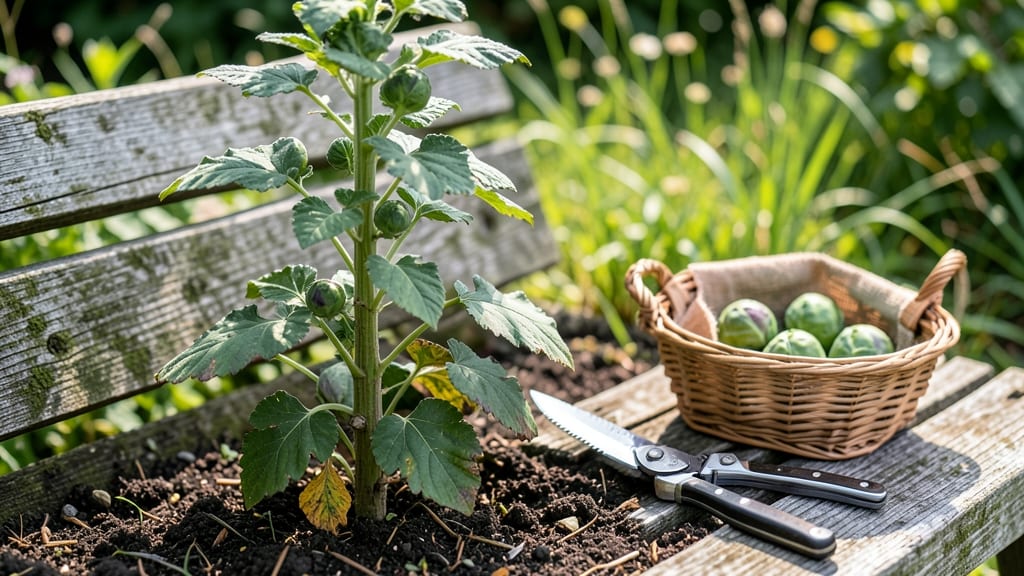
Harvesting Brussels sprouts at the right time turns a 90-to-120-day wait into a flavor-packed reward—when those tiny buds swell to 1-to-1.5-inch gems with a deep green hue.
Picture this: you’ve nurtured your 🥦 plants through spring’s chill, watched them tower over your garden, and now the moment arrives. But how do you know when to snip?
Miss the window, and you’re left with bitter, woody sprouts. Get it right, and you’ll enjoy the crisp, nutty taste that makes Brussels sprouts a garden superstar.
Timing isn’t just about days after planting—it’s about color shifts, seed rattles, and even the weather. A hard frost can turn your crop to mush overnight, while waiting too long means the sprouts burst open, losing their compact charm.
The key is learning these subtle cues before they disappear.
In this guide, I’ll walk you through the exact signs to watch for—from yellowing stems to the telltale rattle of mature seeds—and share pro tips to stretch your harvest season. Whether you’re in Zone 6a or beyond, you’ll never second-guess when to pick again.

How to identify the perfect Brussels sprouts harvest time by visual & physical cues
Harvesting Brussels sprouts at the right moment transforms your garden into a treasure trove of flavorful, tender buds. The key lies in watching for three critical visual cues: stem color shifts, bud firmness, and leaf changes.
Ignore these signs, and you risk bitter, woody sprouts or wasted effort. Let’s break down exactly what to look for to ensure your harvest is perfect.
First, pay attention to the stem color. As your Brussels sprouts mature, the main stem will gradually transition from green to yellowish-brown. This color change signals that the plant is redirecting energy from leaf production to bud development.
The lower leaves will also start to yellow and die back—this is nature’s way of telling you it’s time to harvest. Don’t wait until the entire plant turns yellow, though; that’s a sign you’ve missed the window.
Next, check the size and firmness of the individual sprouts. At peak harvest time, your Brussels sprouts should be 1 to 1.5 inches in diameter and feel firm to the touch. If they’re smaller, they’re not fully developed.
If they’re larger, they’ll be tough and bitter. Gently squeeze a sprout—it should give slightly but not feel mushy. Overripe sprouts will also start to loosen their compact shape, another clear sign to harvest soon.
Physical cues like seed pod rattling can also help. If you gently shake the stem and hear a faint rattling sound, it means the seeds inside the buds are mature. This is a reliable indicator that the sprouts are ready. Combine this with the visual cues above, and you’ll have a foolproof method for determining harvest readiness. Pro tip: Start harvesting the lowest sprouts first and work your way up the stem to encourage more buds to form.
| Indicator | What to Look For | Action |
|---|---|---|
| Stem Color | Lower leaves turn yellow and die back | Harvest soon—best within 1-2 weeks |
| Bud Size | 1-1.5 inches in diameter | Perfect for harvesting; firm and compact |
| Bud Firmness | Firm, not mushy or loose | Harvest immediately if firmness decreases |
| Seed Pod Rattling | Gentle shake produces faint rattling | Ready to harvest—seeds are mature |
| Bud Color | Deep green with slight purple tint | Harvest before color fades to yellow |
Don’t overlook the weather conditions when determining harvest time. Brussels sprouts thrive in cooler temperatures, so if a hard frost is forecasted, prioritize harvesting before the freeze. While they can tolerate light frosts, freezing temperatures will make the sprouts tough and inedible.
If you’re in a warmer climate, keep an eye on the plant’s progress—some varieties mature faster in heat.
Another pro tip: Harvest consistently every few days to encourage the plant to produce more sprouts. By removing the lower buds, you stimulate the growth of new ones higher up the stem.
This method can extend your harvest season by 4-6 weeks, giving you a steady supply of fresh Brussels sprouts. Just be sure to use a sharp knife or shears to avoid damaging the stem, which can lead to disease.
If you’re growing multiple varieties, note that some mature faster than others. For example, ‘Long Island Improved’ typically harvests earlier than ‘Ruby’, which has a slight purple tint.
Always check the seed packet or plant tag for specific maturity dates, but rely on visual cues as your final guide. The goal is to harvest when the sprouts are tender and flavorful, not when they’re forced to mature by the calendar.
Finally, avoid the temptation to harvest too early. Small, loose sprouts lack flavor and texture, making them less enjoyable to eat. Wait until they’re fully formed but still compact, and you’ll reward yourself with Brussels sprouts that are sweet, crisp, and full of flavor.
With these visual and physical cues in mind, you’ll never miss the perfect harvest window again.
Once you’ve mastered the art of identifying the ideal harvest time, your garden will become a reliable source of homegrown goodness. Happy harvesting! 🥦
Step-by-step harvesting guide: when, how, and how often to pick Brussels sprouts
Harvesting Brussels sprouts at the right time transforms your garden into a flavor powerhouse. The key is patience—waiting for the deep green buds to reach 1-1.5 inches in diameter ensures maximum tenderness.
Overlooking this window means tough, bitter sprouts that ruin even the best recipes. I’ve learned the hard way: harvesting too early or too late can turn a golden crop into a disappointment.
Timing also depends on your climate zone. In cooler regions like USDA Zone 6a, I start harvesting as early as November, while warmer zones may extend into January.
The goal is to pick before a hard frost hits, which can turn your sprouts mushy. Always check your local frost dates to plan ahead—this simple step can double your harvest yield.
🌱 Step-by-Step Brussels Sprouts Harvest Guide
-
Step 1: Check Sprout Size
Look for 1-1.5 inch buds. Use your thumb and index finger to gauge—if they fit snugly, they’re ready. -
Step 2: Inspect Color
Buds should be deep green with no yellowing. A slight purple tint is fine for some varieties like 'Ruby Ball'. -
Step 3: Test Firmness
Gently squeeze a sprout—it should feel firm but not hard. Soft sprouts are overripe. -
Step 4: Use Clean Tools
Grab a sharp knife or pruning shears. Sterilize blades with rubbing alcohol to prevent disease. -
Step 5: Cut Strategically
Snip the sprout ½ inch above where it meets the stem. Always start with the lowest buds and work upward. -
Step 6: Harvest Frequency
Pick every 5-7 days to encourage new growth. Never take more than ⅓ of the plant at once. -
Step 7: Store Properly
Keep sprouts in a paper bag in the fridge for up to 1 week. For longer storage, blanch and freeze.
One common mistake I see is over-picking—removing too many sprouts at once stresses the plant and reduces future yields. Instead, I follow the ⅓ rule: never harvest more than one-third of the plant in a single session.
This keeps your Brussels sprouts plant productive for weeks, giving you a steady supply of fresh, homegrown goodness.
After harvesting, I always inspect the remaining plant for signs of pests or disease. Look for holes, yellowing leaves, or slimy stems—these are red flags. If you spot issues, treat immediately with neem oil or insecticidal soap.
A healthy plant will keep producing until a hard frost, so don’t rush the harvest just because the weather turns chilly.
Pro tip: If your plant bolts (sends up a tall flower stalk), it’s time to harvest everything immediately. Bolting signals the end of the season, and the sprouts will become bitter.
Pull the whole plant, trim the stalk, and enjoy the last of your crop—just be sure to compost the plant to avoid spreading seeds you might not want.
With these steps, you’ll enjoy a bountiful Brussels sprouts harvest that’s tender, flavorful, and ready for your favorite dishes. Happy harvesting! 🥦