
Vegetables
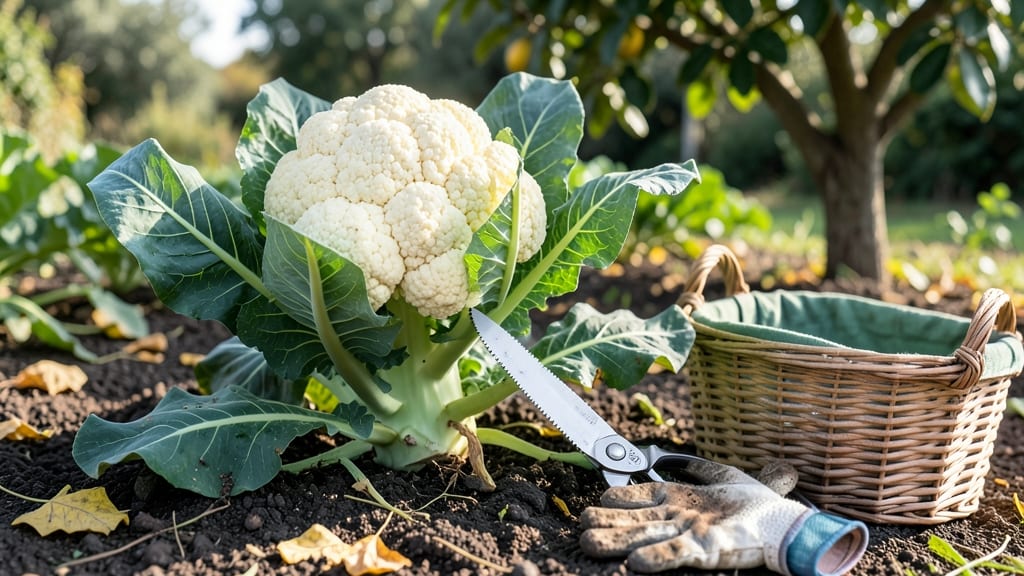
Timing the harvest for cauliflower 🥬 is all about catching that perfect moment when the curd is firm, compact, and ready to eat—before it turns bitter or opens up.
Picture this: you’ve nurtured your cauliflower through spring, watching the leaves unfurl and the curd grow. But how do you know when it’s really ready? Miss the window, and you’re left with a meal that’s tough, woody, or flavorless.
In this guide, I’ll walk you through the two most reliable signs—leaf color shifts and the firmness test—and share how to extend freshness once you’ve cut it down. Whether you’re in Zone 6a or further south, these tips will help you pull cauliflower at its peak.
By the end, you’ll know exactly when to grab your knife, how to check for readiness, and even how to store your harvest for weeks to come. No more guesswork, just crisp, flavorful cauliflower every time.

When to harvest cauliflower: leaf color changes & curd development stages
Harvesting cauliflower at the right moment ensures maximum flavor and crisp texture. The key is watching for leaf color changes and curd development—two visual cues that reveal when your plant is ready. Ignoring these signs can lead to overmature heads that turn bitter or woody, ruining your harvest.
Whether you're growing white, purple, or orange varieties, the principles remain the same, though color shifts vary slightly.
Start by examining the outer leaves. Healthy leaves should remain vibrant green and tightly wrapped around the curd head. If you notice yellowing or browning at the edges, this signals the plant is nearing maturity.
For white varieties, the curd itself should be creamy white, while purple types will deepen to a rich lavender hue. Orange varieties will develop a warm, golden tone—never letting the color fade to yellow.
| Variety | Leaf Color Cues | Curd Size & Color | Harvest Window |
|---|---|---|---|
| White (e.g., 'Snowball Y Improved') | Outer leaves turn dull green to yellow-green | 6-8 inches, creamy white (never yellow) | 70-85 days after transplanting |
| Purple (e.g., 'Graffiti') | Leaves darken to deep green-purple edges | 5-7 inches, rich lavender (avoid graying) | 65-75 days after transplanting |
| Orange (e.g., 'Cheddar') | Leaves stay bright green but curd brightens | 4-6 inches, golden orange (never pale) | 60-70 days after transplanting |
| Green (e.g., 'Green Goddess') | Leaves yellow slightly at base but stay green | 5-6 inches, pale green (avoid browning) | 75-90 days after transplanting |
The curd’s size is another critical clue. Aim for a head that’s firm and compact, typically 6-8 inches in diameter for most varieties. If the curd feels loose or spongy, it’s underdeveloped—wait a few more days.
Conversely, if the florets start separating or turning yellow, you’ve missed the window. For purple varieties, the curd may split slightly as it matures, but harvest before it turns grayish.
Pay attention to the stem’s flexibility. A mature cauliflower head will snap easily when you gently bend the stem—this is your green light to harvest. If the stem bends without snapping, the head isn’t ready yet.
This test works for all varieties, including mini cauliflower types, which may reach harvest size in as few as 50 days. Always prioritize this test over guessing by days since planting, as environmental factors like temperature and sunlight can delay or speed up maturity.
Regional climate differences can shift harvest timing slightly. In cooler climates (USDA zones 3-5), cauliflower may take 10-15 extra days to mature compared to warmer zones (zones 7-9).
If your summer heat exceeds 85°F, the plant may bolt prematurely, so harvest earlier or provide shade cloth to extend the growing season. Conversely, in short-season areas, opt for fast-maturing varieties like 'Early Snowball' to avoid frost damage.
One common mistake is harvesting based on calendar days alone. While most cauliflower varieties mature in 70-100 days, extreme weather can throw off this timeline. For example, a dry spell might slow growth, while cool nights can accelerate it.
Always cross-reference leaf color, curd firmness, and stem flexibility before cutting. Pro tip: Use a small notebook to track your plant’s progress—note when leaves first yellow and when the curd reaches ideal size.
For continuous harvests, consider planting successive crops every 2-3 weeks in early spring and late summer. This staggered approach ensures you’re always harvesting at peak ripeness. If you’re growing multiple varieties, prioritize harvesting the fastest-maturing types first (like orange cauliflower) to avoid overcrowding.
Always use a sharp knife or pruning shears to cut the stem 1-2 inches below the curd, leaving the outer leaves intact to protect the plant.
After harvesting, store your cauliflower in the crisper drawer of your fridge for up to 5-7 days. For longer storage, blanch and freeze the curds to preserve texture and flavor. If you notice yellowing leaves post-harvest
Cauliflower curd firmness test: how to check ripeness before harvesting
Harvesting cauliflower at the perfect moment ensures a crisp, flavorful head instead of a woody, bitter disappointment. The curd firmness test is my go-to method to avoid guessing—it’s quick, reliable, and works for white, purple, or orange varieties.
A simple thumb pressure check tells you whether your curd is ready or needs more time.
Start by gently pressing your thumb into the largest part of the cauliflower curd. If it feels slightly resistant but gives just a little (like pressing a ripe avocado), it’s ready.
If it’s too soft, wait 2-3 days—underripe curds won’t firm up. Overly hard or woody curds mean you’ve waited too long, and the flavor will suffer.
⚠️ callout warning ⚠️
Harvesting too late causes yellowing florets and a bitter, tough texture. Watch for these red flags:
- ❌ Brown or yellow spots on the curd
- ❌ Loose, separating florets
- ❌ Outer leaves turning brown and crispy
If you see these signs, harvest immediately—even if the curd feels firm—to salvage what you can!
Timing is everything, so check your cauliflower daily during the last 7-10 days of its 70-100 day growth cycle. Morning is ideal—cool temps help the curd hold its firmness longer. Pro tip: Purple varieties often ripen faster than white ones, so monitor them closely.
Common mistakes include harvesting based on size alone (a 6-8 inch diameter is ideal, but firmness matters more) or ignoring the outer leaves. Yellowing or dying leaves signal stress—harvest before they fully brown. Even if the curd looks perfect, check firmness first to avoid disappointment.
For container-grown cauliflower, the firmness test works the same, but be extra gentle—potted plants can bolt faster due to root stress. If your curd feels spongy or hollow, it’s past its prime.
In hot climates, shade cloth can help delay overmaturity, but always prioritize the thumb test over calendar dates.
Once you master this test, you’ll never second-guess harvest time again. A firm, closed curd with vibrant leaves guarantees a sweet, tender reward—worth the patience! 🥬