
How To
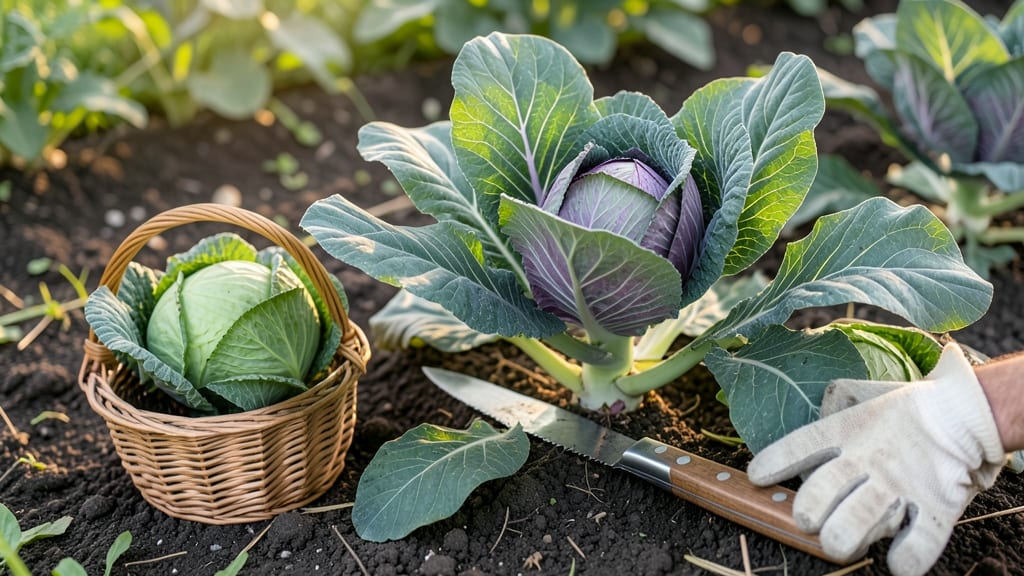
Knowing when to harvest cabbage means catching it at the peak of flavor and texture, before it bolts or turns tough.
Picking too early leaves you with small, underdeveloped heads, while waiting too long risks a bitter, loose center—both mistakes cut your yield and storage life. The key lies in a few simple but often overlooked cues: leaf color, head firmness, and size benchmarks that vary by variety.
In USDA Zone 6a, spring cabbage planted in March–April typically reaches harvest in 75 days, while fall plantings need close monitoring as days shorten.
Below, I’ll walk you through the exact visual and tactile tests to avoid common pitfalls, plus how to adjust timing for green, red, or Savoy types.
By the end, you’ll confidently harvest 🥬 at its prime—no guesswork, no wasted effort. Ready to learn the foolproof signs?


5 Visual & physical signs your cabbage is ready for harvest
Harvesting cabbage at the perfect moment ensures the best flavor, texture, and storage life. Many gardeners focus only on size, but the real clues lie in a combination of visual color shifts, head firmness, and leaf structure.
Ignoring these signs often leads to heads that are either too small or woody—both of which ruin the eating experience. I’ve learned the hard way that waiting just a few extra days past the ideal window can turn crisp, sweet cabbage into a tough, bitter disappointment.
Cabbage heads mature at different rates depending on the variety and growing conditions, but the key indicators remain consistent. For example, a Green Express cabbage might reach harvest readiness in 60-75 days, while a Savoy type could take up to 100 days.
The trick is to watch for these five universal signals, regardless of the type you’re growing. These signs work for both spring and fall crops, so you can apply them year-round in your garden.
Here’s the breakdown of what to look for, from the earliest visual cues to the final physical test:
Outer leaves transition from bright green to deep, consistent color (varies by variety: green, purple, or white). Yellowing or browning means it’s past prime.
Press the head gently—it should feel solid and heavy for its size. If it’s loose or spongy, it’s not ready. Overly firm heads may be woody if left too long.
Outer leaves begin to curl inward tightly around the head. Flat or spreading leaves mean it’s still developing. This is a visual cue that the head is maturing.
Most varieties reach 6-8 inches in diameter at harvest. Dwarf types (like Miniature Drumhead) may be ready at 4-6 inches. Measure from base to top—smaller heads are often tighter and sweeter.
The head stops expanding rapidly and enters a steady state. Check daily—once growth slows, harvest within 2-3 days to avoid toughening. This is your last chance for peak flavor!
Let’s talk about the leaf color shift first, because this is where many gardeners go wrong. A cabbage head that’s ready for harvest will have outer leaves that are uniform in color—no streaks of yellow or brown.
For example, a Red Express cabbage should have deep, rich purple leaves, while a Golden Acre will be a vibrant yellow-green. If you notice any discoloration, it’s a sign the head is either stressed or overripe.
I once left a batch of cabbage in the garden too long, and the outer leaves turned yellow-brown. When I finally harvested them, the texture was sad and the flavor was bland. Don’t make that mistake!
The head firmness test is non-negotiable. Grab the head firmly with both hands and give it a gentle squeeze. If it feels dense and resists compression, it’s ready. If it feels soft or mushy, it’s past its prime.
Pro tip: Compare it to a ripe green apple—similar firmness is what you’re aiming for. I’ve found that morning harvests yield the firmest heads because overnight moisture evaporation tightens the leaves. Harvesting in the heat of the day can make the heads feel softer and less crisp.
Don’t overlook the leaf cupping signal—this is one of the most reliable indicators. When the outer leaves start to curl inward like the pages of a book, it’s a clear sign the head is maturing. This happens because the inner leaves are pressing outward as the head expands.
If the leaves are still flat or spreading, the cabbage needs more time. I’ve seen gardeners mistake this stage for readiness and harvest too early, resulting in small, underdeveloped heads. Patience is key here—wait until the leaves are fully cupped before picking.
Size matters, but it’s not the only factor. While most cabbage varieties reach 6-8 inches in diameter at harvest, some heirloom or dwarf varieties may be ready smaller. For instance, Early Jersey Wakefield is often harvested at 5-6 inches because it’s bred for early maturity.
The key is to balance size with the other signs. A head that’s too large for its variety might be woody, while one that’s too small could be underdeveloped. Always check the variety’s days to maturity on the seed packet as a general guideline, but trust the physical signs more.
Finally, pay attention to the growth stage pause. Cabbage heads grow rapidly at first, but as they near maturity, their expansion slows. This is your cue to watch closely. I like to check my plants daily during the last week of growth, feeling each head and observing the leaves.
If the head hasn’t grown noticeably in 3-4 days, it’s likely ready. Harvesting at this stage ensures you capture the peak flavor and texture. Waiting too long can turn your cabbage into a tough, fibrous mess—something I’ve regretted more times than I’d
How to test cabbage head firmness (and why it matters more than size)
When it comes to harvesting cabbage, size isn't everything. Many gardeners assume bigger heads mean better flavor, but overmature cabbage often becomes tough, bitter, and stringy. The real secret lies in head firmness—a tactile test that tells you exactly when to harvest for peak quality.
This simple method helps you avoid premature harvesting (which wastes potential yield) and delayed harvesting (which ruins texture).
Cabbage heads should feel solid and dense, almost like a well-packed soccer ball. If you press gently and the head gives slightly, it’s not ready yet. But if it feels heavy for its size and resists pressure, you’ve hit the sweet spot.
This firmness test works for green, red, and Savoy varieties alike, ensuring you harvest at the perfect moment for storage or immediate use.
⚠️ callout warning ⚠️
Many gardeners wait until cabbage heads reach 8-10 inches in diameter, but this isn’t always the best indicator. Overmature heads (even large ones) develop a woody core and lose sweetness. Instead, focus on firmness and leaf color—these are the true signs of readiness.
✅ Do: Test firmness daily in the last 2 weeks of growth.
❌ Don’t: Harvest based on outer leaf yellowing—this means it’s past prime.
To test firmness, gently squeeze the head with your thumb and forefinger. A ready-to-harvest cabbage will feel compact and resistant, while an underripe one will feel loose or spongy. Pay attention to the outer leaves too—they should begin to cup inward slightly, signaling the head is nearing maturity.
This inward curl is your plant’s way of protecting the core, a clear sign it’s time to harvest.
Timing is everything, especially for fall crops. If you wait too long, the head may split or bolt (especially in warm weather), ruining your harvest. For spring cabbage, aim to harvest before the first signs of bolting (when the plant sends up a flower stalk).
By mastering the firmness test, you’ll ensure every head you pick is crisp, flavorful, and ready for the kitchen.
Pro tip: Harvest in the morning when temperatures are cool. This preserves the crunch and sweetness of the cabbage. Use a sharp knife to cut the head cleanly, leaving the outer leaves intact—they’ll protect the remaining plant and may produce a smaller second head in some varieties.
Store harvested cabbage in a cool, humid place (like a root cellar) to extend freshness for weeks.
Remember, firmness beats size every time. Skipping this test means risking bitter, tough cabbage that’s far from its best. With practice, you’ll develop a tactile intuition for the perfect harvest moment—one that guarantees sweet, crisp cabbage straight from your garden to your table. 🥬