
How To
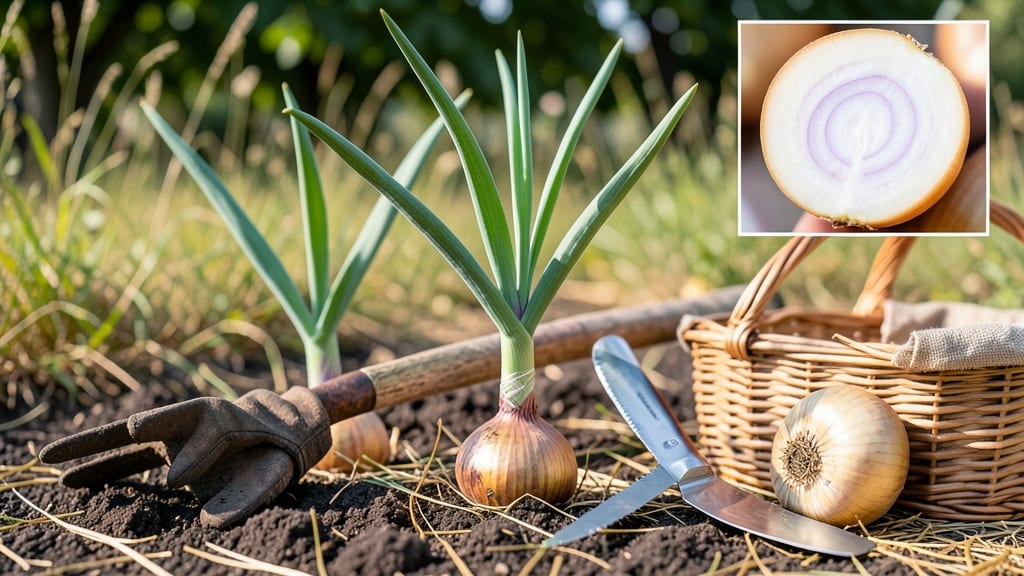
Knowing when to harvest onions is all about watching for the right cues—leaf color, bulb size, and neck shrinkage—that tell you the bulbs are ready to pull.
Onions are one of the most versatile vegetables in your garden, but harvesting them at the wrong time can mean the difference between sweet, flavorful bulbs and bitter, pungent disappointment.
If you’ve ever pulled onions too early or left them in the ground too long, you know how frustrating it can be.
Most gardeners wait 90 to 120 days after planting, but the best way to know for sure is to check the tops. When the leaves turn yellow and begin to flop over, that’s your signal.
The bulbs should also feel firm when gently squeezed, and the neck should start to shrink.
In this guide, I’ll walk you through the top three visual signs your onions are ready, how to test them before pulling, and the key differences between harvesting green onions and storage onions. By the end, you’ll never second-guess when to pull your 🧅 again.


3 Visual signs your onions are ready for harvesting
Harvesting onions at the perfect moment ensures the best flavor and storage life. Unlike many vegetables, onions don’t ripen after picking, so timing is everything. When you miss the window, you risk bitter, pungent bulbs or small, underdeveloped harvests.
The key lies in observing three clear visual cues: leaf color changes, bulb size, and neck shrinkage. Each signal tells you exactly when to pull your onions for peak quality.
First, let’s address a common mistake: waiting too long. Many gardeners pull onions only when the tops die back completely, but by then, the bulbs may have split or lost flavor. The ideal harvest time comes just before the tops fully brown and fall over.
This window ensures your onions store well and taste their sweetest. Now, let’s dive into the three unmistakable signs that your onions are begging to be harvested.
-
1. Leaf Color Changes
The tops turn from deep green to yellowish-brown, signaling maturity.
-
2. Bulb Size Reaches 1-2 Inches
When bulbs feel firm and round, they’re ready—smaller than a golf ball but larger than a marble.
-
3. Neck Shrinkage Begins
The stem above the bulb starts to dry and tighten, indicating the bulb has finished growing.
Let’s start with the most obvious clue: leaf color changes. When your onion tops transition from vibrant green to a golden-yellow or straw-like hue, it’s time to act. This color shift happens naturally as the plant redirects energy from leaf production to bulb development.
If you wait until the leaves turn completely brown and crispy, you’ve missed your window. The ideal harvest time is when about 50% of the leaves have yellowed—this ensures the bulbs are fully mature but still fresh.
Next, check the bulb size. Ready-to-harvest onions should measure between 1 to 2 inches in diameter. To test, gently dig around the base of one plant and lift it from the soil. If the bulb feels firm and solid (like a small potato), it’s ready.
If it’s still small and soft, give it another week or two. Overly large bulbs often split or develop hollow centers, so timing is critical. Think of the perfect onion size as being about the width of a standard soda can’s diameter.
The third and often overlooked sign is neck shrinkage. The stem connecting the bulb to the leaves will start to dry out and tighten as the bulb finishes growing. This is nature’s way of telling you the plant has completed its primary goal: storing nutrients in the bulb.
If you see the neck beginning to collapse or the leaves flopping over, harvest within the next 2-3 days. Waiting too long can lead to rot or poor storage quality, so don’t procrastinate.
What if your onions show these signs but the weather is forecasted to rain? Harvest immediately to avoid waterlogged bulbs, which can rot. Lay the onions in a dry, shaded area for 1-2 days to cure before storing.
Proper curing hardens the skins and extends shelf life. For storage onions, leave the dried roots and stems intact—they help the bulb last longer in a cool, dark place.
For green onions (scallions), the rules are different. These are harvested when the leaves reach 6-8 inches tall but before the bulbs begin to form. Simply snip the outer leaves, leaving the inner ones to keep growing.
This method ensures a continuous harvest throughout the season. Storage onions, on the other hand, are all about waiting for those three key visual cues we’ve discussed.
One final tip: if you’re unsure whether your onions are ready, perform the finger squeeze test. Gently press the bulb—if it feels firm and doesn’t dent easily, it’s harvest-ready. If it’s still soft, wait another week.
This simple test saves you from pulling onions too early or too late. Remember, patience pays off when it comes to onions. The right timing guarantees sweeter, longer-lasting harvests that will impress anyone who tastes them.
Now that you know what to look for, grab your gardening gloves and get ready to harvest. Your kitchen—and your taste buds—will thank you for it! 🌱
When to harvest green onions vs storage onions: key differences
Harvesting onions at the wrong time can turn your hard work into disappointment. Green onions (scallions) and storage onions have completely different harvest windows, and confusing them leads to wasted crops.
I'll show you how to tell them apart and when to pick each type for the best flavor and storage potential.
Green onions are harvested young, while storage onions need time to mature. Green onions are ready in just 4-6 weeks after planting, while storage onions take 90-120 days to reach full maturity.
The key difference lies in their bulb development and leaf condition—let's break it down so you never miss the perfect harvest moment.
| Feature | Green Onions (Scallions) | Storage Onions |
|---|---|---|
| Harvest Time | 4-6 weeks after planting | 90-120 days after planting |
| Bulb Size | Small, under 1 inch | 1-3 inches in diameter |
| Leaf Color | Bright green, upright | Yellowing, falling over |
| Neck Condition | Thick, firm | Shrinking, papery |
| Seasonal Window | Spring to early summer | Late summer to early fall |
| Storage Potential | Use fresh or refrigerate | Cure and store for months |
For green onions, the secret is to harvest them before they develop a thick bulb. Look for bright green leaves that are about 6-8 inches tall. The bulb should be small—under 1 inch in diameter.
If you wait too long, they'll become tough and bitter, losing their mild, fresh flavor. I like to harvest mine in succession every 2-3 weeks for a steady supply.
Storage onions, on the other hand, need full maturity for that sweet, pungent flavor we all love. The tops will turn yellow and flop over, while the neck begins to shrink and dry. This usually happens in late summer, just before the first frost.
If you harvest too early, the bulbs won't store well, and if you wait too long, they'll rot in the ground. The finger test is my go-to trick—gently squeeze the bulb; it should feel firm and solid.
A common mistake I see is harvesting storage onions too soon because the leaves look healthy. But remember, yellowing tops are your cue, not green ones. Also, avoid harvesting after a heavy rain—wet soil makes onions more prone to disease.
For green onions, the opposite is true: harvest them while the leaves are still crisp and green. If you see any signs of bolting (flowering), it's definitely time to pull them!
Pro tip: If you're unsure whether your onions are ready, dig up one bulb to check. This gives you a clear view of the bulb size and neck condition without risking your entire crop.
For storage onions, a 1-2 inch diameter bulb with a shrinking neck means it's harvest time. For green onions, a small bulb and tender leaves are all you need.
Knowing these key differences will help you avoid bitter, pungent storage onions or tough, woody green onions. With the right timing, you'll enjoy fresh, flavorful onions all season long—whether you're using them raw in salads or storing them for winter cooking. Happy harvesting!