
How To
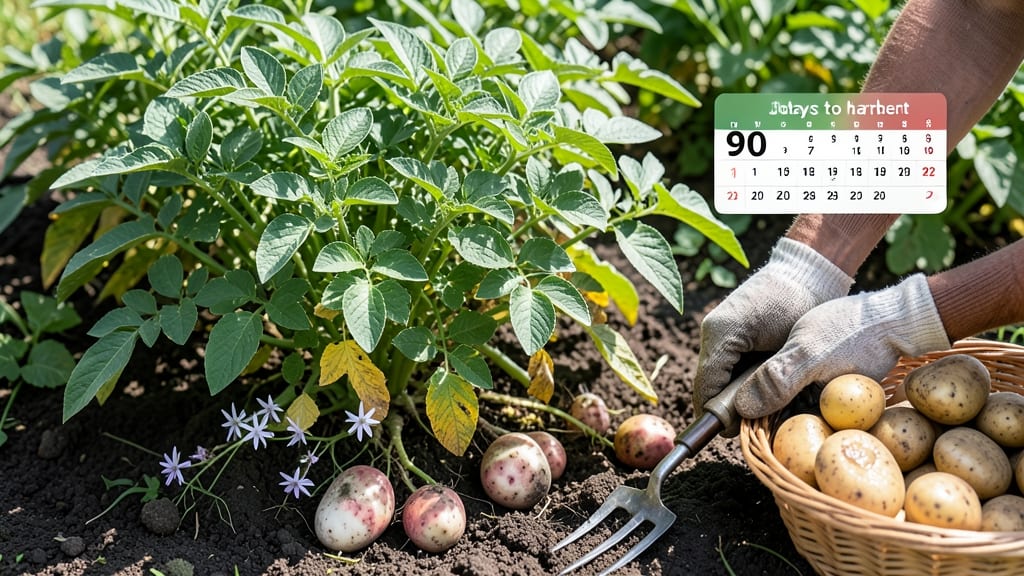
Harvesting potatoes takes anywhere from 8 to 16 weeks after planting, depending on the variety you’re growing 🥔 — and getting it right means the difference between tender new potatoes and tough, starchy tubers.
Picture this: you’ve spent months tending to your potato patch, and now you’re staring at a sea of green foliage, wondering if it’s finally time to dig.
The truth is, the exact timing depends on whether you’re after baby potatoes or fully mature tubers — and missing the window can mean wasted effort or even spoiled harvests.
In this guide, I’ll break down the key signs your potatoes are ready (like flower fade and yellowing leaves), explain how soil temperature and variety type affect harvest time, and share pro tips for storing your haul so it lasts all winter.
Whether you’re growing early varieties like Red Norland or late-season keepers like Russet Burbank, you’ll walk away knowing exactly when to grab your fork and start digging.


Potato harvest timeline by variety: early, mid-season, and late varieties explained
Timing your potato harvest correctly ensures you get firm, flavorful tubers instead of shrunken or sprouted ones. The key lies in understanding your potato variety type—whether it’s an early, mid-season, or late variety—since each has a distinct maturity window from planting to harvest.
Knowing these timelines helps you plan your garden layout and storage needs effectively.
Early varieties mature in just 8-12 weeks, making them perfect for spring plantings or cool climates. Mid-season varieties take 12-14 weeks and offer a balance between yield and timing, while late varieties need 14+ weeks but produce larger tubers ideal for long-term storage.
Let’s break down the exact weeks and popular cultivars for each category.
| Variety Type | Maturity Time | Popular Cultivars | Best For | Harvest Window |
|---|---|---|---|---|
| Early | 8-12 weeks | Red Norland, Yukon Gold, 'Early Rose' | New potatoes, quick harvests | June-July (Northern Hemisphere) |
| Mid-Season | 12-14 weeks | Kennebec, Red Pontiac, 'LaSoda' | Balanced yield, storage | July-August |
| Late | 14+ weeks | Russet, Purple Viking, 'Katahdin' | Large tubers, long storage | August-September |
If you’re growing early varieties like Red Norland, you can expect harvests as early as 60 days after planting, often aligning with late June in most Northern Hemisphere gardens.
These potatoes are prized for their tender skin and creamy texture, making them ideal for new potatoes or early-season meals. I’ve found that planting them in cool spring soil (around 45-50°F) speeds up their growth.
For mid-season varieties such as Kennebec, plan to harvest between 12-14 weeks, typically in July or early August. These potatoes strike a balance between yield and storage life, making them a favorite for home gardeners.
I recommend harvesting them when the foliage starts yellowing but before it completely dies back, as this ensures tubers are fully mature but still firm.
Late varieties like Russet take the longest to mature, often requiring 14-16 weeks or more. These potatoes are perfect for baking or long-term storage due to their thick skins and high starch content. In my experience, late varieties benefit from warmer soil temperatures (around 60°F+) and should be planted slightly later in the season to avoid early blight or other diseases.
Regional climate plays a huge role in harvest timing. In cooler climates (USDA Zones 3-5), early varieties might be your only option for a summer harvest, while warmer zones (6-10) can support multiple plantings of mid and late varieties.
For example, in Zone 7, I’ve successfully grown late varieties like Purple Viking by planting them in late April and harvesting in early September.
Don’t forget to account for soil temperature—potatoes grow best when soil is between 50-70°F. Cold soil slows growth, while overly hot soil can stress plants. Use a soil thermometer to monitor conditions, especially if you’re in a transitional climate where temperatures fluctuate wildly.
I’ve learned the hard way that rushing harvests in hot, dry weather can lead to shrunken tubers.
Pro tip: If you’re unsure about your variety’s maturity, check the seed packet for days to maturity and count backward from your average first frost date. This helps you plan succession plantings for a continuous harvest.
For instance, if your first frost is October 15 and you’re growing a 12-week variety, plant in mid-June to avoid a late-season freeze.
Finally, always harvest on a dry, overcast day to prevent skin damage. Cure your potatoes for 1-2 weeks in a dark, 60-70°F space with high humidity to toughen their skins and improve storage life.
This step is especially critical for late varieties, which need extra care to prevent rot or sprouting during winter storage.
5 Key signs your potatoes are ready for harvest (and when to ignore them)
If you’ve been eagerly checking your potato patch, you’ve probably noticed some plants are starting to change—but not all of these signs mean it’s harvest time 🥔. The key is knowing which cues to trust and which to ignore, because digging too early or too late can ruin your harvest.
For example, early varieties like Red Norland might be ready in just 8-10 weeks, while late-season types like Russet Burbank need 14+ weeks. The difference? Their foliage behavior and tuber development follow distinct patterns. Let’s break down what to watch for—and what to dismiss as red herrings.
Here’s the non-negotiable checklist for harvest readiness, ranked by reliability:
Now, here’s what to ignore—even if it looks promising. For instance, green tops don’t always mean the tubers are ready, especially in cool climates. Some varieties, like fingerlings, keep green foliage longer but still need the 2-3 inch tuber rule to be harvest-worthy.
Pro tip: If you’re unsure, do a test dig by gently brushing back soil near one plant. If the tubers are smaller than a golf ball, wait another 2-3 weeks. But if they’re basket-sized, it’s time to harvest before they split or rot in the ground 🌱.
Remember, late harvests can lead to sprouting or disease, while early harvests might give you tiny, underdeveloped potatoes. Trust the foliage, flower signals, and tuber size—not just the calendar!