
How To
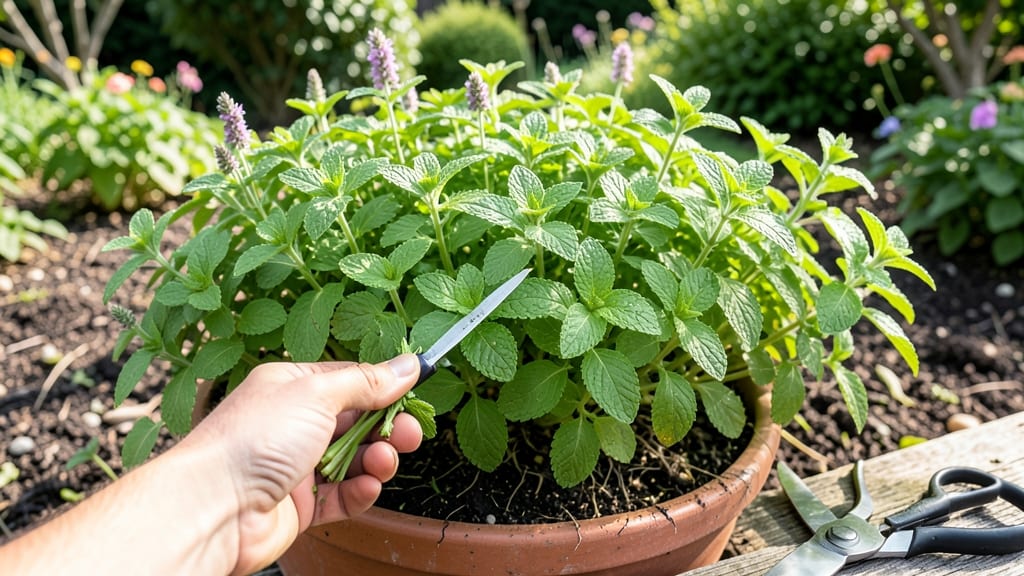
Harvesting mint without killing the plant means pruning the right way—cutting just above a leaf node to spark fresh growth while keeping your 🌿 herb lush and productive.
Picture this: You grab a handful of stems, only to watch your mint wilt over the next few weeks. That’s the classic sign of over-harvesting, and it’s easier to avoid than you think.
Timing matters just as much as technique. Harvest in the morning after the dew dries but before the sun peaks, and always leave at least half the plant intact to keep photosynthesis humming.
Below, I’ll walk you through the exact steps—when to snip, how much to leave behind, and the simple tricks that turn sparse stems into a year-round harvest.


The correct way to harvest mint for maximum growth and health
Harvesting mint the right way isn't just about snipping stems—it's about encouraging your plant to grow thicker and bushier after each cut. When done correctly, you'll get continuous harvests without weakening the plant.
The key lies in understanding where to cut and how much to leave behind. Unlike many herbs, mint thrives on regular pruning, but only if you follow the proper technique.
Most gardeners make the mistake of cutting stems too short or removing too many leaves at once. This stresses the plant and can lead to stunted growth or even death. Instead, we'll focus on selective pruning that stimulates new shoots while preserving the plant's energy.
Think of it like giving your mint a haircut that promotes a fuller head—not a buzz cut that leaves it bald.
Before you grab your pruners, know this: the best time to harvest mint is in the morning after the dew dries. This ensures the leaves are dry and full of moisture, making them easier to handle.
Also, always harvest before flowering—once mint blooms, the leaves become bitter and the plant shifts energy toward seed production instead of foliage growth.
How to Harvest Mint Without Killing the Plant
-
Step 1: Choose the Right Stems
Select healthy, non-flowering stems that are at least 4-6 inches tall. Avoid cutting stems with flowers or buds—they won’t regrow as vigorously. -
Step 2: Use Clean Pruners or Scissors
Sterilize your tools with rubbing alcohol to prevent disease transmission. Sharp tools make cleaner cuts, reducing stress on the plant. -
Step 3: Cut Above a Leaf Node
Make your cut just above a set of leaves (where a new shoot can emerge). This encourages new growth from that node. Aim for a 45-degree angle to reduce water pooling. -
Step 4: Never Remove More Than 1/3 of the Plant
Leave at least half the foliage intact to maintain photosynthesis. If you harvest too much, the plant won’t recover and may stop producing. -
Step 5: Harvest Regularly
Mint grows quickly—harvest every 4-6 weeks during the growing season to keep it compact and bushy. In winter, reduce harvesting to once every 8-12 weeks. -
Step 6: Encourage Regrowth
After harvesting, water the plant deeply and apply a light fertilizer (like 5-10-10) to support new growth. Keep the soil moist but not soggy for the next 2 weeks.
🌱 Pro Tip: If your mint starts to look leggy, prune the top 1/3 of the tallest stems to encourage bushier growth.
One of the biggest myths about harvesting mint is that you should cut it back hard to "reset" the plant. This is false—mint doesn’t need drastic pruning to thrive. Instead, focus on consistent, light harvesting.
Think of it like trimming your hedges: small, frequent cuts keep them shaped and healthy, while one big trim can shock the plant.
If you notice your mint bolting (sending up tall flower stalks), it’s a sign you’ve waited too long to harvest. Bolted mint is still edible, but the leaves lose their aromatic intensity.
To prevent bolting, harvest stems before they reach 6 inches tall and avoid letting the plant go dormant without a break.
After each harvest, monitor your mint for new shoots emerging from the nodes where you cut. These are your signs of success—they mean your plant is recovering and preparing for the next harvest.
If you don’t see new growth within 2-3 weeks, your plant may be stressed from over-harvesting or poor conditions.
For container-grown mint, the same rules apply, but be extra cautious about root space. Mint spreads aggressively, and overcrowded roots can lead to stunted growth even if you’re pruning correctly. If your mint outgrows its pot, consider dividing the plant every 1-2 years to refresh its root system.
In colder months, mint’s growth slows down, but that doesn’t mean you should stop harvesting entirely. If your plant is still green and healthy, you can lightly harvest 1-2 stems per month to keep it trimmed. Just avoid heavy pruning, as the plant needs to conserve energy for winter.
Remember, the goal isn’t just to harvest mint—it’s to keep it thriving for years to come. By following these steps, you’ll enjoy abundant, flavorful mint all season long, without ever sacrificing your plant’s health. Happy harvesting! 🌿
Common mistakes that kill your mint plant (and how to avoid them)
Your mint plant might look healthy one day and wilted the next after aggressive harvesting. This happens when you strip too many stems at once, leaving no energy reserves for recovery. Mint is a fast grower, but even it needs time to bounce back.
Another silent killer is cutting stems at the wrong place. If you snip below leaf nodes, you’re removing the plant’s growth points, which means no new shoots will sprout from that spot. Think of each node as a tiny bud waiting to burst into life.
Seasonal neglect also plays a role. Mint slows down in winter dormancy and needs less frequent harvesting. Forcing it to produce during cold months stresses the roots and weakens next year’s growth.
🌿
⚠️ How to Harvest Mint Without Killing the Plant
Never remove more than 1/3 of the plant at once. Use clean, sharp pruners and cut just above a leaf node (the bump where leaves grow). Avoid cutting flowering stems—they sap energy from your harvest.
Harvest in the morning after dew dries but before peak sun (10 AM). This preserves oil content and flavor. Always leave at least 6 inches of growth to maintain photosynthesis.
One of the biggest mistakes is ignoring soil health. Mint thrives in rich, moist soil but struggles when roots become compacted or nutrient-starved. Add compost every 3 months to keep it fed without overloading it.
Overcrowding also stunts growth. Mint spreads aggressively—if you don’t divide clumps every 2 years, the center becomes woody and stops producing fresh leaves. Simply dig up the plant, split the roots, and replant sections.
Finally, don’t harvest diseased leaves. Yellowing, spotted, or moldy foliage should be removed immediately and discarded (not composted). Fungal spores spread quickly, and mint’s shallow roots make it especially vulnerable.