
How To
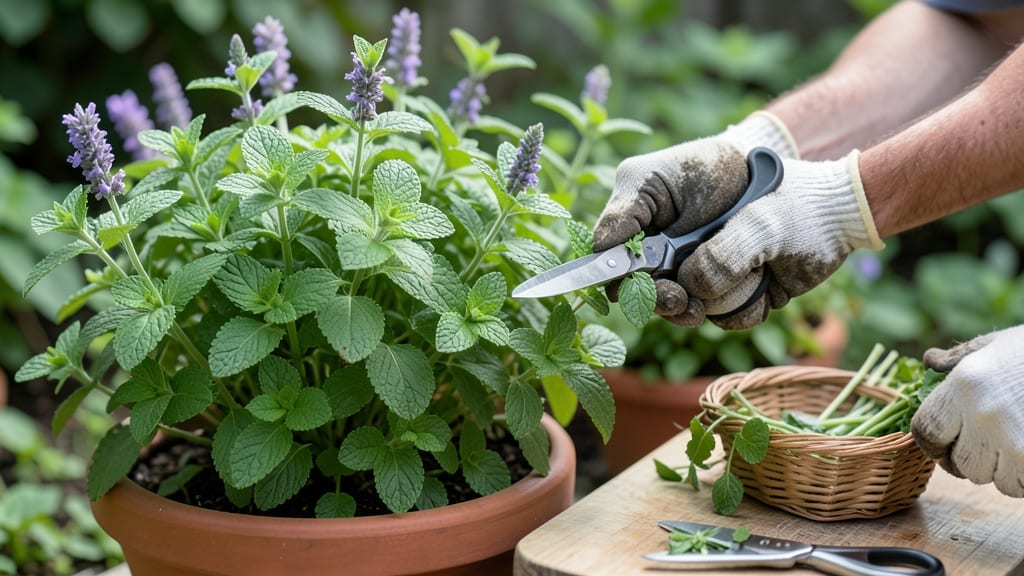
Harvesting mint the right way keeps your plants lush and your supply endless—here’s how to do it without killing your 🌿 or wasting a single leaf.
Picture this: you’ve finally got a thriving mint patch, but every time you snip, the growth slows down or the flavor fades. That’s because most people cut too late, too low, or too aggressively. The secret? Timing, technique, and a little regrowth magic.
Mint loves being trimmed—it’s how you get bushier plants and stronger flavor—but you’ve got to do it right. We’re talking morning cuts, the perfect stem thickness, and knowing when to stop before the flowers steal all the energy.
Skip these steps, and you’ll end up with leggy, bitter leaves instead of the vibrant green powerhouse you planted.
In this guide, I’ll walk you through the exact when, where, and how to harvest mint for maximum regrowth, plus pro tips to store your bounty so it stays fresh longer. No more guesswork—just a steady stream of flavor-packed leaves all season.


When and how to cut mint for maximum regrowth
Harvesting mint at the right time ensures a flavorful crop and encourages vigorous regrowth. The key is timing—cutting too early or too late can weaken your plant or reduce flavor.
For outdoor mint, aim for the growing season between June and September, while indoor mint can be harvested year-round with proper care.
Morning is the best time to harvest mint because the leaves are drier and more fragrant. Avoid harvesting after rain or in the evening, as moisture can promote fungal growth and dilute the flavor. Always use clean, sharp tools to prevent damage to the plant.
Before you start cutting, identify the healthiest stems. Look for vibrant green leaves that are at least 2-3 inches long. Avoid cutting stems that are woody or flowering, as this can reduce flavor and encourage seed production instead of leaf growth.
How to Harvest Mint for Continuous Growth
- Step 1: Choose the right harvesting time—early morning after dew has evaporated.
- Step 2: Locate the healthiest stems with 3-4 sets of leaves (avoid cutting too close to the base).
- Step 3: Use clean pruning shears or sharp scissors to cut stems at a 45-degree angle, about 1-2 inches above a leaf node.
- Step 4: Harvest no more than 1/3 of the plant at a time to avoid stressing it.
- Step 5: Remove lower leaves from harvested stems to reduce moisture loss and keep the plant upright.
- Step 6: Water the plant thoroughly after harvesting to encourage new growth.
Pro Tip: Regular harvesting (every 4-6 weeks) keeps mint bushy and productive.
Seasonal timing matters for outdoor mint. In spring and early summer, focus on light harvesting to encourage leaf growth. By mid-summer, you can harvest more aggressively, but avoid cutting back more than 1/3 of the plant at once.
For indoor mint, harvest whenever the leaves reach desired size, but reduce frequency in winter months when growth slows.
One common mistake is cutting too close to the base, which can leave the plant vulnerable to rot or pests. Always leave at least 1-2 inches of stem above a leaf node. This ensures the plant has energy to regrow while maintaining its structure.
After harvesting, rinse the leaves under cool water to remove dirt and pat them dry with a paper towel. Store them in the fridge for up to 1 week or dry them for long-term use. Proper storage preserves flavor and extends the life of your harvest.
To encourage maximum regrowth, fertilize your mint plant with a balanced 5-10-5 fertilizer every 4-6 weeks during the growing season. This provides essential nutrients without overloading the plant. Pair this with consistent watering and partial shade to keep your mint thriving.
If your mint starts to flower, pinch off the buds immediately. Flowering signals the end of the plant's leaf-producing phase and can make the leaves bitter. Removing flowers redirects energy back into leaf growth, ensuring a longer harvest season.
With these techniques, you’ll enjoy a continuous supply of fresh mint all season long. Happy harvesting! 🌿✂️
Best pruning tools and techniques to keep mint bushy
Choosing the right pruning tools makes all the difference when keeping your mint bushy and productive. While both sharp scissors and pruning shears work, pruners offer better control for thicker stems (up to 1/4-inch diameter).
For delicate mint stems, bypass pruners are ideal—they create cleaner cuts that heal faster and reduce disease risk. Avoid dull tools, as they crush stems and invite infections.
When cutting, aim for stems with 3-4 sets of leaves—this ensures you’re harvesting mature growth while leaving enough energy for regrowth. Cut just above a leaf node (where leaves meet the stem) at a 45-degree angle.
This angle increases surface area for faster healing and prevents water from pooling on the cut. Never snip too close to the base, as this can expose the plant to rot.
Here’s a quick comparison: scissors work for thin stems but lack precision, while pruning shears handle thicker growth better. For large mint patches, consider hedging shears to trim uniformly. Always sterilize your tools with rubbing alcohol before and after use to prevent spreading diseases like powdery mildew.
⚠️ Common Mistake: Cutting Too Low
Why it hurts your mint:
- Exposes woody stems to rot and pests
- Removes growth nodes, slowing regrowth
- Can kill the plant if cuts are too severe
Fix it: Always leave 1-2 inches of stem above a leaf node. This preserves the plant’s structure while encouraging new shoots to sprout from the remaining nodes.
To encourage bushier growth, prune your mint regularly every 4-6 weeks during the growing season. This mimics natural grazing and stimulates lateral branching. After pruning, water thoroughly to help the plant recover.
For indoor mint, trim leggy stems to promote compact growth, while outdoor mint benefits from occasional light shearing to maintain shape.
Watch for flowering stems—these sap energy from leaf production. Pinch off buds as soon as they appear to keep your mint focused on growing flavorful leaves. Over time, this habit results in a denser, more productive plant with fewer bitter notes.
If your mint becomes too woody, it’s time for a harder prune: cut back 1/3 of the plant to rejuvenate growth.
Pro tip: Use harvested stems for propagation! Place cuttings in water with a rooting hormone to grow new plants. This multiplies your mint supply while keeping your original plant healthy. Just ensure your tools are sterile and cuts are clean to avoid fungal issues.