
How To
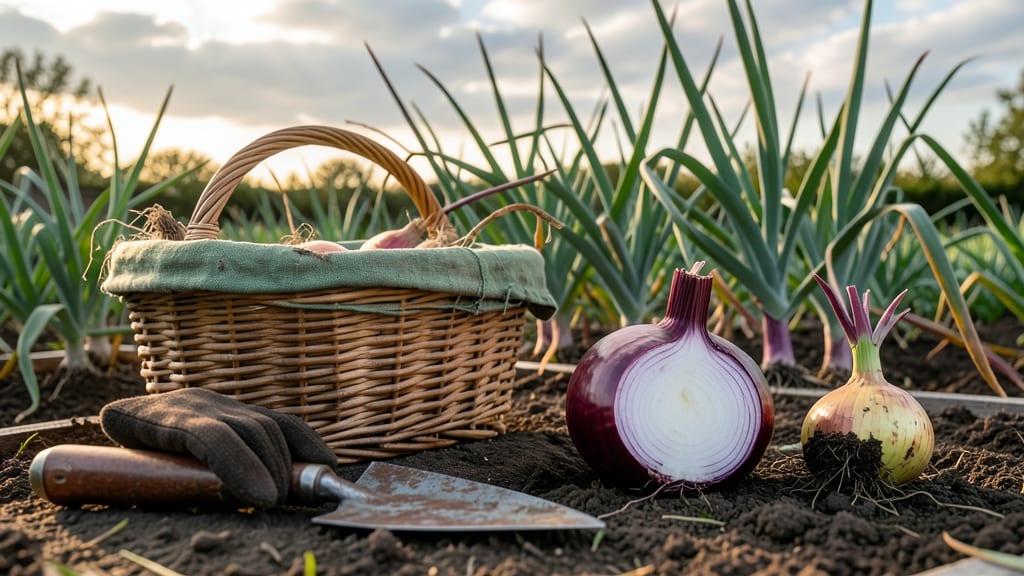
Knowing when to harvest red onions 🧅 means the difference between a sweet, flavorful bulb and a tough, pungent one — and it all comes down to a few simple cues.
Harvesting too early leaves you with small, underdeveloped bulbs, while waiting too long turns them bitter or causes them to split. The trick is spotting the perfect moment when the tops yellow and the bulbs feel firm to the touch.
In this guide, I’ll walk you through the finger-firm test, size benchmarks for different varieties, and how to adjust for your climate. No more guessing — just confident harvests every time.
You’ll also learn how to avoid common mistakes that ruin onions, like harvesting at the wrong stage or storing them improperly. Let’s get those red onions out of the ground at just the right time.


The finger-firm test: how to check red onion readiness
Harvesting red onions at the perfect moment ensures sweet, flavorful bulbs that store well. The finger-firm test is my go-to method for determining readiness—it’s simple, reliable, and requires no special tools. When you pull up a bulb that feels firm but not rock-hard, you’ve nailed the timing.
This tactile check saves you from harvesting too early (small, pungent onions) or too late (bitter, overmature bulbs).
Red onions need about 100-120 days to mature, depending on your climate and variety. But days alone won’t tell you when to harvest—you must combine the finger test with visual cues.
For example, the tops should start yellowing and falling over while the bulb feels round and dense. Ignoring these signs often leads to wasted effort or poor storage potential.
Here’s how to perform the finger-firm test correctly, step by step:
Timing your harvest correctly also impacts storage life. Onions harvested at the right firmness stage can last 2-3 months in a cool, dry place. Overripe onions spoil quickly, while underripe ones won’t store well.
Pro tip: Cure your harvested red onions for 1-2 weeks in a dark, dry spot before storing to extend their shelf life.
If you’re growing short-day varieties (like ‘Red Creole’), they’ll mature faster in hot climates. Long-day varieties (like ‘Red Baron’) take longer but develop sweeter flavors. Always adjust your finger test for your specific variety—some stay firmer longer than others.
For example, ‘Red Wing’ onions might feel slightly softer at peak ripeness compared to ‘Tropea.’
One common mistake is waiting until the tops are completely brown and dry. By then, the bulb may have split or become pungent. Instead, harvest when the tops are 50% yellowed and the bulb passes the finger test.
This ensures you get the best balance of flavor and texture. For storage onions, aim for bulbs about 2-3 inches in diameter—they’ll keep longer than larger ones.
For gardeners in USDA Zone 6a or warmer, early fall harvests (September-October) often yield the sweetest red onions. In cooler zones, focus on spring harvests (June-July).
Always harvest in the morning when the soil is moist but not soggy—this makes the bulbs easier to pull and reduces stress on the plant. After harvesting, trim the tops to 1 inch above the bulb and let them dry in the sun for a few hours before storing.
Remember, the finger-firm test is just one part of the equation. Combine it with visual cues like yellowing tops and papery skin for foolproof results. With practice, you’ll develop a keen sense for when your red onions are at their peak. Happy harvesting!
Red onion size guide: when bulbs reach perfect harvest dimensions
Red onion varieties come in three common size categories: small (golf ball-sized), medium (tennis ball-sized), and large (softball-sized). The perfect harvest size depends on your variety and growing conditions, but most gardeners aim for bulbs between 1.5 to 3 inches in diameter when the tops yellow and flop.
For example, ‘Red Creole’ onions typically stay small (1.5–2 inches), while ‘Red Baron’ can grow larger (2.5–3.5 inches). Hotter climates often produce smaller bulbs faster, while cooler seasons may yield larger onions with more time to mature.
Always check the skin texture—it should feel dry and papery, not slick or green.
Here’s a quick reference for ideal harvest sizes by variety and climate:
| Variety | Ideal Size (Diameter) | Climate Notes | Harvest Cue |
|---|---|---|---|
| Red Creole | 1.5–2 inches | Hot climates (Zones 8–10) | Tops yellow at 90 days |
| Red Baron | 2.5–3.5 inches | Cooler climates (Zones 4–7) | Bulbs firm at 120 days |
| Red Wing | 2–2.5 inches | Versatile (Zones 5–9) | Neck shrinks at 100 days |
| Red Zebra | 1–1.5 inches | Short season (Zones 3–6) | Skin papery at 80 days |
If your soil is rich and moist, onions may grow larger but risk splitting. To prevent this, reduce watering slightly when bulbs reach 70% of their target size.
In dry climates, onions often stay small but develop deeper flavor—harvest when tops yellow, even if bulbs aren’t fully round.
Pro tip: Use a ruler or caliper to measure bulbs if you’re unsure. For storage onions, aim for the largest size possible—bulbs over 3 inches in diameter store best through winter. Smaller varieties like ‘Red Creole’ are best used fresh or cooked immediately.
Adjust your harvest timeline by 1–2 weeks based on your local frost dates. In short-season zones, prioritize bulb firmness over size—smaller, perfectly ripe onions taste sweeter than overgrown ones. 🌱