
How To
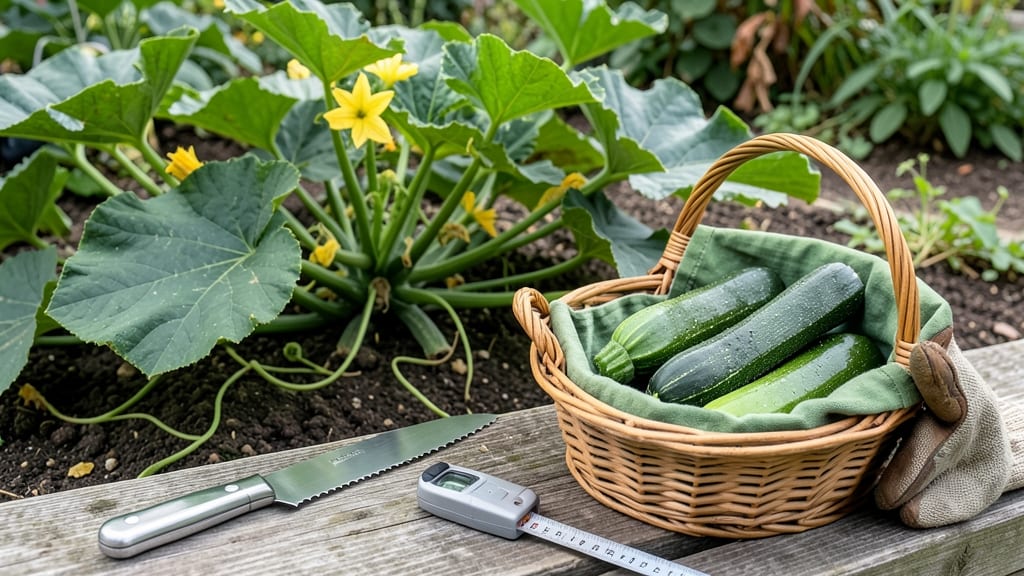
Knowing when to harvest zucchini 🎃 is all about timing—pick too early, and you’ll get tough, seedy fruit; too late, and you’re left with oversized, mealy giants.
Most gardeners miss the sweet spot because they rely on size alone, but the real secret lies in a simple finger-press test that reveals tenderness before the fruit gets away from you.
In this guide, you’ll learn the exact moment to harvest (hint: it’s not just about inches) and how to adjust for heat waves, drought, or late-season slowdowns that can throw off your timing.
By the end, you’ll never again end up with a foot-long zucchini that’s more suitable for compost than the kitchen—just crisp, flavorful squash ready for your favorite recipes.
The finger-press test: zucchini harvesting’s most reliable method
Harvesting zucchini at the right moment ensures crisp texture and maximum flavor, but many gardeners struggle to pinpoint the perfect time. The finger-press test is my go-to method for determining ideal harvest readiness.
Unlike guessing by size or color alone, this tactile approach reveals the internal tenderness that defines peak zucchini quality.
When you press a zucchini too early, you’ll get woody, underdeveloped fruit that lacks sweetness. Wait too long, and you’ll end up with seedy, mealy giants that turn to mush when cooked.
The finger-press test bridges this gap by focusing on the stem’s resistance and the fruit’s firmness—two key indicators of perfect harvest timing.
Before you grab your shears, check these three visual cues first: a deep green color (not pale or yellowing), a 6-8 inch length, and a slightly bulbous shape. These signs alone won’t guarantee perfect flavor, but they narrow down the window to apply the finger-press test with confidence.
How to Perform the Finger-Press Test
- Step 1: Gently grasp the zucchini near its midsection with your thumb and forefinger.
- Step 2: Apply firm but gentle pressure—imagine squeezing a ripe avocado. You’re testing for yield without bruising.
- Step 3: Look for slight give (about 1/8 inch) where your fingers press. If the skin springs back immediately, it’s underripe.
- Step 4: If the skin holds the indentation for 1-2 seconds before rebounding, that’s your harvest sweet spot.
- Step 5: Check the stem end: A yellowing base signals readiness, while a green stem means wait 1-2 days.
Pro Tip: Test multiple zucchini on the same plant—they often ripen at different rates! 🌱
Why does firmness matter so much? Zucchini at the ideal harvest stage have thin, tender skins and fewer seeds, which translates to better texture in dishes like grilled zucchini or spiralized noodles. Overripe zucchini develop thick, fibrous skins and large seeds, making them less versatile in the kitchen.
Common mistakes throw off the finger-press test. For example, pressing too hard can bruise tender skin, while gentle pressure on an overripe zucchini might feel deceptively firm.
Always use moderate pressure and focus on the rebound time rather than absolute firmness. If the fruit feels spongy, it’s past its prime.
Seasonal factors also influence timing. In hot summers, zucchini mature faster—sometimes in just 45 days—while cooler springs may extend the window to 60 days.
Pay attention to your local climate and adjust your finger-press checks accordingly. Morning harvests are ideal because cool temperatures preserve the fruit’s crispness longer.
Once you master the finger-press test, you’ll notice other subtle cues, like the sound of the fruit when tapped (a dull thud means ripe, a sharp ping means underripe). Combine this method with the visual checks mentioned earlier, and you’ll never miss the perfect harvest window again. Happy harvesting!
Remember: Zucchini left on the vine too long compete for nutrients with future blooms, reducing your overall yield. Stay proactive with your finger-press checks to keep your plants productive all season long. ✂️
5 Additional signs your zucchini are ready for harvest (beyond the finger test)
While the finger-press test is my go-to method for zucchini readiness, I’ve learned that nature gives us extra clues if we know where to look. These secondary signs help me confirm harvest time—especially when I’m unsure or dealing with unusual growing conditions like heatwaves or drought.
Paying attention to these details means fewer overgrown monsters and more perfectly tender zucchini for your table. Let’s explore the subtle but unmistakable signals your plants send when they’re begging to be picked.
- 1 Bloom Stage: The female flower (with a tiny zucchini at its base) wilts completely within 24-48 hours after pollination. This means your zucchini is growing fast—check it daily!
- 2 Stem Separation: Gently twist the zucchini at its stem. If it snaps cleanly (not tears), it’s ready. A stubborn stem means it needs more time.
- 3 Weight Test: Lift the zucchini—heavy for its size means it’s packed with flavor. Light zucchini are often underripe, while overly heavy ones may be overripe.
- 4 Sound Test: Tap the zucchini lightly with your knuckle. A hollow thud signals maturity, while a dull thump means it’s still firm and unripe.
- 5 Color Shift: The stem end turns from bright green to a faint yellowish hue. This is your plant’s way of saying, “Pick me now!”
I’ve noticed that overripe zucchini develop a woody texture and lose their sweetness, while underripe ones stay hard and bland. These extra cues help me avoid both extremes, ensuring every harvest is a winner.
Pro tip: If your zucchini are growing faster than expected (like in hot summers), check them every 2-3 days—they’ll go from perfect to giant overnight! The more you harvest, the more your plants produce.
Now you’ve got five foolproof ways to know when your zucchini are ready—no guesswork, just delicious results. Happy harvesting! 🌱