
How To
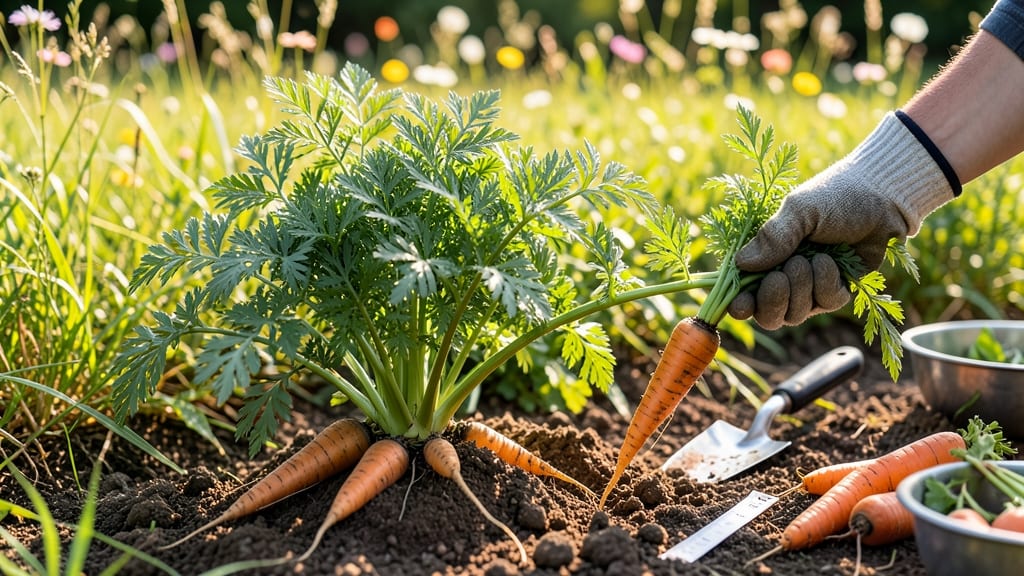
To tell when to harvest carrots, watch for firm roots that resist gentle pressure and tops reaching 3-4 inches tall—these are your best clues for peak flavor and texture.
Digging up carrots too early means mushy, underdeveloped roots—but waiting too long can leave you with tough, woody vegetables. Mastering the perfect harvest timing ensures crisp, flavorful 🥕 every time.
Most varieties are ready in 70-90 days, but soil conditions and weather play a role. A simple resistance test—gently tugging on the leaves—reveals whether they’re ready to pull.
Below, I’ll break down the visual cues, soil tricks, and seasonal adjustments to guarantee you harvest at the perfect moment—no guesswork required.


The soil resistance test: how to check carrot maturity without digging
The soil resistance test is my favorite trick for harvesting perfectly mature carrots without digging up every root. This method relies on soil texture and subtle resistance cues that reveal when roots have reached ideal size.
Unlike guessing by leaf size or days since planting, this test gives you tactile confirmation of carrot readiness—no surprise forks or underdeveloped roots here!
Why does this work? As carrots grow, their roots push through soil particles, creating compacted zones around them. When mature, these zones develop noticeable resistance when pressed.
Mastering this test means you’ll harvest carrots at their peak sweetness and crispness, avoiding both the mushy underripe stage and the tough overripe phase.
You’ll only need two simple tools: a small hand trowel and your fingers. No fancy gadgets required! The technique is gentle yet precise, making it perfect for gardeners who want to minimize root disturbance while still getting accurate results.
Let’s dive into the step-by-step process that’s saved me from countless disappointing harvests.
How to Perform the Soil Resistance Test
- 1
- 2
- 3
- 4
- 5
Select a carrot plant with healthy foliage (3-4 inches tall) and no visible pests. Avoid plants near the garden edges where roots might be stunted.
Gently brush away topsoil (about 1 inch deep) to expose the soil where the carrot root meets the dirt. Use your fingers or a small hand trowel for precision.
Place your thumb and index finger about 1 inch below the soil surface, directly beside the carrot stem. Apply light downward pressure (like testing a ripe avocado).
If the soil feels firm with slight resistance (like pressing a ripe pear), the carrot is ready. If it gives way easily, wait 3-5 days. If it feels rock-hard, the carrot may be overripe.
For confirmation, gently dig one test carrot from the same row. If it meets your size preferences (1-2 inches diameter) and has a smooth, crisp texture, the resistance test is accurate for the rest.
Pro tip: Perform this test in the morning when soil is moist but not waterlogged. Damp soil provides better resistance feedback, while dry soil can give false "ready" signals. I’ve found that testing every 5-7 days starting at 60 days after planting gives the most reliable results for most varieties.
What about different carrot varieties? The resistance test works universally, but adjust your expectations: short varieties (like 'Paris Market') will show resistance at smaller sizes (½ inch diameter), while long varieties (like 'Danvers') need firmer resistance before harvest.
Always cross-reference with the foliage height—3-4 inches is ideal for most types.
One common mistake is pressing too hard, which can damage nearby roots. Think of it as a gentle handshake with the soil—the pressure should be enough to feel resistance but not enough to compact the dirt permanently. If you’re unsure, test multiple spots around the plant for consistency.
For gardeners with heavy clay soil, this test becomes even more valuable because clay naturally compacts around roots. In these conditions, you’ll feel resistance earlier than in loose, sandy soil. Always amend your soil with compost before planting to create the ideal balance for this test to work effectively.
Remember: The soil resistance test is just one tool in your harvest arsenal. Combine it with visual leaf cues and seasonal timing for foolproof results. Once you master this method, you’ll never guess when to harvest carrots again—just listen to what the soil tells you!
🥕
Visual and size-based harvest indicators for perfect carrots
Carrots don't come with a "ready" label, so I rely on visual cues and size benchmarks to know when to harvest. The foliage height and leaf color often reveal more than the soil ever could.
For example, my Danvers carrots typically reach harvest size when their tops hit 3-4 inches tall, while Paris Market varieties stay smaller but crisp longer.
I always check the leaf color first—vibrant dark green tops mean active growth, while yellowing or purple tinges signal it's time to pull them. The skin texture is another clue: smooth, firm skin means perfect timing, while rough or cracked surfaces mean you waited too long.
Even the root shape matters—forked or misshapen carrots need harvesting ASAP to prevent further issues.
For short varieties like Paris Market, I harvest when the roots are 1-1.5 inches wide—they stay tender and sweet if pulled early. Medium varieties like Nantes need that 3-4 inch foliage height before harvesting, while long varieties like Danvers can wait until their tops reach 5-6 inches.
I always test one carrot first by gently tugging—if it slides out easily, the rest are ready too.
Watch for color shifts in the leaves—my purple carrots develop deeper hues as they mature, while orange varieties stay consistent. If the edges of the leaves start yellowing or curling, that’s your last call to harvest before the flavor turns bitter.
I’ve learned the hard way that over-mature carrots develop woody cores, so I’d rather harvest a few days early than risk tough roots.
Seasonal timing matters too—spring-planted carrots mature faster in cooler weather, while summer heat can slow growth. I adjust my harvest window based on the USDA zone: in Zone 6a, I start checking carrots in late June for early varieties and extend to October for late-season types.
Always harvest in the morning after watering for the crispest texture.
Pro tip: Keep a harvest journal to track your carrots' growth patterns. Note the days to maturity, foliage height, and root size for each variety. Over time, you’ll recognize the perfect harvest window for your garden’s conditions.
My Danvers carrots always reach ideal size around 80 days, while my short varieties are ready in just 55 days—knowing these timelines saves me from guessing.