
Trees
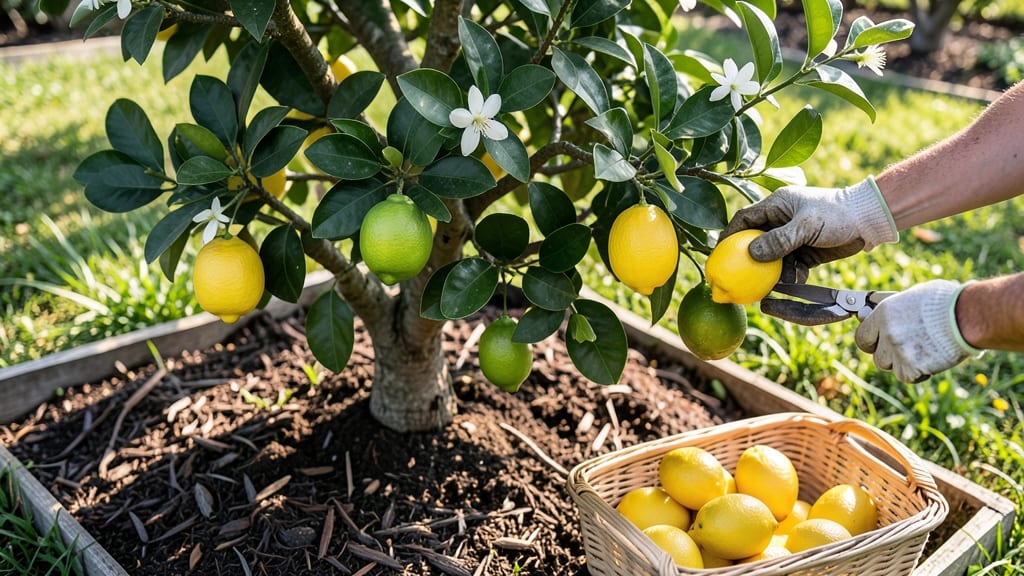
Harvesting lemons from your tree at the right time means the difference between sweet, juicy fruit and bitter, overripe waste 🍋 — and the best time isn’t just when they turn yellow.
If your lemon tree’s leaves are turning yellow and fruit is dropping unexpectedly, you might be harvesting at the wrong time—or missing key signs that your tree is ready. Timing your harvest correctly ensures sweet, juicy lemons while preventing waste from overripe or fallen fruit.
In Zone 9b (like Phoenix or coastal California), peak harvest runs from May to September, but the exact moment depends on fruit color, texture, and how easily it separates from the tree.
A lemon that’s too green will never ripen off the branch, while one left too long may split or attract pests.
Below, I’ll walk you through the visual cues, regional tweaks, and storage tips to maximize your yield—so you’re picking at the perfect moment, not too early or too late.

Signs your lemon tree is ready for harvest (beyond ripe color)
Harvesting lemons at the perfect moment ensures peak flavor and prevents waste. While bright yellow color is the most obvious sign, many gardeners miss subtle cues that signal true readiness. Your tree might be telling you it's time to pick—even if the fruit looks green or the leaves are yellowing.
Understanding these hidden indicators can transform your harvest from mediocre to exceptional.
Don’t assume lemons are ready just because they’ve changed color. Many varieties, like Meyer lemons, stay green until fully ripe, while others like Eureka lemons develop a deep yellow-orange hue. The key lies in combining visual, tactile, and environmental clues to avoid picking too early or too late.
For example, a slightly soft peel and easy stem removal often mean the fruit is at its sweetest.
Yellowing leaves near the fruit can actually be a good sign—it’s your tree’s way of redirecting nutrients to the lemons. However, excessive leaf drop or yellowing on older leaves might signal stress from overwatering or pests. The trick is distinguishing between natural ripening signals and stress warnings. For instance, if leaves turn yellow but the fruit feels firm and green, your tree may need more sunlight or balanced fertilization.
| Sign | Description | Action |
|---|---|---|
| Fruit Color | Deep yellow or orange (varies by variety) | Check for even coloring; green patches mean wait. |
| Peel Texture | Slightly soft but still firm to touch | Gently squeeze; if it gives slightly, it’s ready. |
| Stem Detachment | Stem twists off cleanly with minimal force | Twist gently; if it resists, the fruit needs more time. |
| Leaf Yellowing | Yellow leaves near fruit (not entire tree) | Natural nutrient shift; harvest soon if fruit is soft. |
| Fruit Drop | Fruit falls naturally (not due to pests/disease) | Pick immediately; overripe fruit loses flavor fast. |
| Seasonal Cues | Peak harvest in Zone 9b: May-September | Adjust for your climate; cooler zones harvest later. |
One of the most misunderstood signs is the ease of fruit removal. If a lemon’s stem detaches with a gentle twist, it’s a clear signal to harvest. However, if you’re forcing the fruit off or hearing a snap, the lemon likely isn’t ripe yet.
This tactile test is especially useful for Meyer lemons, which often stay green until fully mature. Pair this with a light squeeze test: a ripe lemon should yield slightly under gentle pressure but not feel mushy.
Yellow leaves can be confusing, but they’re often a positive sign when paired with other readiness cues. If only the leaves near the fruit are yellowing, your tree is likely redirecting nutrients to improve flavor and sweetness.
However, if older leaves are turning yellow or falling off, your tree might be stressed from overwatering, poor drainage, or nutrient deficiencies. In this case, address the root cause before harvesting.
Environmental factors like temperature shifts and humidity levels also play a role. In Zone 9b, lemons ripen faster in the dry, warm months (May-September), while cooler zones may see a delayed harvest. Watch for natural fruit drop—if lemons are falling on their own, they’re likely overripe.
But if the drop is accompanied by shriveled skin or mold, your tree may be under stress from pests or disease.
To avoid common mistakes, harvest in the morning when temperatures are cooler. This reduces stress on the tree and ensures lemons stay fresh longer. Use clean, sharp pruners or your hands to pick fruit, leaving a small stem attached to prevent rot.
Store harvested lemons in a cool, dry place (not the fridge) to preserve their flavor and texture for up to 2 weeks.
If you’re unsure whether your lemons are ready, cut one open for a quick test. A ripe lemon will have bright yellow flesh with minimal seeds, while an unripe one will taste bitter and seedy.
This simple trick saves you from harvesting too early and ensures you’re getting the sweetest, juiciest lemons possible. Remember, patience pays off—waiting for the perfect signs guarantees a harvest worth celebrating.
🌱🍋✂️
Best lemon harvesting methods to maximize yield & prevent waste
Harvesting lemons at the right time and using the proper techniques can triple your yield while keeping your tree healthy. I’ve learned that gentle handling and strategic pruning make all the difference between a bountiful harvest and wasted fruit.
The key is to pick when lemons are ripe but still firm, and to store them properly to extend their freshness.
Start by inspecting your tree for ripe fruit—look for deep yellow or orange color and a slight give when pressed. Overripe lemons will drop naturally, but you can also harvest them before they hit the ground to avoid pests or fungal issues.
After harvesting, focus on pruning to encourage new growth and storing lemons in a cool, dry place to maintain their quality.
Step-by-Step Lemon Harvesting Guide
-
Step 1: Identify Ripe Lemons
Check for deep yellow/orange color and a slight softness when gently squeezed. Avoid hard or green lemons—they need more time.
-
Step 2: Harvest by Hand
Grasp the lemon near the stem and twist gently. If it detaches easily, it’s ready. Use pruning shears for stubborn stems to avoid damaging the tree.
-
Step 3: Prune for Regrowth
Trim dead or overcrowded branches after harvesting to improve airflow. Focus on outward-facing branches to encourage sunlight exposure.
-
Step 4: Handle Dropped Fruit
Pick up fallen lemons immediately to prevent fungal rot. Discard any with soft spots or mold, and store the rest in a cool, dry place.
-
Step 5: Store Properly
Keep lemons at 50-55°F and 85-90% humidity. A paper bag in the fridge extends freshness for 2-4 weeks.
Yellowing leaves after harvest? This is often normal as the tree redirects energy to new growth. However, if leaves are drooping or curling, check for overwatering or nutrient deficiencies. Adjust your watering schedule and fertilize lightly with a citrus-specific blend to support recovery.
To prevent waste, avoid harvesting overripe lemons—they spoil quickly and attract pests. Instead, pick them when they’re firm but yielding, and store them in a well-ventilated container. This method keeps them fresh longer and ensures you always have lemons on hand for cooking or juicing.
Remember, the best time to harvest is morning when temperatures are cooler. This reduces stress on the tree and preserves the fruit’s quality. With these techniques, you’ll enjoy a consistent harvest and a healthier lemon tree all year round. 🍋