
Light Requirements
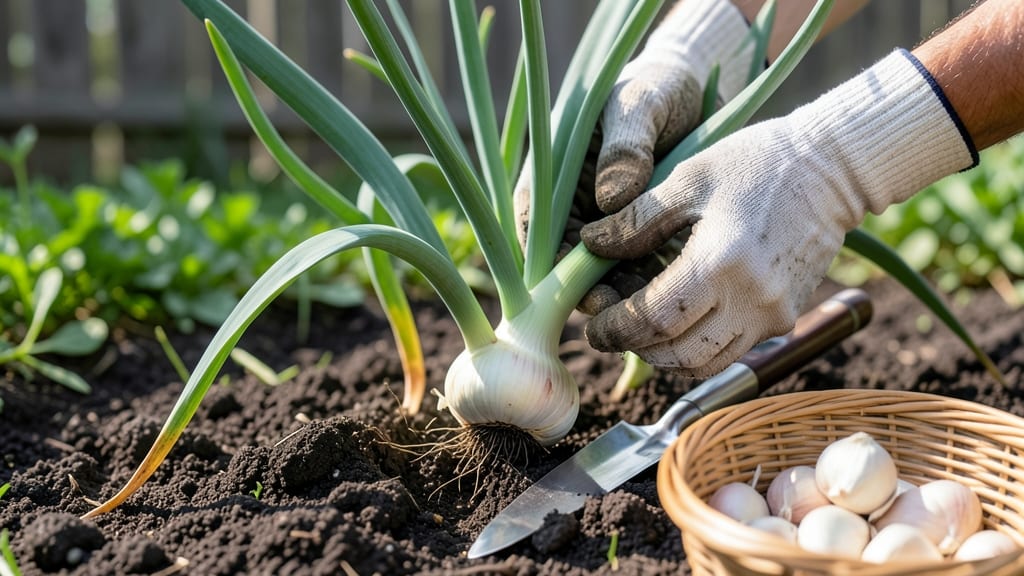
You can harvest garlic when the lower leaves turn brown and the bulb shape is visible above soil—typically in late spring to early summer, depending on your climate.
Harvesting garlic at the wrong time can mean the difference between plump, flavorful bulbs and sad, shriveled cloves—so knowing exactly when to pull them is critical for gardeners.
This small but mighty plant 🧄 thrives in USDA Zone 6a, where the timing window narrows to just a few weeks. Miss it, and you risk bulbs that split, sprout, or fail to store properly.
In this guide, I’ll break down the 3 foolproof signs your garlic is ready, how hardneck vs. softneck varieties differ, and what to do if you harvest too early or late.


3 Foolproof signs your garlic is ready for harvest
Timing your garlic harvest perfectly ensures you get those plump, flavorful bulbs you’ve been dreaming about. But how do you know when it’s time to dig? Unlike many vegetables, garlic doesn’t ripen in the traditional sense—it matures when its leaves start sending signals.
Missing these cues can lead to shriveled cloves or even moldy storage. The key is watching for three visual and physical indicators that tell you your garlic is ready to pull.
First, let’s talk about leaf browning, the most reliable sign. Garlic doesn’t need all its leaves to stay green—think of it like a tree shedding leaves in autumn.
When the lower leaves turn brown and crispy, it’s your body’s way of saying, “Hey, the bulb below is fully developed!” But here’s the catch: if you wait too long, those upper leaves will yellow and flop over, signaling the bulb is past its prime. Balance is everything.
Next, check the bulb size and visibility above the soil. A ready-to-harvest garlic bulb will have a rounded, papery skin that’s clearly visible through the soil. Gently brush away a little dirt—if you can see the distinct shape of the bulb (like a small onion), it’s time to harvest.
This is especially true for hardneck varieties, which mature faster than their softneck cousins. Pro tip: If the bulb feels firm and the skin is tight, you’re golden.
Finally, pay attention to the stem condition. When the stems begin to yellow and fall over, it’s a clear sign the bulb is mature.
But don’t wait until the stems are completely flat—this means the bulb has started to dry out in the ground, which can lead to poor storage life. The ideal moment is when about 50% of the stems are yellowing but still standing.
This balance ensures your garlic stores well through the winter.
🌱 3 Signs Your Garlic Is Ready to Harvest
-
1. Lower leaves turn brown and crispy
Starts at the base; 50-70% browning = ready. Upper leaves stay green. -
2. Bulb shape is visible above soil
Gently brush away dirt—if you see a rounded, papery bulb, it’s time to dig. -
3. Stems begin to yellow and flop
50% yellowing = perfect harvest window. Avoid waiting until stems are flat.
Now, let’s talk regional timing adjustments because climate zones play a huge role. In cooler climates (Zones 3-6), garlic typically matures in late June to early July.
But if you’re in warmer zones (7-10), your garlic might be ready as early as May or as late as August, depending on when you planted. For example, if you planted in fall (October-November), harvest timing shifts earlier than spring-planted garlic.
Always check your last frost date—garlic needs at least 240 days to mature, but hardnecks often mature faster.
One common mistake is assuming all garlic varieties mature at the same time. Hardneck garlic (like ‘Music’ or ‘German White’) tends to mature 2-3 weeks earlier than softneck garlic (like ‘Silverskin’ or ‘Artichoke’). If you’re growing both, keep an eye on each variety separately.
Hardnecks also produce scape shoots in spring—removing these redirects energy to bulb development, so harvest timing can be slightly accelerated. Softnecks, on the other hand, store longer and can wait a few extra days.
If you’re still unsure, do a test dig—gently pull up one bulb and check its size. If it’s at least 1.5 inches in diameter and the skin is tight, your garlic is ready. If not, give it another 1-2 weeks and check again.
Remember, garlic bulbs won’t sweeten or improve after harvest, so timing is everything. The goal is to harvest when the bulb is fully mature but hasn’t started to dry out in the ground—this ensures maximum flavor and storage life.
Once you’ve confirmed your garlic is ready, it’s time to harvest properly. Use a fork or spade to loosen the soil around the bulb, then gently lift it out. Shake off excess dirt and let the bulbs cure in the sun for 3-5 days before storing.
Proper curing is key to preventing mold and extending shelf life. Store your garlic in a cool, dry, well-ventilated place (like a mesh bag) and enjoy the fruits of your labor all winter long.
Don’t let the fear of missing the perfect harvest window hold you back. With these three foolproof signs, you’ll never second-guess when to pull your garlic again.
And if you’re new to growing garlic, start with a small batch—it’s a forgiving crop, and even a slightly late harvest can still yield delicious results with proper curing.
Hardneck vs softneck garlic: harvest timing differences
Not all garlic is created equal when it comes to harvest timing! Hardneck and softneck varieties mature at different rates, and understanding their unique growth cycles helps you avoid shriveled bulbs or poor storage life.
Hardnecks, like Rocky Mountain or German Red, develop scape stalks in spring and typically mature 60-90 days earlier than softnecks. Meanwhile, softnecks like Silverskin or Artichoke take longer to bulk up but store better for months.
Your climate zone also plays a role. In cooler regions (USDA Zones 3-6), hardnecks often mature by late June to early July, while softnecks may need until mid-to-late July.
In warmer zones (7-10), both types may mature earlier, but heat stress can accelerate leaf browning—so monitor closely! The key is balancing bulb maturity with leaf condition.
| Factor | Hardneck Garlic | Softneck Garlic |
|---|---|---|
| Maturity Timeline | Late June - Early July (Zones 3-6) | Mid-July - Early August (Zones 3-6) |
| Key Harvest Sign | Lower leaves brown, scape stalks dry | Lower leaves brown, no scapes |
| Bulb Size at Harvest | 2-3 inches diameter | 3-4 inches diameter |
| Storage Life | 3-5 months (shorter) | 6-9 months (longer) |
| Best For | Fresh use, braiding | Long-term storage, markets |
For hardneck varieties, watch for scape stalks to turn brown and crispy—this signals the bulb is nearly ready.
If you harvest too late, the leaves may collapse completely, leaving you with loose-skinned bulbs that won’t store well. Softnecks, on the other hand, don’t produce scapes, so focus on the lower leaves browning while the upper leaves stay green.
Pro tip: Gently tug on the stems—if the bulb slides out easily, it’s ready!
Storage differences matter too. Hardnecks store best in cool (50-60°F), dry conditions and lose quality faster. Softnecks handle warmer storage (60-70°F) better, making them ideal for pantries.
To maximize shelf life, cure both types by hanging them in a dark, airy spot for 2-3 weeks before storing. This hardens the skins and prevents rot.
If you’re growing both types, plan ahead! Hardnecks often need harvesting 2-3 weeks before softnecks. Use straw or mesh bags to separate them during curing to avoid cross-contamination.
And remember: Never harvest when soil is wet—this invites disease and shortens storage life. A dry, sunny day is perfect for digging!
My hardneck garlic always seems ready earlier than expected, so I set calendar reminders for late June in my zone. For softnecks, I wait until mid-July unless the heatwave hits early.
The difference in timing has saved me from shriveled bulbs and moldy cloves more times than I can count! 🌱