
How To
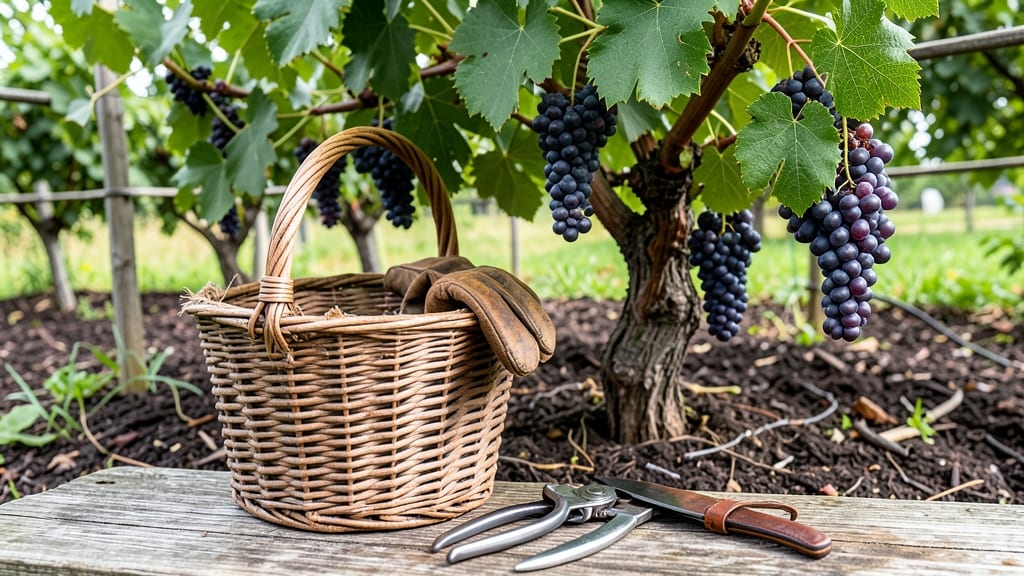
Harvesting Concord grapes at their peak means waiting for deep purple-black berries that pop with sweetness and resist a gentle pull—because timing is everything for that signature jam flavor.
Picture this: you’ve spent months tending to your 🍇 Concord vines, and now the clusters hang heavy with promise. But pick too soon, and you’re left with tart, seedy grapes that’ll never shine in your favorite recipes.
Too late, and they shrivel into mealy disappointment. The difference between a showstopping harvest and a forgotten batch? Knowing when those berries are just right.
In USDA Zone 6, where most gardeners grow Concord grapes, the harvest window typically opens in late August and stretches into September—but temperature swings, sunlight exposure, and even soil conditions can shift that timeline. That’s why the berry color test and the stem test are your best friends.
A grape should darken to a rich, velvety purple-black and pull away cleanly from the vine, signaling it’s ready to be turned into wine, jam, or fresh snacks.
Below, I’ll walk you through the exact cues to watch for, how climate affects ripening, and what to do if you miss the window. By the end, you’ll never second-guess whether those grapes are ready—or if you should wait just a little longer.


How to test Concord grapes for perfect ripeness: color and stem methods
Concord grapes are a gardener’s dream, but their harvest window is narrow—just a few days separate perfect sweetness from mealy disappointment. The secret? Two simple tests: the berry color test and the stem test.
These methods reveal whether your grapes are ready for fresh eating, jam-making, or wine fermentation. I’ve used these techniques for years, and they’ve never failed me.
First, let’s talk berry color. Concord grapes start as green berries and gradually darken as they ripen. At their peak, they should be a deep purple-black with a slight sheen—almost like a rich plum.
But here’s the catch: the underside of the grape often ripens 3-5 days later than the top. Use a flashlight to check hidden spots if you’re unsure.
Next, the stem test is your fail-safe. Gently grasp a grape between your thumb and forefinger and pull upward. If the stem snaps cleanly away from the cluster, it’s ready.
If it resists or breaks, the grape is either underripe or overripe. This test works best in the early morning when grapes are cool and firm.
| Ripeness Indicator | Berry Color | Stem Test (Pull Resistance) | Flavor Profile | Best For | Temperature Impact |
|---|---|---|---|---|---|
| Early Ripening | Purple-red with green undertones | Stem pulls away easily | Tart, underripe | Jam (needs cooking) | Faster ripening in hot weather |
| Mid-Ripening | Deep purple-black with slight sheen | Stem resists slightly but pulls cleanly | Balanced sweet-tart | Fresh eating, freezing | Moderate temperatures ideal |
| Overripe | Dull purple-black, wrinkled skin | Stem stays attached or breaks | Mushy, overly sweet | Wine (ferment fast) | Ripens slower in cool weather |
Sunlight plays a huge role in ripening speed. In hot climates, grapes can go from mid-ripe to overripe in just 3-5 days. If you’re in a warmer zone, check your vines every 2-3 days starting in late summer.
Conversely, in cooler regions, grapes may take 2-3 weeks longer to reach peak ripeness, so don’t rush the harvest.
Pro tip: If you’re making jam or jelly, you can harvest grapes slightly underripe—the cooking process will deepen their color and mellow their tartness. But for fresh eating, wait until they’re fully purple-black.
Overripe grapes lose their crisp texture and become mushy, which is a bummer after all your hard work.
One common mistake I see is harvesting based solely on color. Some grapes stay red or purple-red due to shade stress or nutrient deficiencies. If your grapes aren’t darkening, check for nearby trees casting shade or add a potassium-rich fertilizer to encourage proper ripening.
And always harvest in the morning to avoid heat damage and preserve flavor.
For the best results, test 3-5 clusters across your vineyard. Grapes ripen unevenly, so don’t assume all clusters are ready at once. If most pass the color and stem tests, it’s time to harvest. Grab a bucket, wear gloves, and enjoy the fruits of your labor—literally!
Remember, the stem test is your best friend. If the stem snaps cleanly, you’re golden. If it resists, give it a few more days. And if it breaks or stays attached, you’ve waited too long. But don’t stress—even slightly overripe grapes make fantastic wine or jelly.
Now that you’ve mastered the tests, your next step is knowing when to expect harvest in your specific climate. Stay tuned for our next section on month-by-month ripening guides tailored to your region! 🍇
Concord grape harvest timeline: month-by-month ripening guide by climate
Timing your Concord grape harvest depends entirely on your climate—cool northern zones delay ripening, while southern heat speeds it up. Even a 5°F temperature shift can push your harvest window by 1-2 weeks.
If you live in Zone 5 or higher, you’ll need to adjust your expectations (and your calendar) to avoid missing peak flavor or dealing with frost-damaged clusters.
Gardeners in northern climates (Zones 3-6) often face the biggest challenge: balancing ripening with early frost. Meanwhile, those in southern zones (7-10) must contend with uneven ripening caused by heat stress.
The good news? With a few simple adjustments—like harvesting early morning or using shade cloth—you can optimize your yield regardless of where you garden.
Harvest window: Late August to mid-September. Grapes ripen slower due to cooler nights. Watch for frost warnings—harvest 10-14 days before first frost if grapes aren’t fully ripe.
Harvest window: July to early September. Heat can cause grapes to ripen unevenly—check clusters every 3-4 days starting in late June. Shade cloth may help prevent sunburn.
Harvest window: Mid-August to October. Extreme heat accelerates ripening—harvest in early morning to preserve flavor and reduce dehydration.
- ✅ Day 7: Confirm berries are 80% purple-black (use a flashlight to check undersides).
- ✅ Day 5: Perform stem test on 3 clusters—if 2/3 pass, harvest is near.
- ✅ Day 3: Taste-test a grape—sweetness should outweigh tartness.
- ✅ Day 1: Harvest early morning after dew evaporates to avoid heat damage.
If you’re growing early-ripening varieties, like 'Valiant' or 'Niagara,' you might harvest as early as mid-July in warm zones. Late varieties like 'Concord' or 'Catawba' typically need until late August or September.
Pro tip: Track your vine’s growth from flowering (late spring) to see if it’s on track for a standard timeline.
Temperature fluctuations are your biggest wildcard. A heatwave in July can push grapes to ripen faster, while a cool snap in August might stall them. In these cases, focus on the stem test over calendar dates—if the stem pulls cleanly, it’s time to harvest, even if the color isn’t perfect.
For uneven ripening, pick clusters individually rather than waiting for the whole vine.
Once you’ve nailed your harvest window, the next step is post-harvest care. Store grapes in a single-layer tray in the fridge for up to 2 weeks, or freeze them for longer storage. If you’re making jam or wine, harvest slightly underripe—cooking or fermentation will develop the flavors.
Just avoid letting them overripen on the vine, or you’ll end up with mealy, flavorless grapes that even processing can’t save.